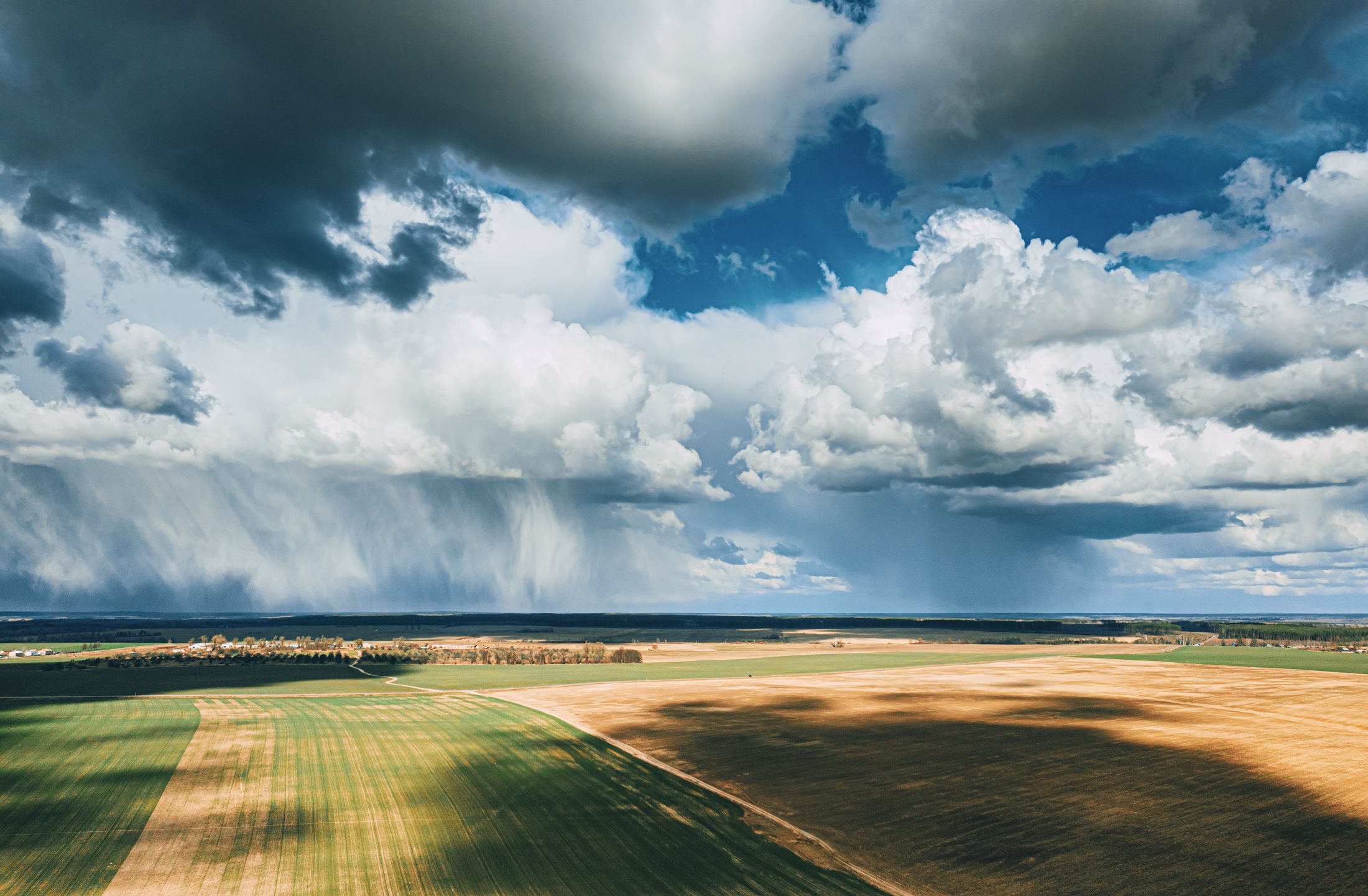
- The stability of rainfall depends not only on how much rain falls, but where the moisture originally evaporated.
- Crops become more drought-vulnerable when a large share of rainfall comes from land rather than the ocean.
- The U.S. Midwest and parts of East Africa face heightened risks linked to land use and soil moisture conditions.
Monday, December 15, 2025 — Last week, Science Daily reported on new research suggesting that the origin of rainfall plays a major role in determining drought risk for agriculture. The study, led by scientists at the University of California, San Diego and published in Nature Sustainability on October 24, 2025, focuses on where rainwater begins its journey before it falls on croplands.
Traditionally, drought assessments have emphasized how much rain a region receives. The new findings add another layer by examining whether rainfall originates from ocean evaporation or from land surfaces such as soil, lakes, and forests. According to the researchers, this distinction has important implications for crop reliability and long-term food production.
Tracing Where Rain Begins.
The research team analyzed nearly two decades of satellite data, from 2003 through 2019, to track atmospheric moisture back to its source. Ocean-derived moisture forms when sunlight heats ocean water, creating vapor that can travel long distances through large weather systems such as monsoons, atmospheric rivers, and tropical storms. This type of rainfall tends to be heavier and more consistent.
Land-derived moisture, often called recycled rainfall, forms when water evaporates from soils and vegetation and later returns as local precipitation. While this process supports regional rainfall, the study found that it is less reliable, especially during dry periods.
The researchers identified a key threshold. When more than about 36 percent of rainfall originates from land sources, croplands become significantly more vulnerable to drought. In these areas, soil moisture declines more rapidly, and crop yields are more sensitive to dry years.
“Our work reframes drought risk,” said lead author Yan Jiang of UC San Diego in comments reported by Science Daily on December 12, 2025. “It is not just about how much it rains, but where that rain comes from.”
Why Land-Sourced Rain Can Increase Risk.
According to the study, land-sourced rainfall creates a feedback cycle. When soils and vegetation are moist, evaporation contributes to rainfall. When the land dries out, evaporation decreases, reducing future rainfall and intensifying drought conditions. This self-reinforcing pattern makes agriculture more vulnerable during critical growing stages.
Ocean-sourced rainfall depends less directly on local soil moisture, which helps explain why regions dominated by ocean-derived precipitation tend to experience more stable water supplies.
The analysis found that more than 40 percent of global maize and about 60 percent of winter wheat are grown in regions where rainfall depends heavily on moisture originating from the land. This includes several major food-producing areas.
Spotlight on the Midwest and East Africa.
The study highlights two regions where this pattern is especially pronounced: the U.S. Midwest and tropical East Africa.
In the Midwest, one of the world’s most productive agricultural regions, rainfall is heavily influenced by evaporation from nearby soils and vegetation. The researchers noted that as droughts have become more frequent and intense in recent years, this reliance may amplify dry conditions through rainfall feedback loops. Because Midwestern agriculture plays a central role in global grain markets, disruptions in this region can have impacts far beyond the United States.
East Africa faces a different challenge. Rapid expansion of croplands and ongoing deforestation threaten the forests that help generate regional rainfall. The study suggests that clearing forests to increase food production may undermine the very moisture sources crops depend on, increasing long-term food security risks.
Forests as Part of the Water System.
The research emphasizes that forests and natural ecosystems contribute directly to rainfall through evaporation and transpiration, the process by which plants release water vapor. This moisture helps form clouds that later produce rain over nearby agricultural areas.
As reported by UC San Diego on November 3, 2025, the authors describe upland forests as natural contributors to rainfall, linking land conservation with agricultural stability rather than treating them as separate concerns.
Planning for a Changing Climate.
The study introduces a satellite-based mapping approach that identifies where croplands are most dependent on land-sourced moisture. This information could help guide decisions about irrigation investments, soil moisture conservation, and land management.
Rather than replacing existing drought metrics, the researchers suggest that understanding rainfall origins can complement current tools, offering earlier warnings of vulnerability and helping regions adapt as climate conditions continue to change.
Frequently Asked Questions
What is meant by ocean-sourced versus land-sourced rainfall?
Ocean-sourced rainfall originates from water that evaporates from the ocean and travels long distances before falling as rain. Land-sourced rainfall comes from evaporation off soils, lakes, and vegetation near where the rain eventually falls.
Why does land-sourced rainfall increase drought risk?
Land-sourced rainfall depends on local soil and vegetation moisture. When the land dries out, evaporation declines, which can reduce future rainfall and intensify drought conditions.
What is the key threshold identified in the study?
The researchers found that when more than about 36 percent of rainfall comes from land sources, croplands become significantly more vulnerable to drought and soil moisture deficits.
Which regions are most affected by this pattern?
The study highlights the U.S. Midwest and tropical East Africa as major hotspots, but also notes that many global staple crops are grown in regions with high dependence on land-sourced rainfall.
Does the study suggest specific policies or actions?
The research does not prescribe policies, but it indicates that land management, forest conservation, soil moisture protection, and targeted water planning may influence rainfall stability in vulnerable regions.
When was the study published?
The research article was published in Nature Sustainability on October 24, 2025, and was reported by Science Daily on December 12, 2025.