- Nearly 29,400 public comments were submitted on the proposed rule.
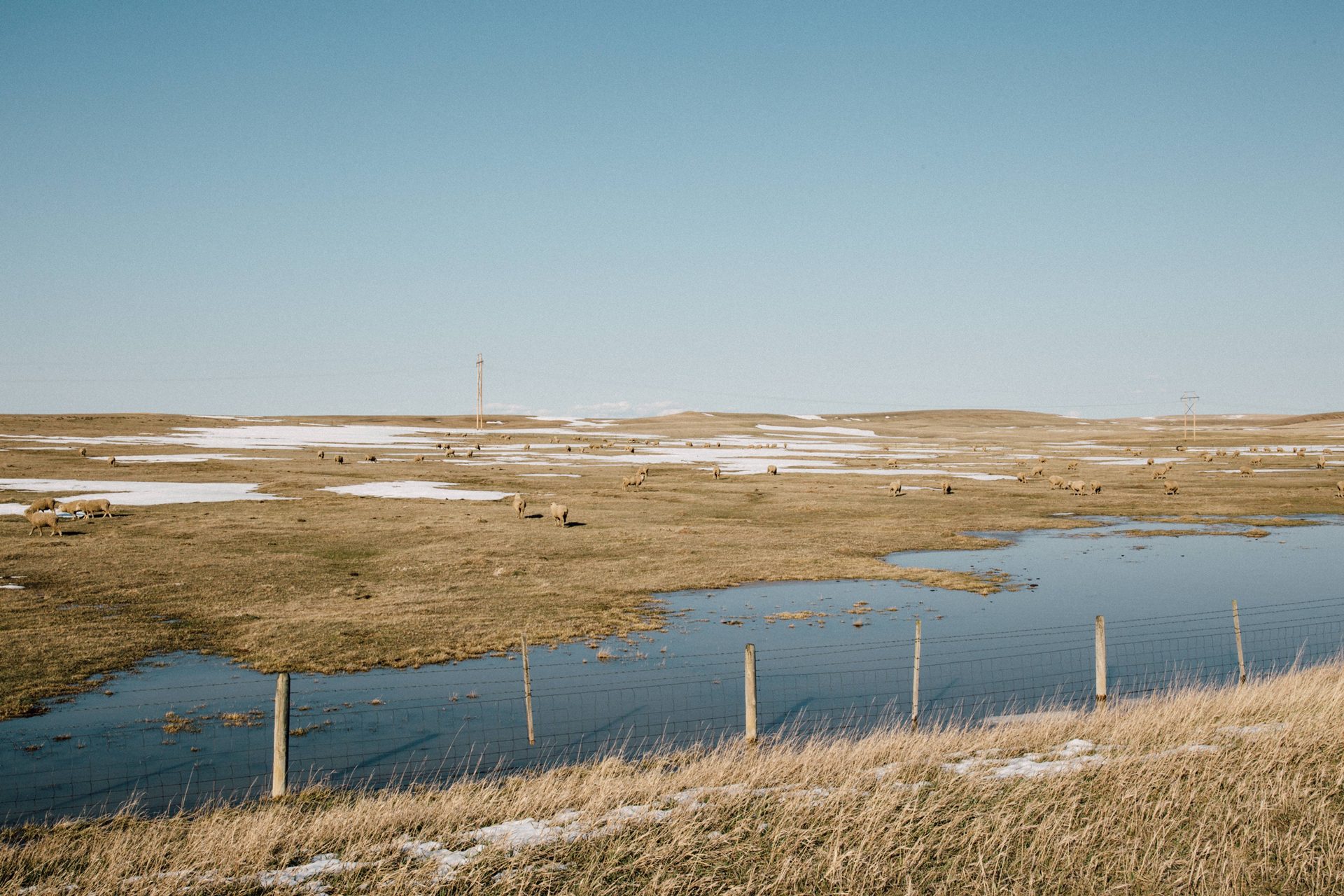
- Farm groups emphasize clarity and limits on federal jurisdiction.
- California water agencies support durability but warn of Western impacts.
- Federal agencies say the proposal follows Supreme Court direction.
Tuesday, January 6, 2026 — The public comment period for the proposed updated definition of “Waters of the United States” closed yesterday. According to the Federal Register , 29,383 comments were submitted to the U.S. Environmental Protection Agency and the U.S. Army Corps of Engineers.
The proposed rule was published in the Federal Register on November 20, 2025 and is intended to revise how waters are classified under the federal Clean Water Act. The update follows the U.S. Supreme Court’s 2023 decision in Sackett v. Environmental Protection Agency, which narrowed the scope of federal jurisdiction and directed agencies to more clearly define which waters fall under federal authority.
What the Proposed Rule Does.
Federal agencies state that the proposal is designed to improve regulatory predictability while respecting the Clean Water Act’s framework of shared federal and state responsibility. The rule introduces regulatory definitions for terms such as “relatively permanent” waters and “continuous surface connection,” which are intended to guide jurisdictional determinations.
The proposal also revises or clarifies several exclusions, including prior converted cropland, ditches, and groundwater. In addition, it removes interstate waters as an independent basis for jurisdiction and deletes the term “intrastate” from certain categories covering lakes and ponds. Federal agencies describe these changes as necessary to conform federal regulations to Supreme Court precedent and the statutory structure of the Clean Water Act.
Farm Bureau: Certainty and Durability Take Priority.
In comments submitted on January 5, 2026, the American Farm Bureau Federation emphasized the need for a clear and legally durable definition of Waters of the United States. The organization stated that farmers and ranchers operate on landscapes shaped by rainfall, irrigation systems, ditches, ponds, and drainage features that may only hold water temporarily.
According to the Farm Bureau, previous regulatory approaches created uncertainty by treating ordinary agricultural features as federally regulated waters. The group said this exposed routine activities such as plowing, planting, fence construction, and fertilizer application to potential permitting requirements and enforcement actions under the Clean Water Act.
The Farm Bureau expressed support for the proposed rule’s reliance on Supreme Court guidance, particularly the focus on relatively permanent waters and wetlands that have a true continuous surface connection to traditional navigable waters. The organization also supported continued exclusions for prior converted cropland and ditches, stating that these exclusions help ensure that normal farming and ranching activities are not unintentionally regulated.
California Water Agencies: Clarity With Regional Flexibility.
The Association of California Water Agencies (ACWA) submitted a detailed comment letter on January 5, 2026, representing approximately 470 public water agencies responsible for delivering most of California’s municipal, agricultural, and industrial water supplies.
ACWA acknowledged progress toward a more durable definition of Waters of the United States and expressed support for regulatory clarity. At the same time, the association emphasized that water agencies have navigated multiple Clean Water Act regulatory regimes over the past decade, creating challenges for long-term planning, infrastructure investment, and compliance.
ACWA stated that regulatory certainty is particularly important for agencies responsible for drinking water supply, wastewater treatment, recycled water, and stormwater management. The association urged federal agencies to ensure that the final rule can be implemented consistently across diverse hydrologic regions.
Concerns Over Ephemeral Streams and Downstream Impacts.
ACWA raised specific concerns regarding how the proposed rule addresses ephemeral streams, which flow intermittently but can still play an important role in water quality and water supply. The association noted that a significant portion of public drinking water systems rely on, at least in part, on intermittent and ephemeral streams.
Rather than automatically including or excluding such features from federal jurisdiction, ACWA recommended a fact-based approach. The association suggested that jurisdictional determinations should consider whether an ephemeral stream has a direct physical hydrologic connection to a traditional navigable water and whether it demonstrably affects downstream water quality.
ACWA also expressed concern about the proposal to remove interstate and intrastate waters as jurisdictional categories. The association warned that downstream states could experience water-quality impacts if upstream discharges are less regulated. While major rivers such as the Colorado River would remain protected as traditional navigable waters, ACWA noted that smaller contributing features could lose federal safeguards.
The Challenge of Defining “Wet Season.”
In its January 5, 2026 comment letter, ACWA also addressed the proposed rule’s reliance on the term “wet season” to help define “relatively permanent” waters and “continuous surface connection.” The association noted that the term is not defined in the Clean Water Act, referenced in the Sackett decision, or clearly delineated in the proposed regulatory text.
ACWA explained that in many regions, particularly in the western United States, the timing and duration of a wet season cannot be reliably defined using fixed dates or regional averages. California’s hydrology varies widely by geography, elevation, and climate. Snowpack may accumulate during wetter months but contribute surface flows later during drier periods. In desert and foothill regions, sudden storm events can produce short-lived flows that are disconnected from longer seasonal precipitation patterns.
Because the term “wet season” plays a central role in determining federal jurisdiction under the proposed definition, ACWA cautioned that uncertainty around its meaning could affect Clean Water Act permitting obligations and long-term water management planning. The association urged federal agencies to work with water providers and other stakeholders to develop clear implementation guidance that reflects regional hydrologic conditions and provides regulatory certainty.
What Happens Next.
Federal agencies will now review the nearly 30,000 public comments submitted before determining whether to revise the proposed rule and issue a final definition of Waters of the United States. Any final rule is expected to influence Clean Water Act permitting, enforcement, and infrastructure planning nationwide.
Because states retain primary authority over land and water use outside federal jurisdiction, changes to the federal definition may also prompt states to reassess their own water quality protections. The outcome is likely to shape water management, regulatory compliance, and project development decisions for years to come.
Frequently Asked Questions
What is “Waters of the United States”?
It is a legal term used in the Clean Water Act to define which waters are subject to federal regulation.
Why was the definition updated?
The update responds to the U.S. Supreme Court’s 2023 Sackett decision, which narrowed federal Clean Water Act jurisdiction.
How many comments were submitted?
According to the Federal Register, 29,383 public comments were received by January 5, 2026.
Why are agricultural groups concerned?
Farm organizations say unclear definitions can expose routine farming activities to federal permitting and enforcement.
Why are Western water agencies focused on this rule?
Western states rely heavily on intermittent and ephemeral streams and want rules that reflect regional hydrology while protecting water quality.
When will a final rule be issued?
No final date has been announced. Federal agencies are reviewing comments and may revise the proposal before issuing a final rule.

A lot of people and organizations put a lot of thought into their comments. Personally, I think it’s good that the definition is being clarified, particularly for smaller family farms.