- Above-normal temperatures continued across much of the western United States.
- Recent storms brought widespread rain, but snowpack remains below normal.
- Drought conditions shifted across the Colorado River Basin states.
- Mountain snow drought remains a concern for long-term water supply.
Saturday, January 10, 2026 — As of early January 2026, drought conditions across the United States reflected a familiar winter pattern: warmth in the West, colder conditions in the East, and highly uneven precipitation nationwide. Large areas west of the Mississippi River experienced near- to well-above-normal temperatures during the past week, with some mountain regions running 15 to 20 degrees Fahrenheit above seasonal averages. These warm conditions favored rain rather than snow, slowing the buildup of snowpack that many western water systems rely on.
While parts of the Southeast, Upper Midwest, and Florida saw pockets of above-normal precipitation, much of the country experienced limited moisture. In contrast, colder-than-normal temperatures dominated the Northeast and Mid-Atlantic, though these conditions had little immediate impact on western drought patterns.
Recent Storms Bring Moisture—but Not Enough Snow.
Across much of the West, including large portions of California, weekly precipitation totals exceeded normal levels, with some areas receiving more than double their typical amounts. Nevada, western Arizona, western Utah, Idaho, and parts of Washington and Oregon also benefited from recent storms.
However, the overall warmth pushed snow to higher elevations and increased rainfall at lower elevations. As a result, snowpack remains critically low in many mountain ranges, including the Cascades, the central Rocky Mountains of Colorado, and key ranges in Idaho and Oregon. This ongoing snow drought is significant because winter snowpack serves as a natural reservoir that supplies rivers and reservoirs through spring and summer.
Colorado River Basin: Improvements and Ongoing Challenges.
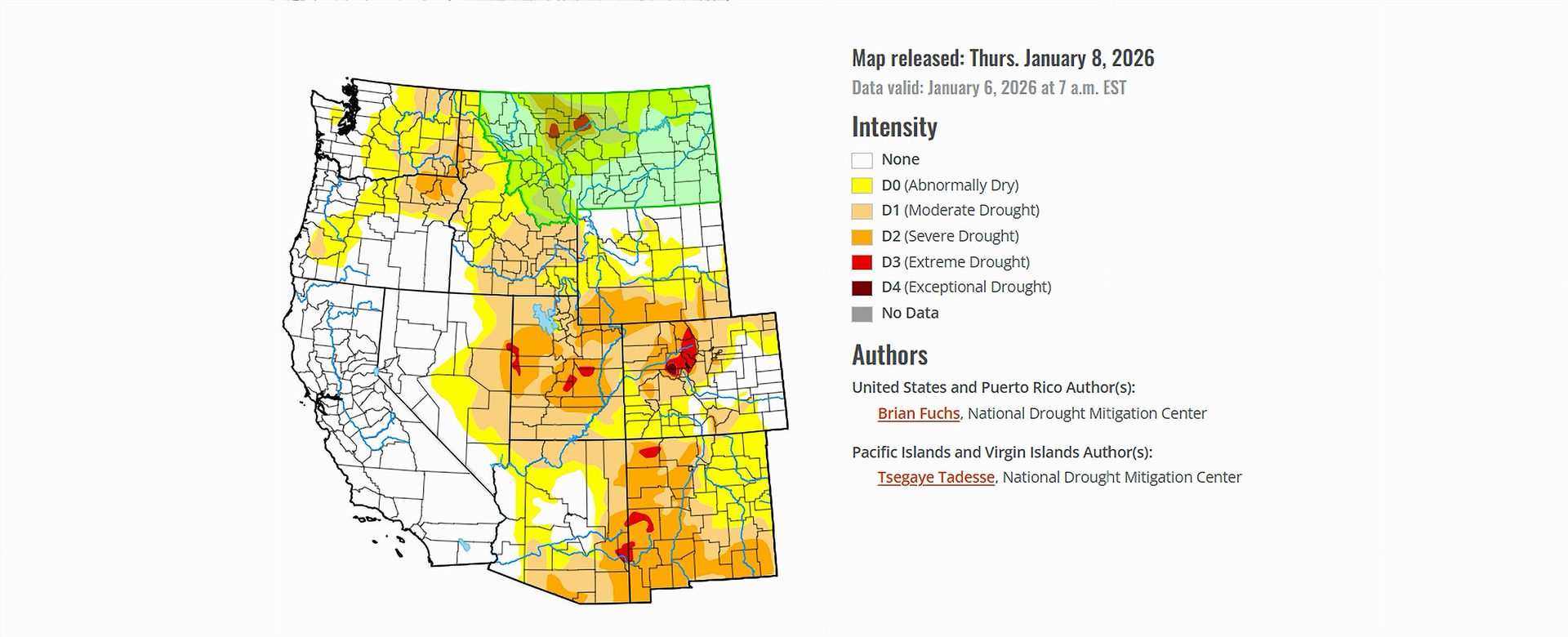
Within the seven Colorado River Basin states—Arizona, California, Colorado, Nevada, New Mexico, Utah, and Wyoming—drought conditions showed a mix of improvement and deterioration during the week.
Recent wet conditions led to improvements in moderate and severe drought across parts of Nevada, Arizona, western Utah, and portions of California. In Wyoming, extreme drought was removed from the southwestern part of the state, and moderate drought improved in western areas. These changes reflect the impact of repeated storm systems delivering moisture across the region.
At the same time, conditions worsened in other parts of the basin. Abnormally dry conditions expanded across northeastern New Mexico. Central Colorado experienced an expansion of extreme and exceptional drought, highlighting the uneven distribution of winter moisture. Even in areas receiving rain, persistent snow shortages continued to factor into drought assessments, particularly in high-elevation watersheds critical to the Colorado River system.
Snow Drought Remains a Key Concern.
Despite recent precipitation, snow drought remains a defining issue across much of the Colorado River Basin. Many mountain regions that typically accumulate snow at this point in the season remain well below normal. Warm temperatures have slowed snow accumulation and increased mid-winter melt risks, limiting the long-term benefits of recent storms.
Water managers and hydrologists continue to monitor these conditions closely, as winter snowpack plays a central role in determining reservoir inflows later in the year.
Looking Ahead.
Forecasts for the coming days suggest an active weather pattern across much of the country, including additional precipitation from the Pacific Northwest into the Rocky Mountains and Southwest. However, temperatures are expected to remain warmer than normal across most of the United States, including the West.
Longer-range outlooks indicate an increased likelihood of below-normal precipitation across much of the Western United States, even as above-normal temperatures persist. These conditions may continue to complicate drought recovery efforts across the Colorado River Basin as the winter season progresses.