- Colorado’s statewide snowpack measured about 58 percent of normal as of January 26, 2026.
- The Upper Colorado River basin, critical to major water projects, stood near 57 percent of average.
- Storage in the Colorado-Big Thompson Project remained above its long-term average despite low snowpack.
- Warm, dry weather early in 2026 reduced snow accumulation but increased outdoor activity.
Wednesday, January 28, 2026 — For much of Colorado, early 2026 brought mild and pleasant winter weather. Clear days and warmer temperatures made it easier for residents to spend time outdoors. Beneath that optimism, however, hydrologists were tracking a less encouraging trend. The state’s snowpack, often described as Colorado’s largest natural reservoir, remained well below average heading into the final days of January.
According to data reported by Northern Water , snowpack conditions in the Upper Colorado River basin were about 57 percent of the long-term average for this point in the season. The South Platte River basin stood slightly higher at roughly 66 percent of average. These two basins play a central role in northern Colorado’s water supply.
The South Platte River basin provides foundational water supplies for farms and cities across northeastern Colorado. The Upper Colorado River basin, meanwhile, supplies most of the water used in the Colorado-Big Thompson Project, a system that supplements local supplies for both municipal and agricultural users. The Upper Colorado River basin also supports the Windy Gap Project, which serves several Front Range communities.
Recent Snowfall Offers Limited Relief.
Snow fell across parts of the state over the weekend before January 26, 2026, but totals were uneven. Mountains west of Crested Butte reported more than 20 inches in some locations, while many other areas received modest accumulations closer to forecast minimums.
Statewide figures reflected that limited boost. The United States Department of Agriculture reported Colorado’s snowpack at approximately 58 percent of normal as of January 26. The snow-water equivalent, which measures how much water the snow would produce if melted, stood near 5.2 inches statewide. That value trailed the previous record low for the date and remained well below typical midwinter levels.
Long-range forecasts at the time suggested few strong storm systems on the immediate horizon, with the next possible window for meaningful snowfall projected around February 10. Even that outlook carried uncertainty.
Why Snowpack Matters to Water Supply.
Snowpack functions as a natural storage system, slowly releasing water as temperatures rise in spring and early summer. This gradual melt supports rivers, reservoirs, farms, cities, and ecosystems during the dry months.
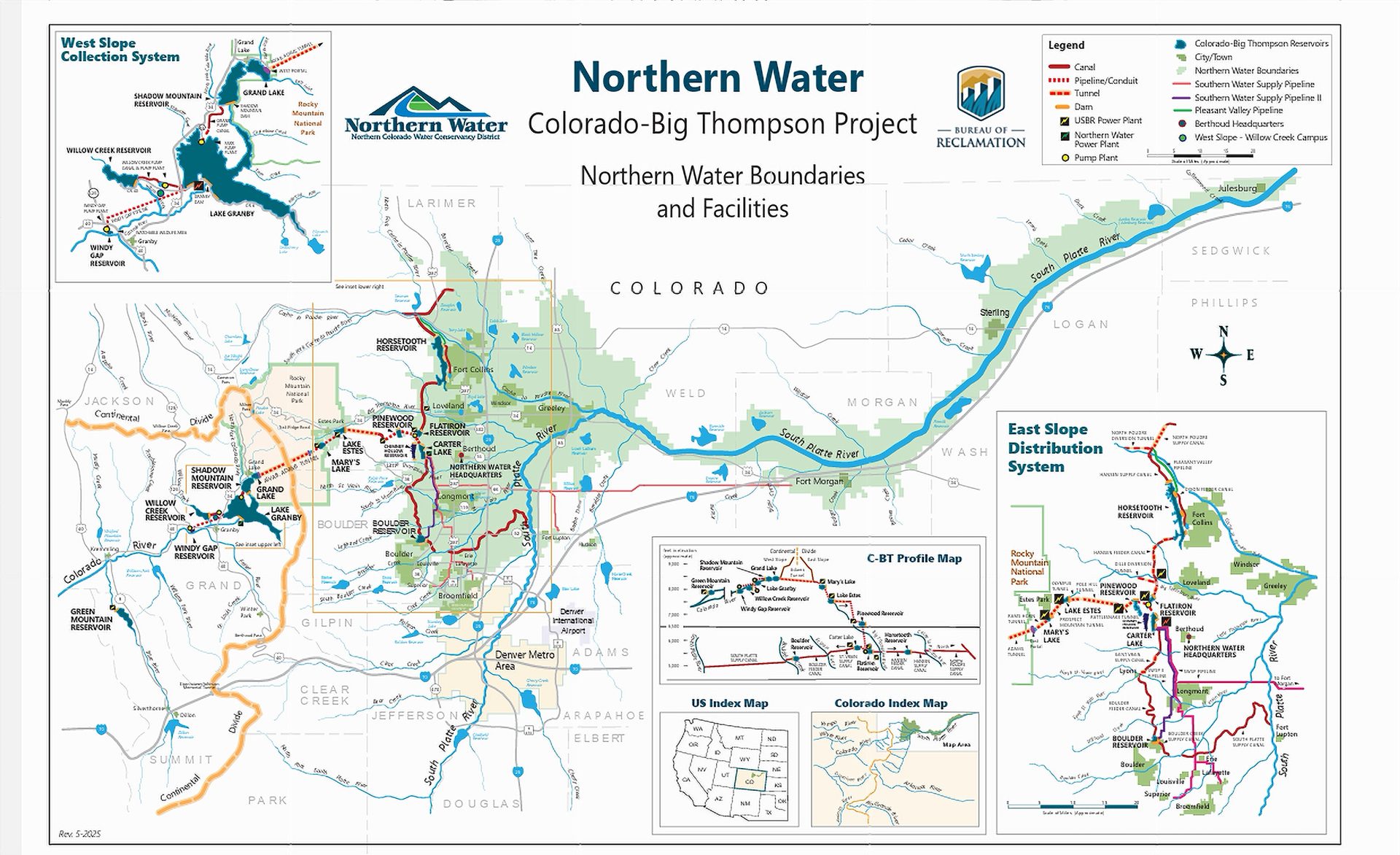
The Colorado-Big Thompson Project depends heavily on snowmelt from the Upper Colorado River basin. The project captures and stores more than 200,000 acre-feet of supplemental water each year, delivering it to more than 1.1 million people and about 615,000 acres of irrigated farmland in northeastern Colorado.
Meltwater from high-elevation snow is stored in Lake Granby and Willow Creek Reservoir before being moved under the Continental Divide through the Alva B. Adams Tunnel. Once on the East Slope, the water descends nearly 2,600 vertical feet, generating hydropower and filling reservoirs such as Horsetooth Reservoir, Carter Lake, and Boulder Reservoir. From there, water is distributed to cities, towns, industries, and irrigation systems.
Northern Water reported that storage within the Colorado-Big Thompson Project remained above its 69-year average for this time of year. That existing storage provides some reassurance that water deliveries can continue during high-demand months, even if snowpack remains below normal.
Looking Ahead to the Rest of Winter.
Water managers emphasized that winter was not yet over as of late January. Additional snowfall in February and March can still improve seasonal totals and support spring runoff. Snowpack conditions can change quickly, particularly during strong late-season storms.
At the same time, the early-season deficit underscored how closely Colorado’s water outlook depends on winter precipitation patterns. Even brief periods of warm, dry weather can have lasting effects if they persist during key accumulation months.
Image: Map of the Colorado-Big Thompson Project via Northern Water.
FAQ
What is snowpack?
Snowpack is the accumulation of snow in mountainous areas that stores water during winter and releases it as snowmelt during warmer months.
Why is snowpack important for Colorado?
Snowpack supplies much of the water used by rivers, reservoirs, cities, farms, and water projects across the state, especially during summer.
How low was Colorado’s snowpack in late January 2026?
Statewide snowpack measured about 58 percent of the long-term average as of January 26, 2026.
What is the Colorado-Big Thompson Project?
It is a large water delivery system that moves snowmelt from the Colorado River headwaters on the West Slope to communities and farmland in northeastern Colorado.
Does low snowpack mean immediate water shortages?
Not necessarily. Existing reservoir storage can offset short-term deficits, but continued low snowpack may affect water availability later in the year if conditions do not improve.