- Drought conditions continue across large portions of the United States.
- Low mountain snowpack is a growing concern for the West.
- Parts of the Colorado River Basin remain in drought despite seasonal storms.
- Winter precipitation deficits are affecting water outlooks for spring and summer.
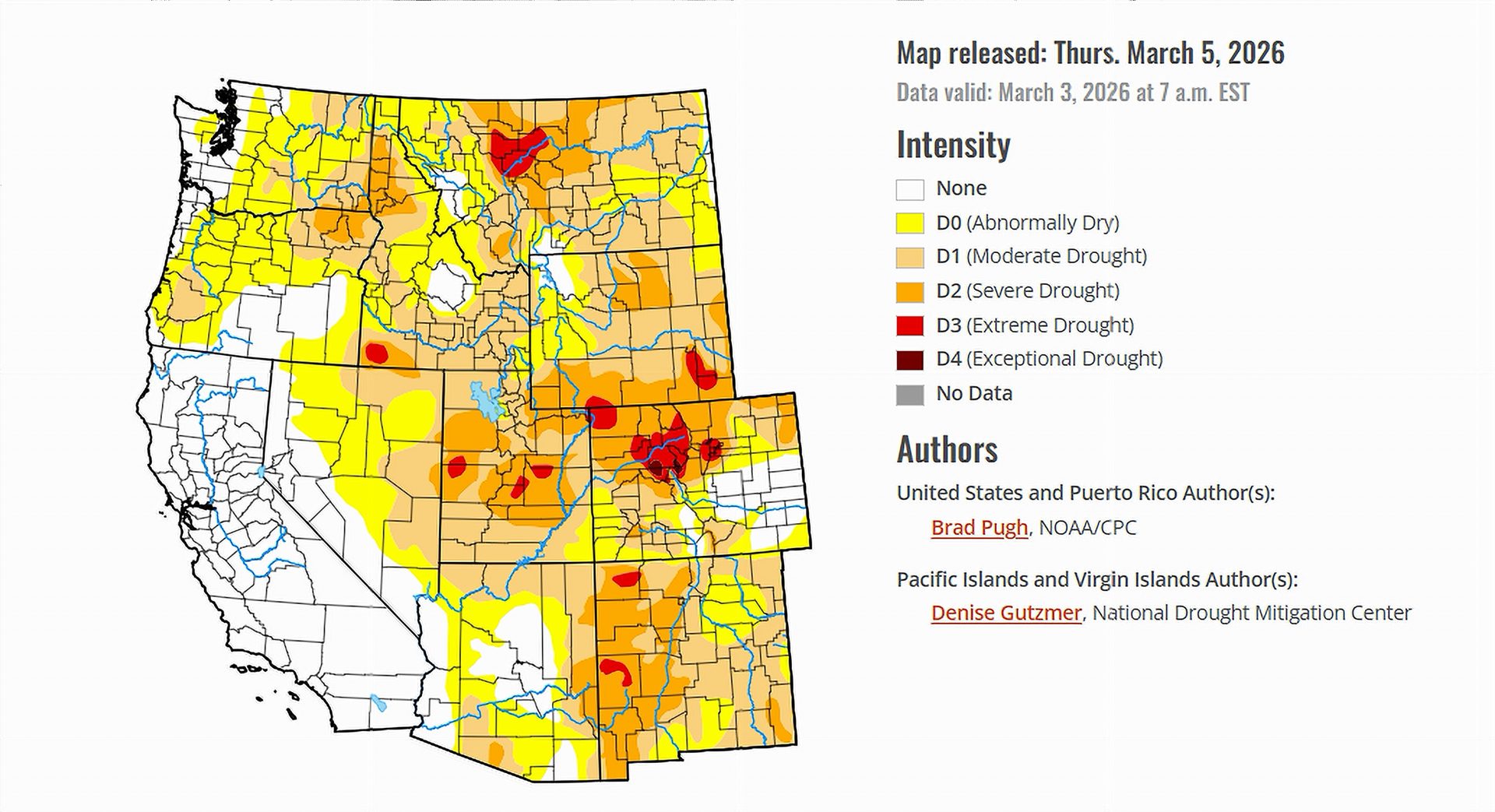
Saturday, March 7, 2026 — The latest U.S. Drought Monitor shows ongoing drought across parts of the Colorado River Basin and below-normal snowpack across much of the West heading into spring 2026.
Drought Persists Across Much of the United States.
The latest national assessment from the U.S. Drought Monitor shows drought continuing across large sections of the country as of early March 2026. Conditions intensified through much of the winter in several regions, including the Lower Mississippi Valley, the Southern Great Plains, and parts of the Midwest.
Meteorologists note that this pattern is consistent with a La Niña winter, which often brings drier weather to parts of the southern United States. Some areas received helpful rainfall near the end of February, bringing small improvements in portions of the Southeast. However, widespread drought remains across many regions of the country.
Longer-term precipitation shortages also persist in parts of the Mid-Atlantic and Northeast. In some areas of New England and the northern Mid-Atlantic, rainfall deficits over the past one to two years remain significant, contributing to ongoing drought conditions.
Across the central United States, drought continued to expand through late winter, with precipitation totals well below normal. Unseasonably warm temperatures and windy conditions have also contributed to worsening dryness in some regions.

Colorado River Basin Faces Continued Dry Conditions.
For the seven states that depend on the Colorado River system—Arizona, California, Colorado, Nevada, New Mexico, Utah, and Wyoming—conditions remain mixed but concerning as spring approaches.
Large portions of the Central Rockies, including areas of Colorado and Wyoming, continue to experience drought of varying intensity. According to the latest monitoring data, drought conditions remain widespread across these mountain regions that help supply much of the river’s water.
At the same time, snowpack levels across the West remain well below average for this point in the season. Snowpack in the mountains serves as a natural reservoir that slowly releases water during the spring and summer as it melts.
As of early March, snow water equivalent in parts of the Central Rockies is running below seventy percent of normal. Across a broader portion of the West—including the Great Basin and the Four Corners region—snowpack levels are even lower in some areas.
Scientists consider these snowpack levels a key indicator for future water supply conditions because the melting snow feeds rivers and reservoirs throughout the Colorado River Basin.
Dry Winter Affects the Interior West.
The winter precipitation season has also been weaker than normal in several parts of the interior West.
Water-year precipitation totals, measured from October through early March, have been below average in portions of the Great Basin. This has led to a small expansion of moderate drought conditions in northeastern Nevada.
Other areas of the northern and central Rocky Mountains have also seen recent intensification of drought following a warmer and drier February. These developments highlight the importance of late winter storms for rebuilding snowpack before the spring melt season begins.
Although some northern parts of the West have received occasional storms since autumn, snowpack totals still remain below normal in several regions.
California Conditions Differ From Other Basin States.
One notable exception within the broader Colorado River Basin region is California.
The state is currently classified as drought-free in the latest national map. However, snowpack levels still remain below normal statewide. Measurements from the California Department of Water Resources indicate that snow water equivalent is about fifty-nine percent of the typical level for this time of year.
Even when drought is not formally declared, snowpack levels remain a critical factor for water supply in California and throughout the Colorado River Basin.
Why Snowpack Matters for the Colorado River.
Mountain snowpack plays a central role in the water supply of the Colorado River system.
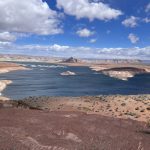
Snow that accumulates during the winter months gradually melts during the spring and summer, feeding rivers and streams that ultimately flow into major reservoirs such as Lake Powell and Lake Mead. When snowpack is below normal, less runoff typically reaches those reservoirs later in the year.
Because of this connection, water managers closely monitor snowpack conditions throughout the winter season. The levels measured in late winter and early spring often provide an early signal about how much runoff may occur during the upcoming melt season.
Outlook for the Coming Weeks.
Weather forecasts indicate that several storm systems may move across the Great Plains and Midwest during early to mid-March. These systems could bring heavy rainfall to parts of the central and eastern United States.
In the West, forecasters expect snowfall across parts of the northern and central Rocky Mountains. However, drier conditions are expected across California and portions of the Southwest.
Longer-range outlooks suggest that above-normal temperatures are likely across much of the southern United States and the Southwest in the coming weeks, while cooler conditions may develop in parts of the northern Plains and Pacific Northwest.
As the winter season moves toward spring, water managers throughout the Colorado River Basin will continue monitoring both snowpack levels and precipitation patterns to better understand how much runoff may reach the river system later this year.