- Over 18,000 comments oppose the federal proposal.
- Arizona faces potential cuts of up to 58 percent.
- Upper Basin states largely avoid mandatory reductions.
- Industries and agriculture warn of severe economic impacts.
- Final plan expected later this year after revisions.
Tuesday, March 31, 2026 –– The federal government’s draft plan to divide shrinking Colorado River water supplies has triggered widespread opposition from states, tribes, industries, and environmental groups. Cronkhite News Service reviewed the comments, reporting that many critics argue the proposal relies too heavily on emergency reductions without addressing long-term conservation, while Lower Basin states, especially Arizona, say the plan unfairly places the burden on them despite prior voluntary cuts. Upper Basin states also object, noting they already face reduced water availability due to declining snowpack. The proposal could significantly impact major sectors, including agriculture, mining, and semiconductor manufacturing, with some warning of operational disruptions or economic losses. With demand rising and river flows declining to about half of historical levels, the Bureau of Reclamation is reviewing thousands of comments and is expected to release a revised plan later this year that will shape water use across the West for decades.
The following is republished from Cronkhite News Service under a Creative Commons Attribution-NoDerivatives 4.0 International License.
Federal plan to divide drought-stricken Colorado River water brings flood of pushback
Cronkite News offers an audio version of this story using an automated voice created by AI. Errors in pronunciation, pacing and intonation may occur. If you notice an error please contact cronkitenews@asu.edu.
WASHINGTON – The Bureau of Reclamation has been flooded with comments on its plan for dividing the Colorado River’s dwindling supply of water – over 18,000 from the states, cities, tribal nations, industry groups and others that rely on it.
Few are happy about the plan. Most are very unhappy.
“The Colorado River reservoir system cannot be stabilized simply by reallocating scarcity,” The Nature Conservancy, Environmental Defense Fund and other groups wrote in one comment, criticizing the plan for focusing on emergency measures rather than conservation and planning.
Arizona and six other states that rely on the river missed deadlines in November and February to find agreement on their own.
Under the Draft Environmental Impact Statement issued in January, the federal government will impose sharp cuts to many users if the states fail to reach a deal by October divvying up the river.
Mandatory cuts would fall most heavily on Arizona under each of five options in the plan, with cuts ranging as high as 58% for Arizona and 46% for Nevada. Upper Basin states would largely avoid mandatory cuts in their share of river water because, unlike downstream states, they don’t rely on releases from reservoirs.
Lower Basin states – Arizona, in particular – argue that the federal plan fails to take into account previous voluntary cuts they have made, while leaving upstream states unscathed.
“The Draft EIS fails to contemplate any water use reductions in the Upper Basin, and in fact assumes that the Upper Basin water uses will increase,” Thomas Buschatzke, director of the Arizona Department of Water Resources, wrote in a comment on file with the bureau. “As a result, the effects of the proposed alternatives fall disproportionately on the Lower Basin.”
But Upper Basin states – Colorado, New Mexico, Utah and Wyoming – also oppose the plan, saying it ignores impacts of releasing water stored in their part of the basin and the fact that in times of drought, they already face scarcity from diminishing snowpack.
Jeffrey Woodruff, chair of the Pitkin County Board of Commissioners in Aspen, Colo., urged the Bureau of Reclamation to revise its draft to reflect the growing disparities between supply and demand for the river’s water. He also urged the board to go further to protect Lake Powell, the second largest reservoir behind Lake Mead, downstream.
The plan’s “focus on predictability disproportionately favors Lower Basin users who rely on reservoir releases, while Upper Basin communities live with hydrologic variability and limited storage buffering,” Woodruff said.
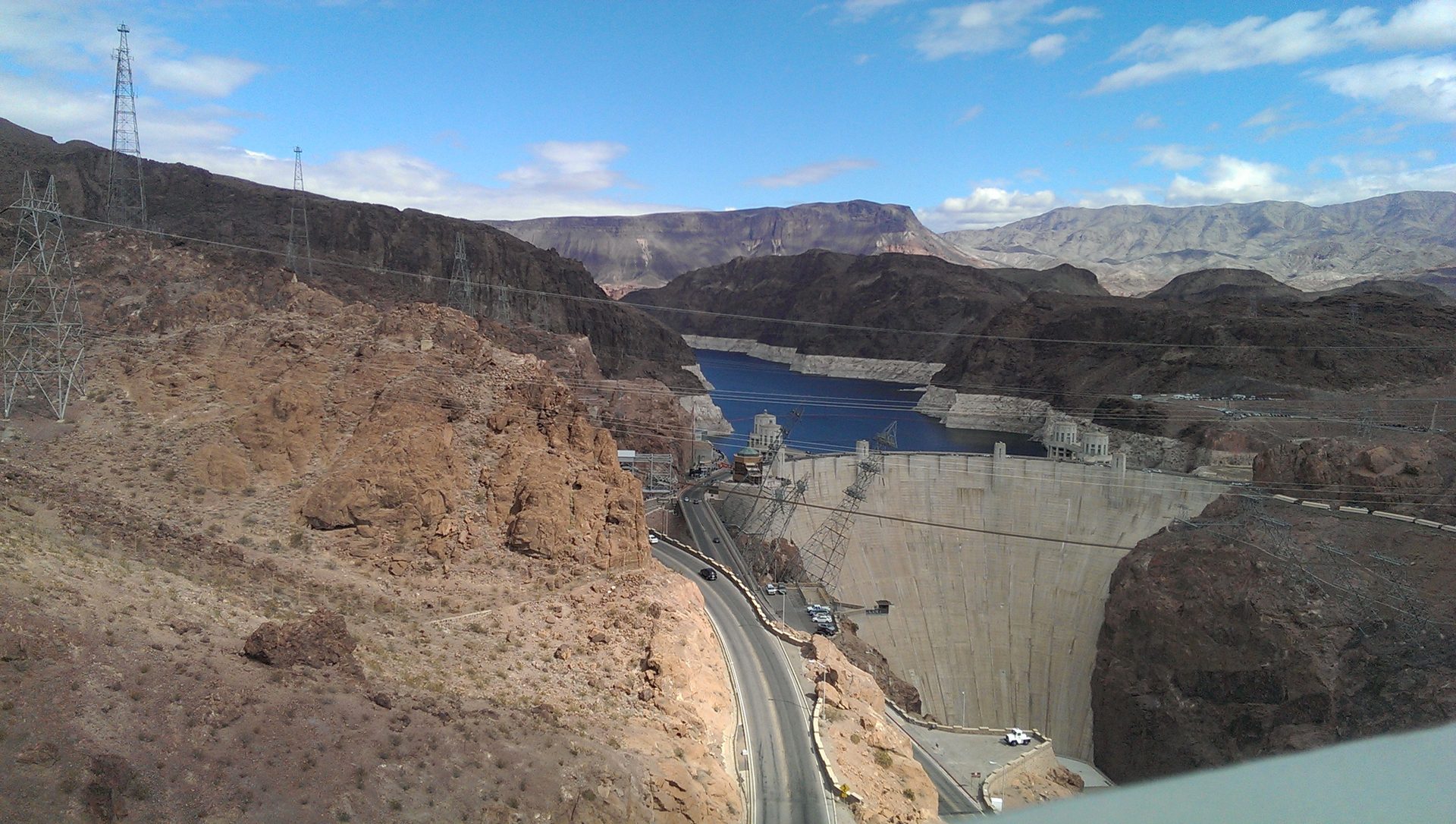
The river starts in Rocky Mountain National Park in northern Colorado, flowing 1,450 miles to the Gulf of California across the Mexican border, with 15 dams along the way. The biggest are the Hoover Dam, which creates Lake Mead, and Glen Canyon Dam, which creates Lake Powell.
Across the Southwest, demand for water has grown steadily despite a prolonged drought that has pushed down reservoir levels sharply. In 2023, the states struck a temporary agreement that expires on Dec. 31, 2026, aimed at preserving river flows.
Lower Basin states, arguing that they have cut usage the most, have pushed for a new deal that includes mandatory cuts for Upper Basin states.
Officials in the Upper Basin states reject mandatory cuts, though they have conceded that more conservation measures are needed.
Cronkite News reviewed hundreds of comments. In over 12,000 form letters, elected officials, non-governmental organizations and tribes expressed their concern over the dramatic cuts proposed by the federal government, citing the impact on business and municipalities and fear of uncertainty.
According to the Central Arizona Project – which operates a system of canals that distribute river water across the state – the federal proposal would be a “crushing blow.”
CAP distributes 1.5 million acre-feet of river water and serves four out of five Arizonans. The federal plan could mean cuts of up to 77% to its allowance from the river.
In lobbying the Trump administration, Gov. Katie Hobbs has emphasized how important water is to Arizona’s huge semiconductor industry, which the president views as a top priority.
CAP echoed that approach in its comments, noting that “the waters of the Colorado River are foundational to the economy and people of Central and Southern Arizona, supporting 6 million Arizonans, many tribal communities, a thriving advanced microchip manufacturing industry, and critical mineral and agricultural production.”
“Water users in Maricopa, Pinal and Pima County who receive CAP water, that includes tribes, cities and industries, will all experience cuts if the cuts get very deep,” Sarah Porter, director of the Kyl Center for Water Policy at Arizona State University, said in an interview.
The draft is a rare issue that has unified Democrats and Republicans in the Arizona congressional delegation.
“The upcoming decisions that will be made by the Secretary will be felt in the West for generations,” Arizona’s six House Republicans wrote to the bureau, a part of the Department of the Interior that has managed water in 17 western states since 1902. “The alternatives currently being proposed in the DEIS impose all the required cuts exclusively on the Lower Basin … even though the Lower Basin has 75% of the total Basin population, 75% of the economy, 76% of the jobs, and 78% of the crop sales.”
Arizona Democrats in Congress called the proposals “an unsustainable distribution of reductions and responsibilities across the Basin States” that would put Arizona residents in harm’s way.
The Colorado River Compact of 1922 divided rights to the river between the Upper and Lower Basin states, with each entitled to 7.5 million acre-feet – enough to cover that many acres to a depth of 1 foot.
That seemed ample at the time, when 18 million acre-feet were available. But decades of drought and warmer temperatures have caused the supply to shrink.
In 2025, the flow was down to roughly 8.5 million acre-feet, according to Bureau of Reclamation data. Mandatory cuts were imposed. Arizona gave up 512,000 acre-feet for the year, out of the 2.8 million it is entitled to under the 1928 Boulder Canyon Act, which ratified the compact and set state-specific allocations.
Eric South, chairman of the Coalition of Local Governments, which represents county commissions in Wyoming and Utah, argued for more generous allocations for upstream states because they have consistently drawn far less water than they were entitled to under compacts dating back a century – up to 4 million acre-feet less.
“These past and current efforts should not be ignored in developing the post-2026 operations for Lake Powell and Lake Mead,” he wrote.
The comment period ended on March 2. The Bureau of Reclamation will publish a final version later this year that could include changes in how the water is shared.
Cuts imposed under the federal plan would be imposed on a “priority” basis, in consultation with the Arizona Department of Water Resources and CAP.
Within CAP’s service area, tribes have the highest priority, followed by cities. Non-tribal agriculture is among the lowest priority and would feel the largest impacts.
In Yuma County, which produces most of the nation’s winter vegetables, river water is the backbone of a multibillion-dollar agricultural sector.
The county consumes 8% of the Colorado River basin’s irrigation water, yet it generates 18% of the basin’s crop sales. Yuma farms generate nearly $4 billion in annual sales, according to the Arizona Farm Bureau.
“The impacts of water reductions to Yuma would be especially severe,” wrote Ben Horwich, an attorney for four Yuma-area irrigation districts. Agriculture comprises approximately two-thirds of Yuma’s economy, and the federal proposal doesn’t adequately take into account the impact of water disruptions, he argued.
While Yuma’s rights to the water are protected with Present Perfected Rights under the 1922 compact, they could still be impacted by the cuts and water unavailability despite having greater protection from typical shortages.
Arizona’s mining industry has also pushed back against the federal plan, arguing it threatens high-tech manufacturing and reminding the bureau that roughly 70% of copper produced domestically comes from the Copper State. Copper is used for electricity generation and transmission, defense systems and advanced manufacturing.
Freeport-McMoRan, which mines copper at five Arizona sites, warned federal regulators that its operations need reliable, predictable water supplies.
“Copper mining, concentrating, leaching, and smelting are water intensive, continuous flow industrial processes. Significant, unplanned reductions in water deliveries cannot be absorbed simply by incremental efficiency measures; they can force curtailments or shutdowns,” wrote Francis McAllister, Freeport-McMoRan’s vice president of energy, land and water.
This article first appeared on Cronkite News and is republished here under a Creative Commons Attribution-NoDerivatives 4.0 International License.
For more stories from Cronkite News, visit cronkitenews.azpbs.org.