- Snowpack measured at just 15 percent of average.
- March heat wave rapidly erased earlier gains.
- Reservoirs remain near full despite low snow.
- Reduced runoff may impact late-season water supply.
Thursday, April 2, 2026 — In late March 2026, the Nevada Irrigation District reported a sharp and unexpected decline in snowpack across its mountain watersheds. What began as a relatively normal winter quickly shifted when unusually warm temperatures arrived, melting much of the snow before it could reach its seasonal peak.
Measurements taken on March 26, 2026, showed snowpack at just 15 percent of average. That makes it one of the lowest April survey readings on record for the District, second only to 2015.
Snowpack in this region typically peaks in late March or early April. It serves as a natural storage system, releasing water slowly into streams and reservoirs as temperatures rise. This process is essential for maintaining water supplies through the dry season.
Warm Temperatures Undercut Winter Gains.
Despite near-average precipitation totals this winter, much of that moisture did not remain as snow.
At Bowman Reservoir, precipitation reached just over 57 inches, which is slightly above average. However, warmer conditions caused much of that precipitation to fall as rain. In cases where snow did accumulate, it melted quickly during the March heat.
By late March, only a few inches of snow remained at the site, with very little water content left to contribute to runoff.
This pattern highlights a growing concern for water managers. Snowpack, not just precipitation, determines how much water will be available later in the year.
Snow Measurements Show Sharp Decline.
Nevada Irrigation District hydrologists collected data from several established snow courses across the watershed. The findings show a steep drop in snow water content:
- Webber Peak, at 7,800 feet, retained the highest levels of snow water.
- Mid-elevation sites such as English Mountain and Webber Lake showed reduced but measurable snowpack.
- Lower elevations, including Bowman Reservoir, had minimal remaining snow.
- Chalk Bluff recorded no measurable snow.
Across all sites, the average snow water content measured just 4.9 inches. The historical average is 33.6 inches.
Snow water content reflects the amount of usable water stored in the snowpack. It is one of the most important indicators for forecasting water supply.
Reservoir Storage Remains Strong.
Even with low snowpack, Nevada Irrigation District reservoirs are in good condition heading into the irrigation season, according to the District’s March 31 report.
As of March 25, 2026, total storage stood at 117 percent of average. Reservoirs were nearly full, holding close to their maximum capacity after a winter of steady precipitation.
Water deliveries are expected to meet demand as irrigation season begins in mid-April. The District’s system supports agriculture through hundreds of miles of canals.
Reduced Runoff Raises Concerns.
The concern now shifts to the months ahead.
Under normal conditions, melting snow in April and May helps refill reservoirs and sustain water supplies. This year, that natural recharge will be limited.
District officials expect lower carryover storage by the end of the year. That could affect water availability if dry conditions continue into the next winter.
No water restrictions have been announced at this time. However, conservation is being encouraged as a precaution.
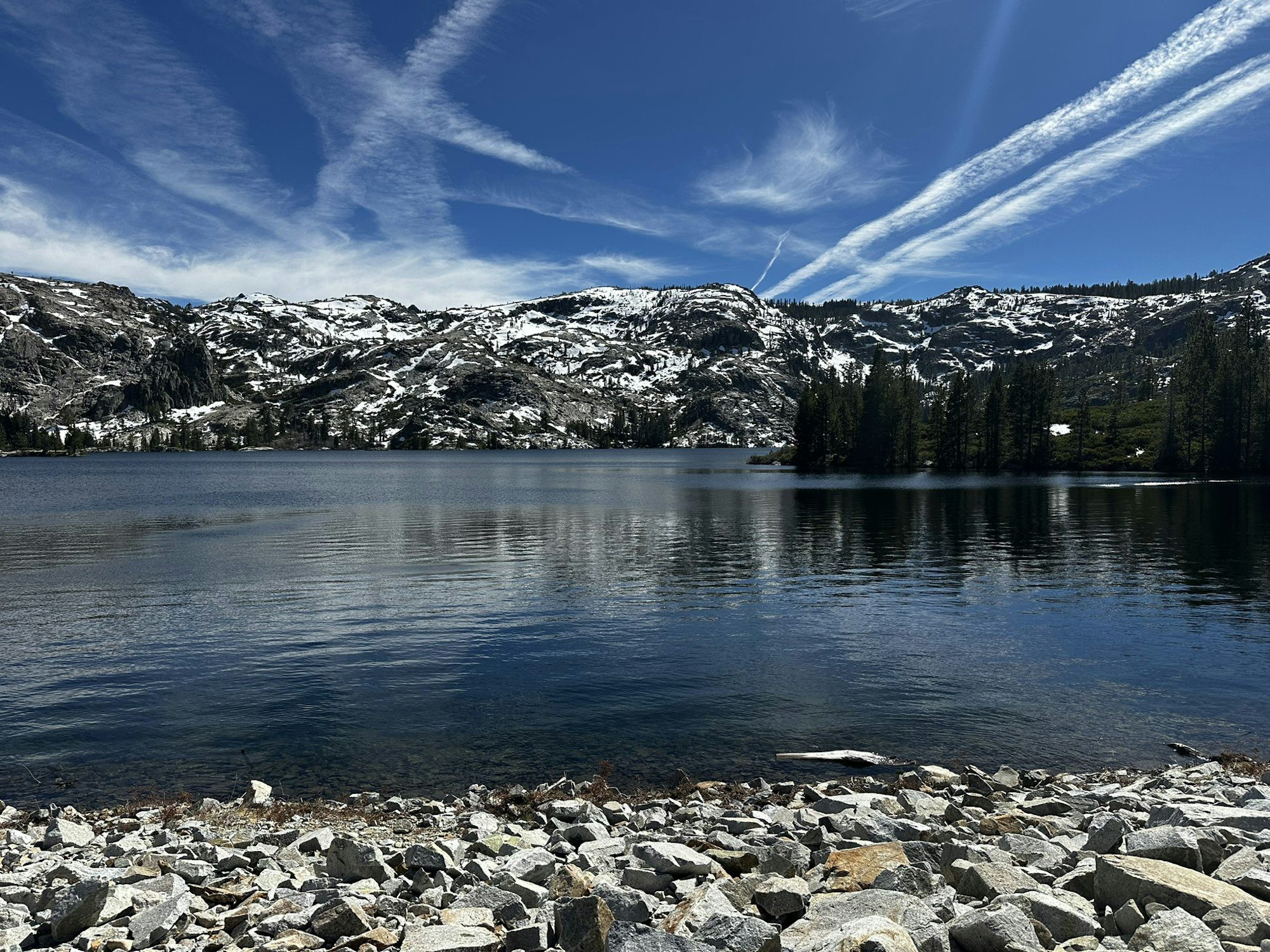
Pictured: Faucherie Lake on March 25, 2026. Photo by Nevada Irrigation District.