- A new House bill revives a long-negotiated tribal water settlement.
- The proposal follows bipartisan legislation advanced in 2024.
- The settlement traces back decades of negotiations over Verde Valley water.
- Congressional review is underway, with bill text still pending.
Monday, December 29, 2025 — On Friday, December 26, 2025, Arizona Representative Eli Crane introduced H.R. 6931, titled the Yavapai-Apache Nation Water Rights Settlement Act , in the United States House of Representatives. The bill seeks congressional approval of a negotiated settlement resolving the Yavapai-Apache Nation’s water rights claims in Arizona and authorizes construction of a water project tied to those claims.
The legislation was referred to the House Committee on Natural Resources, which oversees tribal water settlements and western water policy. As of December 28, 2025, the full legislative text had not yet been released, a procedural delay that can occur following bill introduction.
Legislative History and the 2024 Agreement.
The 2025 bill builds on bipartisan legislation advanced during the 118th Congress in 2024. In July 2024, the Yavapai-Apache Nation, together with Arizona Senators Mark Kelly and Kyrsten Sinema, announced a comprehensive settlement agreement intended to secure the Nation’s water rights and protect flows in the Verde River.
That 2024 agreement authorized approximately $1.039 billion in federal funding for water infrastructure, including a pipeline and a drinking water treatment plant. The settlement confirmed the Nation’s right to 4,610 acre-feet of water per year and identified the C.C. Cragin Reservoir as a key supply source. By shifting reliance away from groundwater pumping, the project was designed to support long-term protection of the Verde River, which is culturally, economically, and ecologically important throughout the Verde Valley.
The 2024 settlement also included a land exchange with the United States Forest Service, allowing the Nation to consolidate lands adjacent to the Middle Verde Reservation. Tribal, state, and federal officials described the agreement as the culmination of decades of negotiations aimed at resolving unresolved water claims while improving regional water planning certainty.
Congressional Efforts in the Prior Session.
During the 118th Congress, the House version of the settlement legislation, H.R. 8949, was introduced by David Schweikert and received bipartisan support from Representatives Debbie Lesko, Juan Ciscomani, and Greg Stanton. A companion bill was introduced in the Senate as S. 4705.
Although the 2024 legislation advanced through portions of the congressional process, it did not receive final passage before the end of the session. As a result, reintroduction in the new Congress was required for further consideration, leading to the introduction of H.R. 6931 in December 2025.
November 2025 Visit to the Nation.
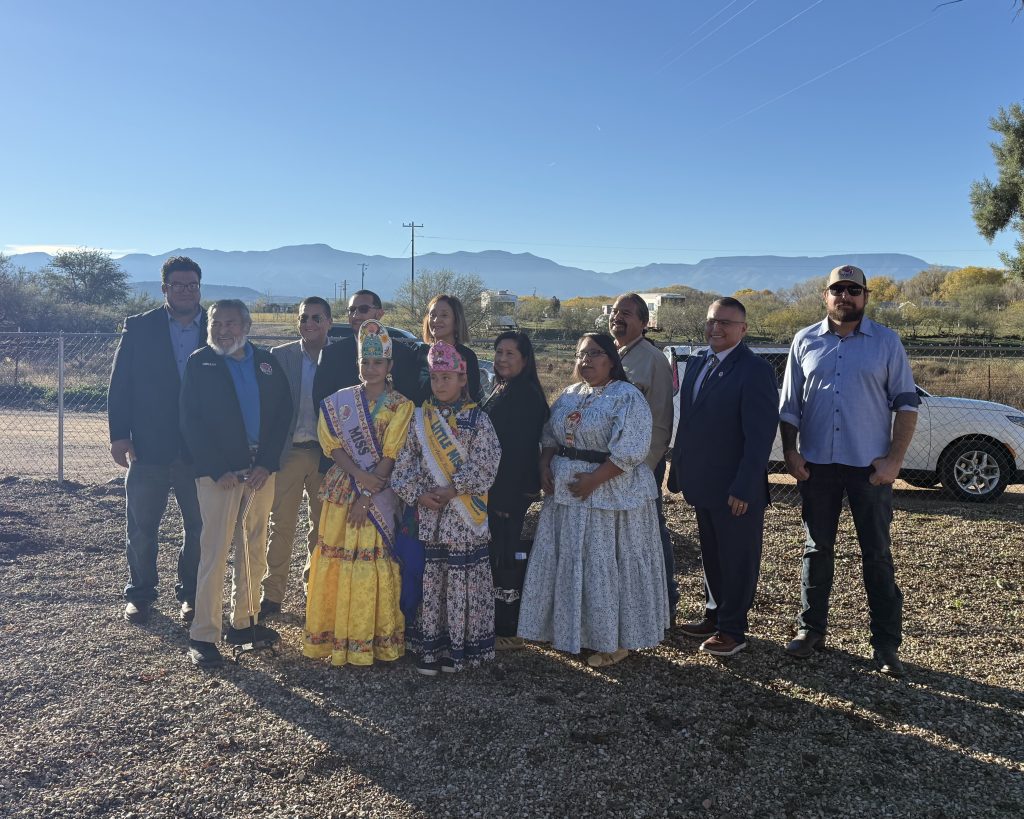
The reintroduction of the settlement legislation followed a visit on November 24, 2025, by Representative Crane and Billy Kirkland, Assistant Secretary for Indian Affairs at the United States Department of the Interior. The visit occurred during Native American History Month and marked Kirkland’s first official trip following Senate confirmation.
During a guided tour of the Middle Verde District of the reservation, officials visited newly acquired lands near Cherry Creek Road, the Middle Verde Wastewater Treatment Plant construction site, and the New Tunlii housing development. Following the tour, Crane and Kirkland met with Yavapai-Apache Nation leadership, including Chairman Buddy Rocha Jr., Vice Chair Charlie Baca IV, and members of the tribal council. Water rights and the pending federal settlement were central to those discussions.
Representative Crane described the visit as an opportunity to strengthen partnerships and reaffirm federal commitments related to the Nation’s water settlement.
What the Current Bill Proposes.
Based on its official title and summary, H.R. 6931 would approve a negotiated settlement of the Yavapai-Apache Nation’s water rights claims and authorize construction of a water project associated with those claims. While detailed provisions are not yet public, the bill appears to follow the framework established by the 2024 settlement, which addressed water supply reliability, infrastructure development, and environmental protection.
Tribal water settlements require congressional approval because they involve federal trust responsibilities, allocation of water rights, and, in many cases, significant federal appropriations. Once enacted, settlements can provide legal certainty for tribes, surrounding communities, state water managers, and other water users.
Implications for Arizona Water Planning.
Arizona has multiple unresolved or partially resolved tribal water rights claims, many dating back generations. Settlements are often pursued to avoid prolonged litigation, clarify water allocations, and support economic development while respecting tribal sovereignty. In river basins already facing long-term water supply challenges, such agreements can also influence regional planning and infrastructure investment decisions.
The introduction of H.R. 6931 represents a procedural continuation of earlier bipartisan efforts rather than a new policy direction, placing the Yavapai-Apache Nation’s settlement back before Congress for consideration in the 119th Congress.
Image from Rep. Crane’s Press Release: Rep. Eli Crane visits the Yavapai-Apache Nation on November 24, 2025.
Frequently Asked Questions
What is H.R. 6931?
H.R. 6931 is a bill introduced in December 2025 to approve a settlement of the Yavapai-Apache Nation’s water rights claims in Arizona and authorize construction of a related water project.
How does this bill relate to earlier legislation?
The bill follows bipartisan settlement legislation introduced in 2024 during the 118th Congress, which did not receive final passage before the session ended.
What water rights were identified in the 2024 agreement?
The 2024 settlement confirmed the Yavapai-Apache Nation’s right to 4,610 acre-feet of water per year and authorized infrastructure to deliver that water from the C.C. Cragin Reservoir.
Why is congressional approval necessary?
Tribal water settlements involve federal trust obligations, water allocations, and funding commitments that require approval by Congress to become legally binding.
What is the current status of the bill?
As of December 29, 2025, the bill has been referred to the House Committee on Natural Resources, and the full legislative text has not yet been released.
What happens next?
The committee may review the bill through hearings and amendments before it can advance to a vote in the full House and Senate.