
- Arizona regulators approved a private energy agreement tied to a large data center near Tucson.
- The Attorney General is seeking a rehearing, citing constitutional and ratepayer concerns.
- Separate data center projects are advancing in Marana under newly adopted local rules.
- Water use, energy demand, and long-term costs remain central issues for Southern Arizona.
Monday, January 12, 2025 — Large-scale data centers are moving forward across Southern Arizona, driven by demand for cloud computing, artificial intelligence, and high-capacity digital infrastructure. While supporters point to job creation and tax revenue, state and local officials are now grappling with questions about electricity rates, water use, and regulatory oversight.
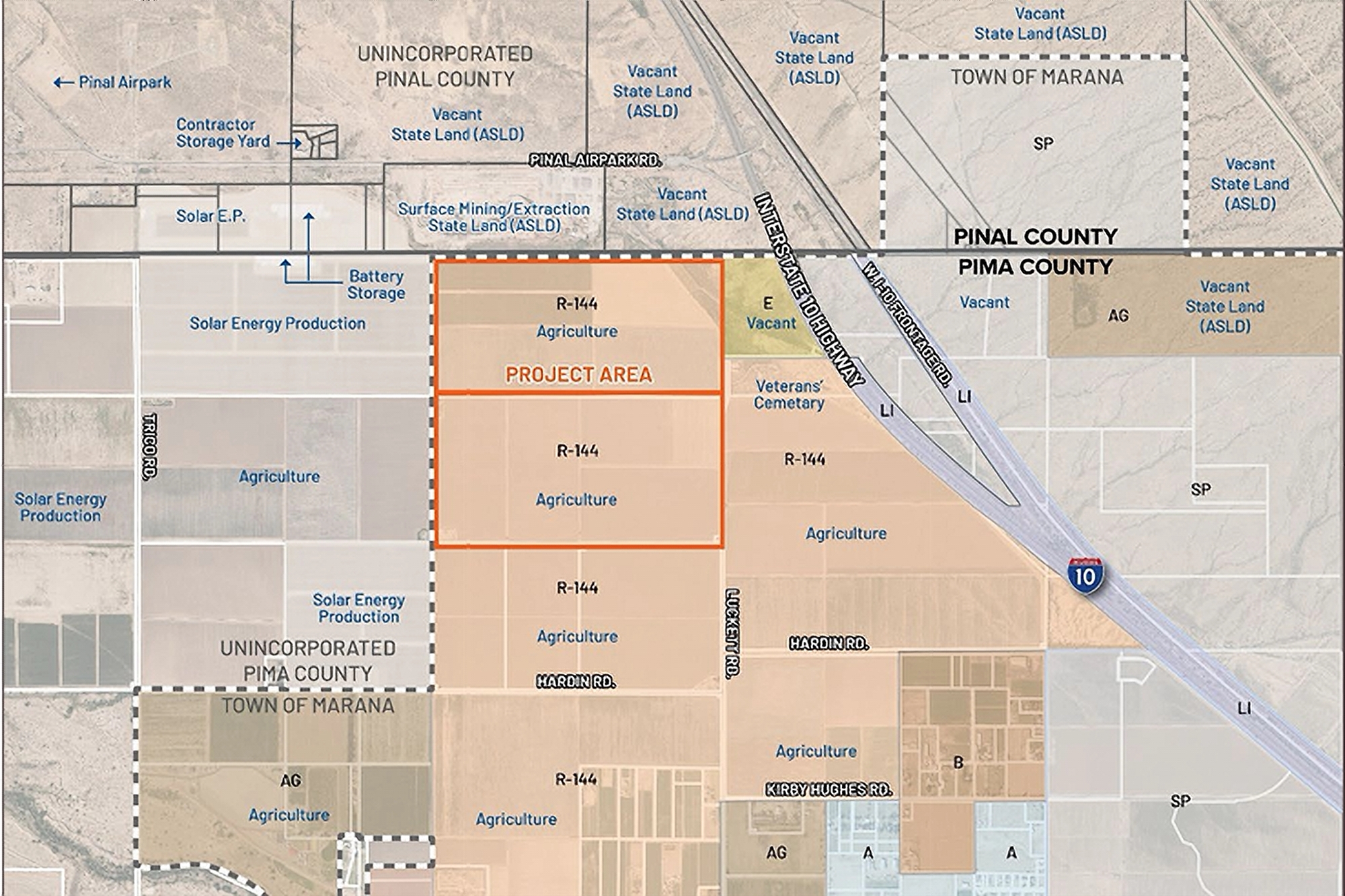
Two major projects dominate the current discussion. One is Project Blue , a hyperscale data center planned east of Tucson in Pima County. The other involves Luckett Road North and South, two data center developments approved for rezoning in the Town of Marana.
Together, these projects have placed new pressure on utility regulation, water planning, and public transparency.
Attorney General Challenges Energy Agreement Approval.
On January 5, 2026, Arizona Attorney General Kris Mayes formally challenged the Arizona Corporation Commission’s December 10, 2025 approval of a private electric service agreement between Tucson Electric Power and Humphrey’s Peak Power LLC, an affiliate of Beale Infrastructure Group, the developer behind Project Blue.
In a filing requesting a rehearing, the Attorney General argued that the Commission unlawfully delegated its constitutional ratemaking authority by approving an agreement that allows the utility and the data center customer to modify electricity rates without clear Commission oversight.
The filing states that Article 15, Section 3 of the Arizona Constitution grants the Commission exclusive authority over rate setting and that this authority cannot be transferred to private parties. According to the Attorney General’s office, the agreement lacks clarity on whether future rate changes would be subject to public review.
The Attorney General also cited concerns that the agreement was approved without a full evidentiary hearing and without access to critical background studies, many of which were not placed in the public docket.
Scale of Power Demand Raises Cost Questions.
According to filings before the Commission, Tucson Electric Power estimates it will supply approximately 286 megawatts of electricity to Project Blue by 2028. That amount is comparable to the electricity needed to cool roughly 57,000 homes.
The rehearing request argues that meeting this demand could require Tucson Electric Power to acquire new generating capacity earlier than planned, potentially shifting costs onto existing ratepayers if those expenses are later rolled into general rates.
Commissioner Rachel Walden raised similar concerns in a dissent, warning that infrastructure investments tied to the project could accelerate costs that would otherwise occur years later.
Tucson Electric Power and Beale Infrastructure have disputed the Attorney General’s claims, stating that the agreement includes protections for ratepayers and that the Commission followed proper procedures.
Marana Advances Separate Data Center Projects.
While Project Blue faces regulatory review, the Town of Marana has moved forward with rezoning approvals for two large data center sites along Luckett Road.
On January 6, 2026, the Marana Town Council unanimously approved rezoning for the Luckett Road North and South Data Centers, totaling approximately 600 acres. One parcel is owned by the Kai Family Trust and the other by the Church of Jesus Christ of Latter-day Saints. Beale Infrastructure is the developer for both projects.
The Luckett Road North Specific Plan outlines a data center development on roughly 300 acres, while the Luckett Road South plan covers approximately 310 acres. Both sites are currently zoned for agricultural use and lie largely within Federal Emergency Management Agency designated floodplains.
Water Supply and Floodplain Conditions.
Planning documents show that both Luckett Road sites are almost entirely within areas subject to 100-year flood events, primarily characterized by shallow sheet flooding of one to two feet. The developments rely on extensive drainage infrastructure and flood mitigation measures detailed in the site plans.
Water supply is another central issue. The Luckett Road South property currently receives between 800 and 1,100 acre-feet per year of irrigation water from the Cortaro-Marana Irrigation District for agricultural use. Future potable water service would come from the Town of Marana’s water system, subject to additional infrastructure and approvals.
Town officials have stated that developers are required to identify water sources, estimate annual water consumption, and demonstrate adequate supply under Marana’s 2024 data center ordinance.
Public Support and Opposition Collide.
Arizona Family reports that the Marana Town Council chambers were packed during the January 6 vote, with strong representation from construction trade unions supporting the project for its job potential. Developers projected up to 4,200 construction jobs, $5 billion in capital investment, and $145 million in town tax revenue over time.
Opponents, including members of the No Desert Data Center Coalition, raised concerns about electricity rates, water availability, air quality from backup generators, and long-term environmental impacts. Some residents have discussed pursuing a citizen referendum to overturn the rezoning vote.
Despite opposition, Marana officials emphasized that the town already has data center regulations in place and argued that the projects represent a significant economic opportunity.
What Comes Next.
The Arizona Corporation Commission has 20 calendar days from the Attorney General’s rehearing request to decide whether to reopen the Project Blue energy agreement for further review.
If granted, a rehearing could include formal discovery, sworn testimony, and cross-examination of witnesses. If denied, legal challenges could still follow.
Meanwhile, Marana’s projects will proceed through detailed site planning, utility coordination, and additional permitting stages.
As Arizona continues to attract large data centers, these cases may shape how the state balances economic development with water security, grid reliability, and public oversight.
Image: Project map for Luckett Road North and South Data Centers.