- The lake finished the 2025 water year at one of its lowest levels on record.
- Nearly 400,000 acre-feet of water were delivered to the lake between 2021 and 2025.
- New data show cities and industry account for a larger share of water use than previously estimated.
- Long-term recovery will require sustained additional inflows over several decades.
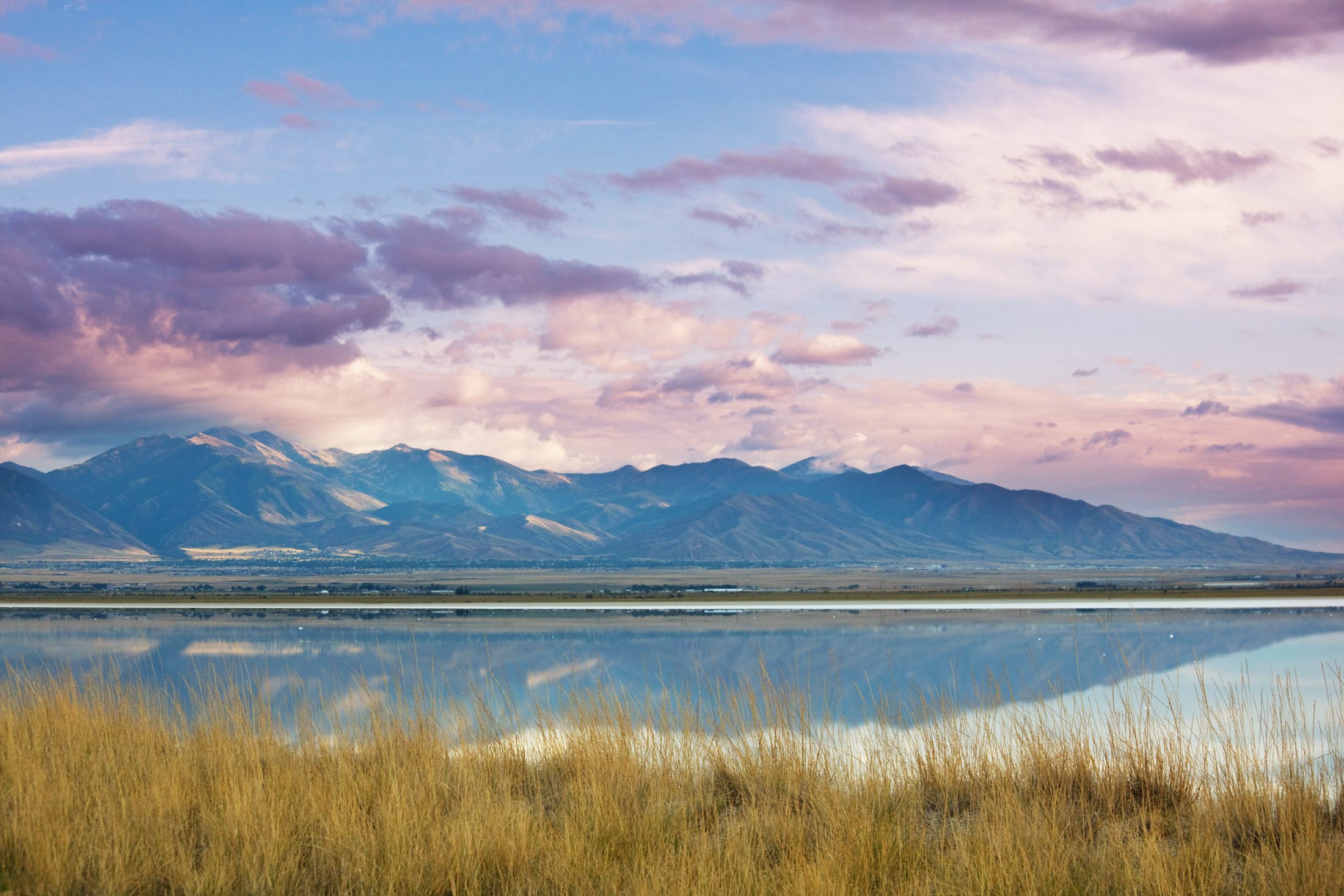
Wednesday, January 14, 2026 — Great Salt Lake closed the 2025 water year on September 30, 2025, at an elevation of 4,191.1 feet in its south arm. That measurement ranks as the third-lowest water-year-end level since records began in 1903 and places the lake firmly in the “serious adverse effects” range, as scientists describe it. The findings were summarized in a data and insights report released January 7, 2026, for Utah’s 2026 General Legislative Session.
While the lake remains well below healthy levels, state officials and researchers report that conditions have stabilized compared to the rapid declines seen earlier in the decade. Stabilization is attributed to a combination of water deliveries, changes in water management, and adaptive salinity control through causeway operations.
Water Delivered, but Not Yet Enough.
Between 2021 and 2025, nearly 400,000 acre-feet of water were dedicated and delivered to the Great Salt Lake. An acre-foot is roughly the amount of water used by one to two households in a year. These deliveries came from a mix of voluntary water leasing, conservation programs, releases from upstream reservoirs, wetland restoration projects, and large-scale removal of invasive phragmites, a reed that consumes large amounts of water.
Despite these efforts, scientists caution that recent gains have not been sufficient to restore lake levels. Updated projections show that an additional sustained inflow of about 800,000 acre-feet per year would be needed to raise the lake to a healthy elevation of about 4,198 feet by 2055. Rising temperatures are expected to increase evaporation, potentially offsetting gains from wetter years.
Dust Risks Grow as Lakebed Is Exposed.
Low lake levels continue to expose large areas of lakebed, increasing the risk of windblown dust. In Farmington Bay alone, more than 120 square miles of lakebed have been exposed, including areas identified as major dust “hotspots.”
To address these risks, Utah has expanded the Utah Dust Observation and Research Network, which monitors dust sources, measures particle composition, and evaluates potential public health impacts. Preliminary studies suggest that temporarily raising water levels in Farmington Bay could submerge more than half of mapped dust hotspots, though such actions would involve tradeoffs, including increased evaporation and reduced water reaching the main body of the lake.
Rethinking Who Uses the Water.
One of the most significant findings in the 2025 data update involves human water use. Revised water budget estimates show that municipal and industrial use accounts for about 26 percent of human-caused water depletion in the basin. This is a larger share than previously estimated and highlights that urban growth and industrial demand play a substantial role alongside agriculture.
Researchers emphasize that restoring the lake will require conservation and participation across all sectors, including cities, farms, and industry, rather than focusing on a single group of water users.
A Long-Term Effort Taking Shape.
Utah has reshaped its approach to managing the Great Salt Lake since the record low levels of 2022. New laws have suspended most new water appropriations in the basin, expanded pathways for dedicating water to the lake, and created tools to better measure and manage water deliveries. The state has also invested in long-term planning through the Great Salt Lake Basin Integrated Plan and a new charter signed by state leaders in September 2025.
Researchers involved in the effort describe the work as urgent but possible. While the lake’s condition remains fragile, they note that Utah now has better data, stronger institutions, and more coordinated strategies than at any time in the past.