
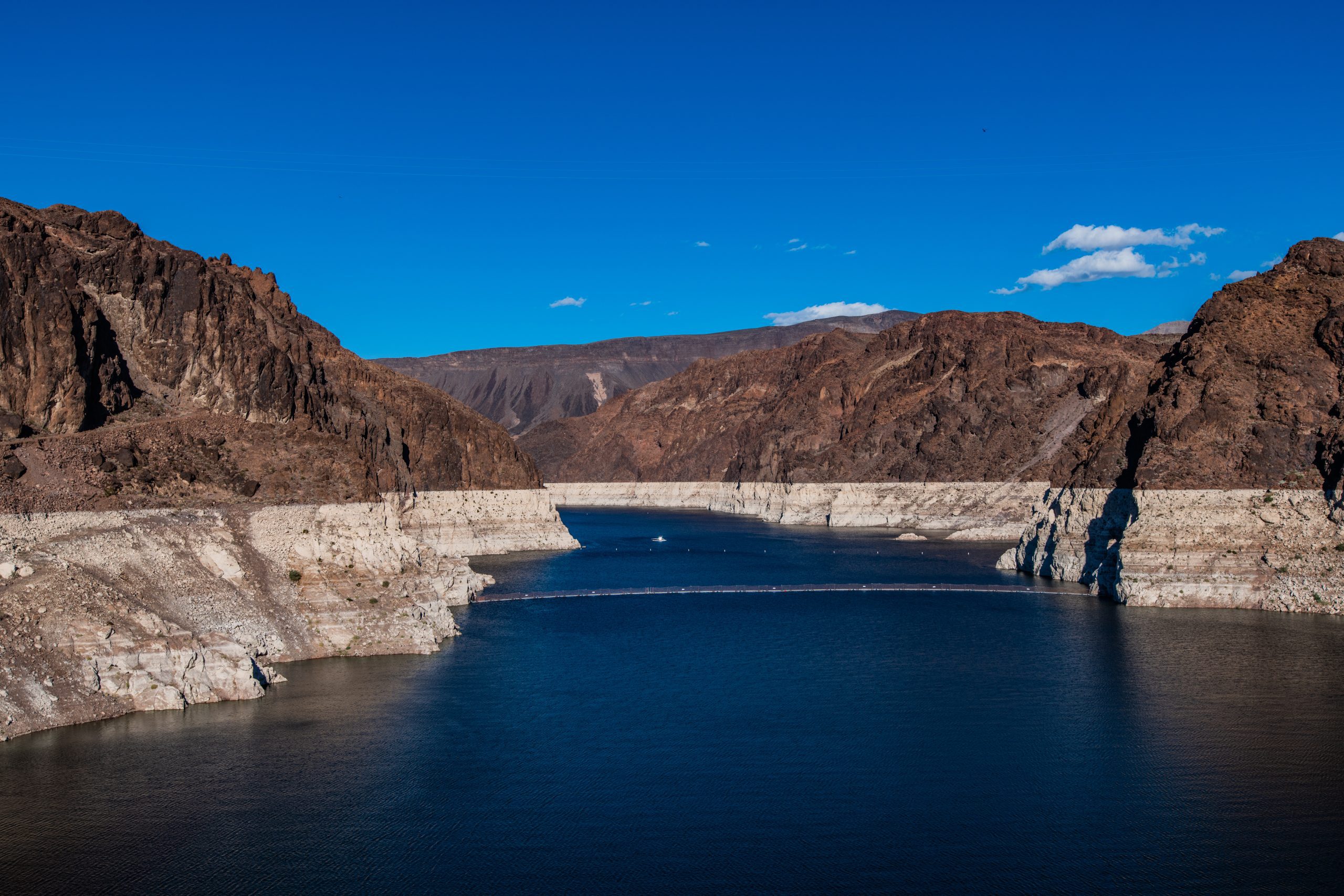
- Lake Powell inflow forecast drops to 52 percent of average.
- Reservoir could reach minimum power pool by December 2026.
- Federal officials are adjusting dam releases to slow the decline.
- Lake Mead remains under a formal shortage condition for 2026.
Tuesday, February 17, 2026 — The Bureau of Reclamation’s February 2026 24-Month Study projects Lake Powell inflow at 52% of average, increasing the risk of reaching minimum power pool and intensifying pressure on Colorado River Basin operations.
Worsening Snow and Runoff Forecast.
On February 13, 2026, the United States Bureau of Reclamation released its February 24-Month Study, offering a sobering update on conditions across the Colorado River Basin. The latest modeling reflects a sharp decline in expected spring runoff into Lake Powell after a dry January and weak snow accumulation.
The most probable forecast now estimates that water year 2026 inflow into Lake Powell will total about 5.02 million acre feet, or 52 percent of the 30-year average. The critical April through July runoff period is projected at just 2.40 million acre feet, which is 38 percent of average conditions.
Since January, projected inflow to Lake Powell has dropped by roughly 1.5 million acre feet. Compared to projections made in November 2025, the decline is now about 3.0 million acre feet. According to the Bureau of Reclamation, that difference is roughly equivalent to 50 feet of elevation at Lake Powell.
Lake Powell Nears Critical Elevations.
The February modeling shows Lake Powell could fall to elevation 3,490 feet by December 2026 under the most probable scenario. That level is known as minimum power pool. Below 3,490 feet, Glen Canyon Dam can no longer generate hydropower and its ability to release water through turbines is reduced.
The study also projects Lake Powell could decline to 3,476 feet by March 2027. That would represent the lowest level since the reservoir first filled.
In response, Reclamation began adjusting monthly releases from Glen Canyon Dam on December 1, 2025. The February study incorporates a plan to hold back approximately 0.598 million acre feet between December 2025 and April 2026 to help protect a target elevation of 3,525 feet. That water is scheduled to be released later in the water year.
The 2026 projected annual release from Lake Powell is 7.48 million acre feet under the Mid-Elevation Release Tier established by the 2007 Interim Guidelines and updated 2024 operating decisions. However, Reclamation notes that actual releases may be reduced if conditions worsen.
Acting Commissioner Scott Cameron stated on February 13, 2026, that the basin’s “poor hydrologic outlook highlights the necessity for collaboration as the Basin States, in collaboration with Reclamation, work on developing the next set of operating guidelines for the Colorado River system.” He added that available operational tools will be used and coordination with partners will be essential to manage reservoirs and protect infrastructure.
Lake Mead Remains in Shortage.
Lake Mead also continues to operate under a formal shortage condition for calendar year 2026. The August 2025 projections placed Lake Mead between 1,050 and 1,075 feet on January 1, 2026, triggering shortage rules under the 2007 Interim Guidelines and the Lower Basin Drought Contingency Plan.
Under the February study, Lake Mead is projected to fluctuate through 2026 but remain well below full capacity. By late summer 2026, projections show elevations around 1,050 to 1,055 feet before modest recovery in early 2027.
Major Lower Basin water users remain significant factors in Mead’s balance. For calendar year 2026, projected diversions include approximately 0.905 million acre feet for the Metropolitan Water District of Southern California, 0.810 million acre feet for the Central Arizona Project, and 0.187 million acre feet for Nevada’s Southern Nevada Water Authority.
These projections already account for additional conservation efforts under the Lower Colorado Basin Conservation Program.
Hydropower Implications.
Hydropower generation is closely tied to reservoir elevation. As water levels decline, turbines lose efficiency and overall generating capacity falls.
The February study notes that Hoover Dam’s generating capacity is adjusted based on effective capacity at projected lake elevations. Unit capacity tests are conducted as elevations change.
If Lake Powell drops below minimum power pool, Glen Canyon Dam would no longer produce hydropower. That outcome would affect power customers across the Southwest and could increase costs for rural electric cooperatives and municipal utilities that rely on federal hydropower.
Upper Basin Reservoir Conditions.
The 24-Month Study also details operations at Upper Basin reservoirs such as Flaming Gorge, Blue Mesa, Navajo, and others.
For example, Blue Mesa Reservoir in Colorado is projected to see water year 2026 inflow of 579 thousand acre feet with total releases of 619 thousand acre feet. Navajo Reservoir in New Mexico is projected at 645 thousand acre feet of regulated inflow in water year 2026.
While these reservoirs are far smaller than Lake Powell, their coordinated operations play an important role in managing system storage and meeting downstream obligations.
What Comes Next.
The February 24-Month Study reflects current snowpack and hydrologic forecasts. Conditions can improve if late winter and early spring storms materialize, but at present the basin is tracking toward another dry year.
Federal and state officials are continuing work on post-2026 operating guidelines, as existing agreements expire at the end of this year. The modeling assumptions in the current study rely on continuation of the 2007 Interim Guidelines, the 2019 Drought Contingency Plans, and related agreements through 2026.
The coming months will be critical. Snowpack accumulation through March and April will largely determine how close the basin comes to the projected worst-case elevations.
Frequently Asked Questions
What does 52 percent of average inflow mean?
It means Lake Powell is expected to receive just over half the water it typically receives during a normal year based on 30-year historical averages.
What is minimum power pool?
Minimum power pool at Lake Powell is elevation 3,490 feet. Below this level, Glen Canyon Dam cannot generate hydropower and its ability to release water through turbines is reduced.
Is Lake Mead under shortage in 2026?
Yes. Lake Mead is operating under a formal shortage condition in calendar year 2026 based on earlier projections under federal guidelines.
Are water deliveries being cut further right now?
The February 2026 study reflects existing shortage rules and release adjustments. Additional actions could occur if hydrologic conditions worsen.
Could late snowstorms improve the outlook?
Yes. Colorado River runoff depends heavily on spring snowpack. Significant late-season storms could raise inflow forecasts, but current projections remain below average.
When will new river operating rules take effect?
Federal and state agencies are working on post-2026 guidelines. New rules are expected to replace the current interim framework beginning in 2027.