- A new federal plan would expand cleanup near Glendale, California.
- More wells and treatment upgrades are proposed to remove pollution faster.
- Over 58 billion gallons of groundwater have already been cleaned since 2000.
- The public can comment on the proposal through April 14, 2026.
Wednesday, March 18, 2026 — This week, the United States Environmental Protection Agency released a proposed plan to strengthen groundwater cleanup in part of the San Fernando Valley near Glendale, California. The area, known as Area 2, is part of a much larger Superfund site that has been under investigation and cleanup for decades.
The contamination dates back to World War II-era manufacturing. Aerospace and industrial facilities used chemicals that later seeped into the ground. Over time, those chemicals spread through underground water, creating a large plume of pollution that could not be traced to a single source.
This groundwater basin is important. It supplies drinking water to millions of people in Los Angeles, Burbank, and Glendale. In an average year, it can provide more than one-fifth of Los Angeles’s water supply.
What the New Plan Would Do.
The proposed plan focuses on speeding up and improving the current cleanup system. Federal officials outlined several key steps.
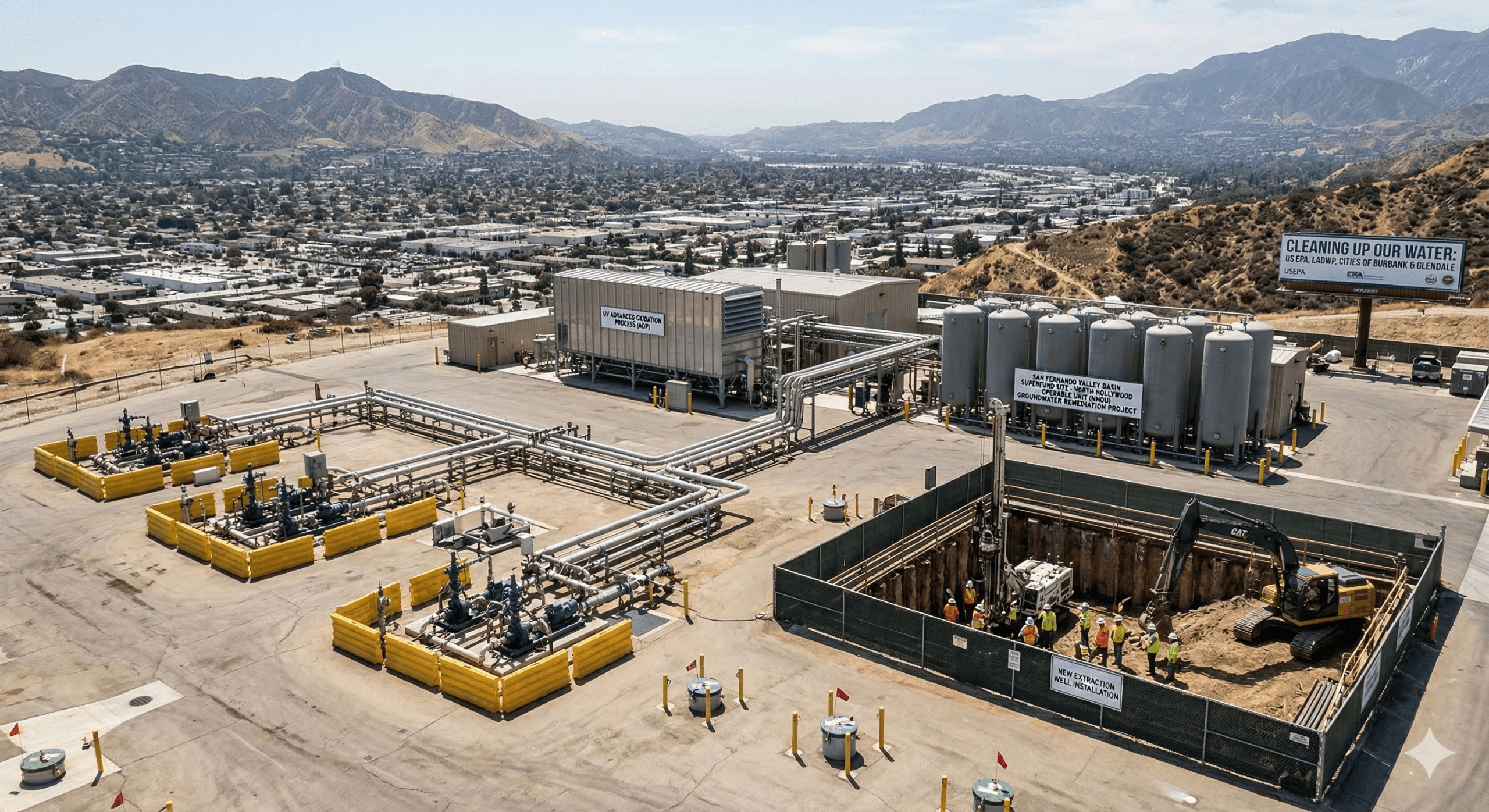
They plan to pump more groundwater out of the aquifer using existing wells. A new well would also be added in the southern part of the site. Treatment systems would be upgraded, including the addition of activated carbon to improve reliability and reduce maintenance. Equipment used to remove chromium would also be modernized.
These changes are designed to contain the pollution plume and reduce contamination levels more quickly.
Michael Montgomery, a regional director with the agency, described the proposal as “an important step forward to protect groundwater and ensure safe drinking water for communities in the San Fernando Valley.”
What Has Been Done So Far.
Cleanup work in this area has been underway for many years. The site was first added to the federal Superfund list in the 1980s after widespread contamination was discovered.
Since 2000, a system of extraction wells and treatment facilities has been operating in Glendale. The system pulls contaminated groundwater, removes harmful chemicals, and sends the treated water to the local supply.
The results have been significant. More than 58 billion gallons of groundwater have been treated and made safe for use. The system has also removed tens of thousands of pounds of harmful chemicals, including volatile organic compounds and chromium.
Today, all drinking water provided to the public in the area meets state and federal safety standards.
The Chemicals Involved.
The main pollutants in the groundwater include industrial solvents and metals. These include trichloroethylene and tetrachloroethylene, which were commonly used for cleaning and degreasing metal parts.
Chromium, including a more toxic form known as hexavalent chromium, is also a concern. These substances can pose risks to human health if they are not properly treated.
In the past, contamination forced the shutdown of local drinking water wells, reducing the availability of reliable local water supplies.
Ongoing Monitoring and Safety.
Federal and state agencies continue to monitor the site closely. Groundwater is tested each year to track changes in contamination and ensure the cleanup system is working as expected.
Studies have also examined a process called vapor intrusion, in which chemicals in groundwater can turn into gas and enter buildings. A large study conducted between 2015 and 2024 found no unacceptable health risks associated with this process.
In 2024, elevated chemical levels were detected near a former industrial property. Federal crews responded with emergency measures, including sealing building floors and adding new extraction wells to reduce vapor movement. Monitoring is ongoing.
Why This Matters for Water Supply.
Cleaning up this groundwater is not just about safety. It also affects the long-term water supply.
Local groundwater is often cheaper and more reliable than imported water from distant rivers and reservoirs. If more clean groundwater becomes available, water agencies can reduce costs and improve supply stability.
This is especially important in California and across the American West, where drought and water shortages continue to strain resources.
Public Input and Next Steps.
The proposed cleanup plan is now open for public comment through April 14, 2026. Officials will review feedback before making a final decision.
An in-person public meeting is scheduled for March 25, 2026, in Glendale. A virtual meeting will follow on April 1, 2026.
Once a final plan is selected, the next phase of cleanup will move forward, continuing a decades-long effort to restore one of Southern California’s most important groundwater resources.
Image is AI-generated.