
- Experts predict Arizona’s drought will continue into 2025.
- La Niña conditions may lead to a drier winter season.
- Record-breaking heat worsens soil moisture and drought impact.
- Officials recommend maintaining the state’s drought declaration.
According to recent findings by state experts , Arizona’s long-standing battle with drought is far from over. Despite a few promising weather events in previous years, the state is gearing up for more dry times ahead. Officials are predicting that the drought will persist for at least the next six months and extend into 2025.
Assessing the Drought: Interagency Coordinating Group’s Findings.
On November 4, 2024, the Arizona Drought Interagency Coordinating Group (ICG) convened to evaluate the state’s drought status. The ICG, which advises the governor on drought issues, includes representatives from state, federal, tribal, and non-governmental organizations. Co-chaired by Tom Buschatzke, Director of the Arizona Department of Water Resources, and Gabe Lavine of the Arizona Division of Emergency Management, the group has been meeting biannually since 2006.
Their assessment was clear: Arizona’s drought conditions are not improving. “The trends are certainly going in a hot and dry direction,” said Buschatzke. “We can’t expect much of a turnaround from where this drought is heading.” Consequently, the panel recommended that the state’s ongoing drought declaration remain in place.
A Hot and Dry Water Year 2024.
Arizona State Climatologist Erinanne Saffell presented a sobering report on Water Year 2024, which ended with concerning statistics. It was the 32nd driest water year on record, and since 1994, two-thirds of Arizona’s water years have experienced below-average precipitation. “We ended really hot and really dry,” Saffell noted.
While there were moments of relief—December brought several storms with significant precipitation, and February was the 24th wettest on record—the respite was temporary. Summer arrived with intense heat and limited rainfall. June was unusually wet, but the monsoon season ended as the 17th driest on record. The period from June through September was the hottest ever recorded in the state, culminating in the hottest September on record.
By the season’s end, moderate to severe short-term drought had returned to 40% of Arizona. The state also endured the longest record-breaking heatwave in U.S. history, exacerbating drought conditions and stressing water resources.
La Niña’s Potential Impact on Winter Weather.
Looking ahead to the winter of 2024-2025, Mark O’Malley of the National Weather Service provided insights that offer little comfort. Cooler-than-normal sea surface temperatures along the equatorial Pacific are signaling an emerging La Niña pattern. “The big player this term may be an emerging La Niña,” O’Malley explained. There’s a 70% chance of a weak and brief La Niña developing, but its exact impact remains uncertain.
Historically, La Niña conditions tend to bring drier-than-normal winters to Arizona. “Many of the driest winters on record occurred during La Niña conditions,” O’Malley noted. As for temperatures, residents should expect average to above-average warmth, contrasting sharply with the cold and wet winter experienced two years ago.
Soil Moisture and Water Resources at Risk.
The prolonged heat and limited rainfall have severely affected soil moisture levels across the region. “Even with an exceptional amount of rainfall, the excessive heat is drying out our topsoil of moisture,” O’Malley said. This dryness could negatively impact spring runoff from the Colorado River system, a crucial water source for the state.
While there’s some hope that the Upper Basin of the Colorado River might see wetter-than-normal conditions this winter, the overall outlook remains cautious. Depleted soil moisture means that any precipitation may first go toward replenishing the dry ground before contributing to runoff, potentially reducing the water available for reservoirs and downstream users.
Maintaining the Drought Declaration.
Given the grim projections, the ICG concluded that the state’s drought declaration should remain in effect. The recommendation underscores the seriousness of the situation and the need for continued vigilance in water conservation and management efforts.
“The trends are certainly going in a hot and dry direction,” reiterated Buschatzke. “We can’t expect much of a turnaround from where this drought is heading.” The focus now shifts to mitigation strategies and prudent water management to navigate the persistent drought conditions.
As Arizona faces the ongoing challenges of a hotter, drier climate, both officials and residents must adapt to the new normal. Conservation efforts, efficient water use, and proactive planning are more critical than ever. The state’s experience is a stark reminder of the broader impacts of climate variability and the importance of resilience in the face of environmental change.
~~~
Image:
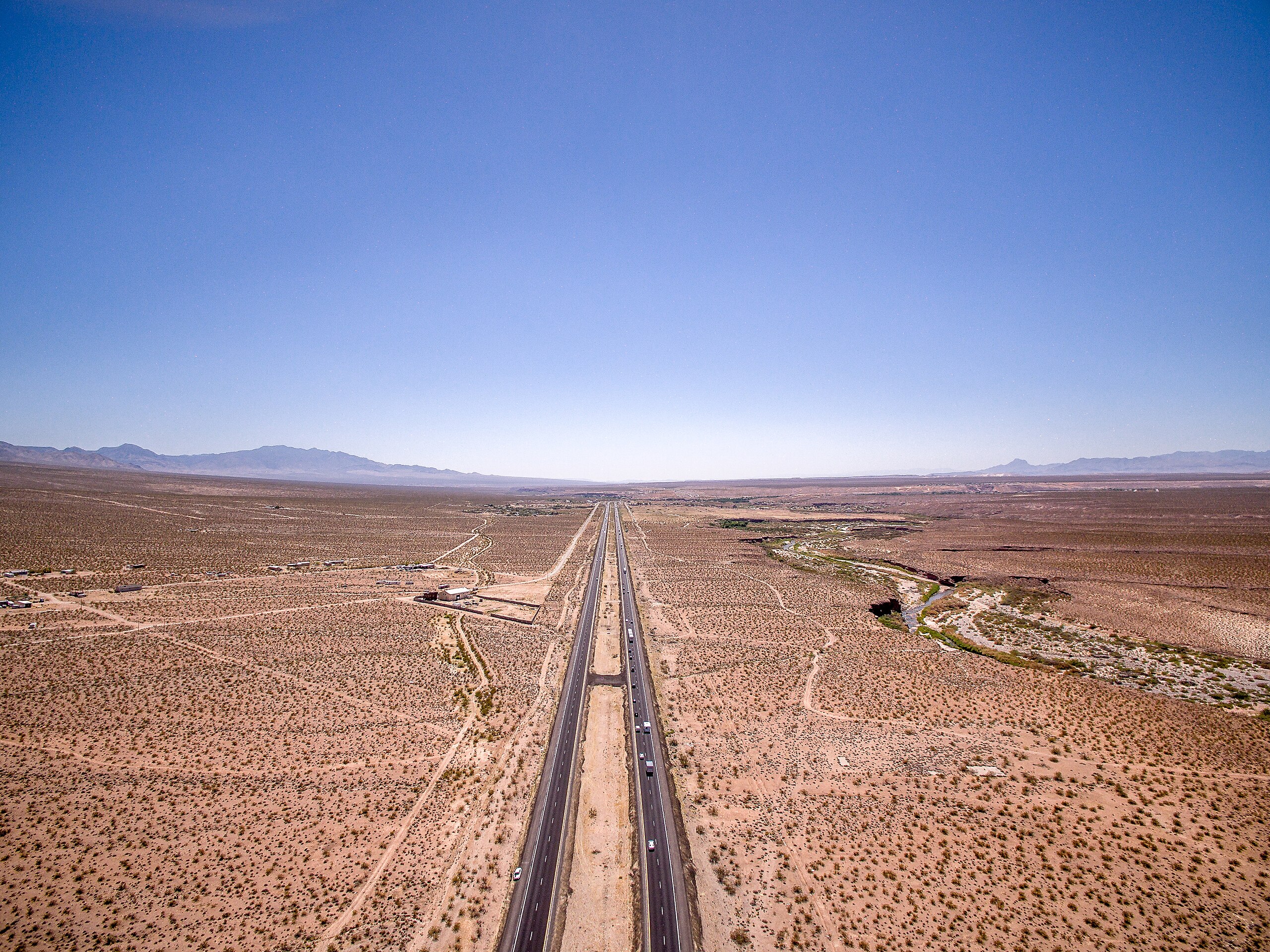
Arizona Heat.jpg "Opens in a new tab.") , by Matt Howard, January 2017. Highway roads divide the rocky desert terrain in Arizona. This image is from Unsplash and was published prior to 5 June 2017 under the Creative Commons CC0 1.0 Universal Public Domain Dedication,
, by Matt Howard, January 2017. Highway roads divide the rocky desert terrain in Arizona. This image is from Unsplash and was published prior to 5 June 2017 under the Creative Commons CC0 1.0 Universal Public Domain Dedication,