- Great Salt Lake has fallen to 30.1% of its natural water volume.
- More than 57% of the lakebed is now exposed.
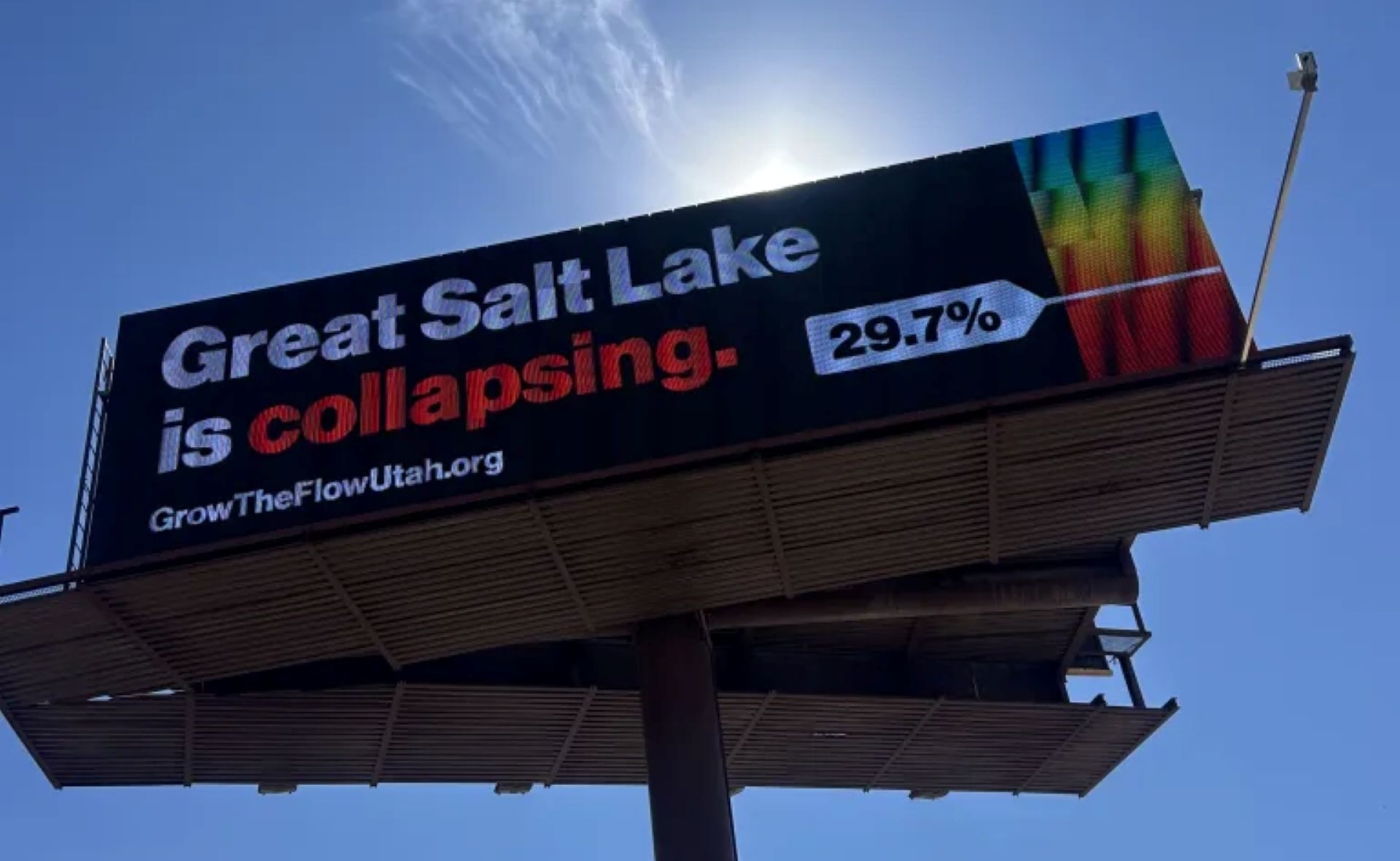
- A billboard campaign is returning to Utah highways to track the lake’s condition.
- Scientists estimate that another 1 million acre-feet of water per year is needed to help restore the lake.
- Restoration costs could reach $2 billion to $10 billion.
Wednesday, October 14, 2026 — Drivers traveling along Utah’s busy highways are getting a reminder of the Great Salt Lake’s declining water levels.
A billboard displaying the lake’s condition has returned to roads in Salt Lake and Davis counties. The display shows how much water remains in the lake compared with its natural volume.
The campaign, organized by the nonprofit Grow the Flow , first appeared in early 2025. At that time, the lake held 37.5% of its natural water volume.
By October 6, 2026, that figure had dropped to just 29.7%. As of this writing, it sits at 30.1%.
The billboard campaign is designed to make the lake’s condition visible to thousands of motorists who might otherwise have little reason to think about its changing water levels.
More Than Half the Lakebed Is Exposed.
The numbers behind the billboard tell a troubling story.
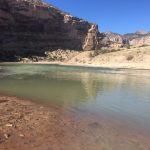
According to Grow the Flow, more than 57% of the Great Salt Lake’s lakebed is now exposed. That represents approximately 1,227.5 square miles of land that would otherwise be underwater.
The organization measures the lake’s remaining water against its natural volume at an elevation of 4,207 feet.
But the remaining water is only part of the concern.
Great Salt Lake is a saltwater lake, and its wildlife depends on water that falls within a suitable range of saltiness, known as salinity.
As water levels fall, salt becomes more concentrated. That can change the conditions needed to support the lake’s ecosystem.
Grow the Flow reports that only 26% of the lake’s natural area currently has salinity levels considered healthy for its ecology.
The shrinking lake also exposes more dry lakebed, creating concerns about dust that can be carried by the wind into nearby communities.
Why the Lake Matters Beyond Its Shoreline.
The effects of Great Salt Lake’s decline extend well beyond the water’s edge.
According to Grow the Flow, dust from the exposed lakebed threatens approximately 2.5 million Utah residents living downwind.
The water loss also affects important wildlife habitat.
Another concern involves the lake’s influence on snowfall. Great Salt Lake contributes to a weather process known as lake-effect snow, which can increase snowfall in surrounding mountain areas.
As the lake shrinks, declining lake-effect snow could affect Utah’s ski industry.
The nonprofit also warns that continued decline could threaten property values, public health and the state’s economy. Potential economic losses could reach billions of dollars.
A Billboard That Changes With the Lake.
The new billboard campaign doesn’t simply display a fixed warning.
Its water-level tracker changes as conditions at Great Salt Lake change.
The displays will rotate among billboard locations along Interstate 15 and Interstate 215, stretching from Lehi to North Salt Lake.
Grow the Flow launched the campaign to give residents an easy way to follow the lake’s condition without searching through scientific reports or government data.
“This lake tracker puts the reality of Great Salt Lake’s decline in front of thousands of Utahns every day,” said Samantha Hawkins, communications director of Grow the Flow.
“That kind of visibility helps build the public support needed to advance practical solutions and make Great Salt Lake a priority for our state leaders.”
Utah Has Set a Restoration Goal.
In September 2025, Utah Gov. Spencer Cox committed to restoring Great Salt Lake to a healthy range by the 2034 Olympic Games.
Since that announcement, Utah has dedicated additional water to the lake and developed new tools to secure more water flows.
However, Grow the Flow says those measures remain insufficient to reverse the lake’s long-term decline.
The Great Salt Lake Strike Team estimates that the lake needs an additional 1 million acre-feet of water each year to have a 70% chance of reaching a healthy level by 2054.
An acre-foot is the amount of water needed to cover one acre of land to a depth of one foot. It equals approximately 326,000 gallons.
That means the additional annual water requirement identified by the Strike Team is roughly 326 billion gallons.
Even with that additional water, the estimated timeline to reach a healthy lake level extends to 2054, about 20 years beyond the governor’s stated goal.
The financial challenge is also substantial.
According to economists cited by Grow the Flow, restoring Great Salt Lake could cost between $2 billion and $10 billion.
The Next Several Months Could Be Important.
Grow the Flow Executive Director Dr. Ben Abbott, an ecologist at Brigham Young University, said Utah has already spent years preparing legislation and building public awareness about the lake’s condition.
He believes the coming months will be especially important.
“Now is the time to harness the years of legislative preparation and intense public concern about the lake,” Abbott said.
“The next several months will be critical in determining its future. We cannot rely on a good snow year to reverse the lake’s long-term decline—Great Salt Lake will only recover if we make it a political and public priority.”
His comments reflect the organization’s position that a single winter with heavy snowfall cannot solve the lake’s long-term water shortage.
Meanwhile, the returning billboards will provide a changing picture of the lake’s condition as drivers travel through northern Utah.
The latest number is considerably lower than the 37.5% displayed when the campaign began in early 2025.
For Grow the Flow, putting that number along some of Utah’s busiest roads is one way to keep the lake’s condition in public view.