- The Ninth Circuit ruled that federal sovereign immunity does not block a Nevada ranchers’ water-rights lawsuit.
- The dispute involves water flowing from Baker and Lehman Creeks through Great Basin National Park.
- Ranchers say National Park Service activities have reduced water reaching downstream properties.
- The case centers on a Nevada water decree entered in 1934 and a federal law passed in 1952.
- The appeals court did not decide whether the ranchers’ underlying claims are correct.
- One judge strongly dissented, arguing the federal government remains protected by sovereign immunity.
Tuesday, October 6, 2026 — A nearly century-old Nevada water decree can be enforced in a lawsuit against the federal government, a divided federal appeals court ruled September 30, 2026.
The decision involves ranchers downstream from Great Basin National Park, two mountain creeks, water rights dating to the 1800s, and a complicated question about when the federal government can be sued over Western water.
At the center of the dispute is Baker Ranches, Inc., along with several other water-right holders. They contend that activities within Great Basin National Park have reduced the amount of water flowing downstream through Baker and Lehman Creeks.
The federal government argued that sovereign immunity protected it from the lawsuit.
In a 2-1 decision, the U.S. Court of Appeals for the Ninth Circuit disagreed.
The court ruled that a federal law known as the McCarran Amendment allows the lawsuit to proceed.
Importantly, the appeals court did not decide whether Baker Ranches is correct about the National Park Service’s activities or whether the ranchers are entitled to the relief they seek.
The ruling addresses whether the federal government can be sued in this particular water-rights dispute.
A Water Decree Dating to 1934.
The dispute reaches back much further than Great Basin National Park itself.
Nevada began a formal process in 1925 to determine water rights on Baker and Lehman Creeks. Nevada conducted the proceeding under its 1913 water law, which established a system for determining water rights throughout an entire stream system.
After years of proceedings, a Nevada state court entered what became known as the Baker-Lehman Decree on October 16, 1934.
The decree established water rights on the two creeks.
Baker Ranches holds rights under that decree with priority dates ranging from 1872 to 1904. David John Eldridge and Ruth Eldridge hold rights dating to 1872, while Zane Jordan and Judee Schaley hold rights dating to 1876.
The decree also included rules intended to keep water moving through the stream system.
It prohibited water users from improperly diverting, using, or obstructing water and required users to keep stream channels reasonably clear of weeds, vegetation, and silt. The decree also required maintenance intended to reduce water loss as it moved downstream.
The United States did not participate in the original proceeding.
That fact became a central legal question in the modern lawsuit.
The Federal Government Later Claimed Water Rights.
The landscape changed substantially after the decree.
The federal government had reserved about 556,000 acres for the Nevada National Forest in 1909. Congress established Lehman Caves National Monument in 1922, and created Great Basin National Park in 1986.
The United States now claims federal reserved water rights associated with those federal lands.
Federal reserved water rights arise when the federal government reserves land for a particular federal purpose and, under federal law, is considered to have reserved enough water to accomplish that purpose.
The 1934 Baker-Lehman Decree did not determine those particular federal reserved rights.
The federal government also owns some water rights that were included in the decree and later acquired from private owners.
Ranchers Say Park Activities Reduce Their Water.
Baker and Lehman Creeks now originate in and flow through Great Basin National Park before reaching downstream water users.
The plaintiffs allege that activities inside the park have reduced that downstream flow.
According to the court opinion, they point to activities that include diverting water for campgrounds and dust suppression, allowing fallen logs to block creek channels, and planting vegetation.
Those are allegations. The Ninth Circuit did not determine whether the allegations are true.
The ranchers filed suit in Nevada state court in 2021 seeking to enforce their rights under the 1934 decree.
Among other things, they sought to stop certain water diversions and require actions intended to keep water moving through the creek channels.
The United States moved the case to federal court and argued that sovereign immunity prevented the lawsuit.
What Is Sovereign Immunity?
Sovereign immunity generally means the United States cannot be sued unless Congress has agreed to allow that type of lawsuit.
That rule created a major problem in Western water law during the first half of the 20th century.
Western states developed systems designed to determine all the water rights on a stream together. But the federal government owned or claimed significant water rights and could invoke sovereign immunity instead of participating.
Congress responded in 1952 by passing what is commonly called the McCarran Amendment.
The law allows the United States to join certain cases involving the determination or administration of water rights.
In simpler terms, Congress created circumstances in which the federal government must enter the same legal arena as other water users when it determines or administers rights throughout a water system.
But the law does not open the federal government to every private water dispute.
That limitation became crucial in the Baker Ranches case.
Was the 1934 Proceeding Comprehensive?
The Ninth Circuit said the McCarran Amendment applies to the administration of water rights that were established through a “comprehensive” adjudication.
The federal government argued that the 1934 proceeding did not qualify because the United States was not a party and its federal reserved water rights were never decided.
The majority rejected that argument.
The court focused on how Nevada conducted the original proceeding.
The Nevada State Engineer began the process under the state’s system for determining all water rights on a stream. The state published notices, collected claims, allowed objections, and eventually sent the matter to a state court.
The United States received notice but did not participate.
The Ninth Circuit concluded that this did not prevent the proceeding from being comprehensive.
The majority said the Baker-Lehman process “was meant to serve as a final determination of all relative water rights upon the Baker-Lehman Creeks.”
The court also emphasized that Nevada’s water law was designed to replace scattered lawsuits between individual water users with one organized process for resolving rights across a stream system.
A Law Passed in 1952 Applied to an Older Decree.
There was another unusual wrinkle.
The Baker-Lehman Decree was entered in 1934.
Congress did not enact the McCarran Amendment until 1952.
The federal government argued, in part, that applying the later law to the earlier proceeding could improperly bind the United States to a decree entered when federal sovereign immunity still existed.
The majority rejected that position.
It relied on previous court decisions holding that the McCarran Amendment can apply to the administration of water rights acquired before the law was enacted.
The majority also noted a potentially significant consequence of accepting the government’s argument.
According to the opinion, 67 Nevada water decrees were entered before Congress passed the McCarran Amendment.
The court said the government’s interpretation could undermine the finality of those older decrees by allowing previously unadjudicated federal claims to be raised decades later.
Is This Really About Administering Water Rights?
The federal government made another argument.
It said the ranchers were seeking more than simple administration of the 1934 decree.
Some of the requested relief could affect how the National Park Service manages federal land.
For example, the plaintiffs have sought actions involving rocks and debris, caves, sinks and seeps, creek channels and vegetation along the waterways.
The majority nevertheless concluded that those requests were connected to enforcing the water rights established in the decree.
The 1934 decree itself required water users to keep stream channels reasonably clear of vegetation and silt and to maintain them in ways that reduced water loss.
The court therefore concluded that the ranchers were seeking “administration” of existing water rights within the meaning of the McCarran Amendment.
A Strong Dissent.
Judge Johnnie B. Rawlinson strongly disagreed with the majority.
“I respectfully but emphatically dissent,” she wrote.
Rawlinson argued that the McCarran Amendment should not apply because the United States was not a party to the proceedings that produced the 1934 decree.
She emphasized the general rule that waivers of federal sovereign immunity must be interpreted narrowly.
In her view, a comprehensive water adjudication must resolve all claimants’ rights to a stream.
Because the Baker-Lehman proceeding did not adjudicate federal water rights, she concluded it did not meet that standard.
The dissent also raised concerns about the activities Baker Ranches wants to conduct inside Great Basin National Park.
According to Rawlinson, Baker Ranches has entered federal park land and performed work that included moving rocks and debris and cleaning and straightening creek channels, sometimes using heavy equipment.
She argued that Congress did not intend the McCarran Amendment to allow private landowners to enter national park property and undertake extensive work affecting federal lands and vegetation.
The majority responded to that concern by stressing the limited nature of its ruling.
It said it was not expressing an opinion on whether Baker Ranches should ultimately prevail on its claims.
What the Court Actually Decided.
The Ninth Circuit’s ruling is narrower than a decision awarding water to one side or the other.
The majority held that the original Baker-Lehman proceeding was comprehensive and that the ranchers are seeking administration of water rights established by that decree.
As a result, the court concluded that the McCarran Amendment waives the federal government’s sovereign immunity in this lawsuit.
The court reversed the lower court’s dismissal and sent the case back for further proceedings.
That means the underlying dispute remains unresolved.
Questions about the National Park Service’s activities, the ranchers’ requested remedies, and other issues may still have to be addressed as the litigation continues.
For now, the Ninth Circuit has decided one important threshold question: sovereign immunity does not prevent the ranchers from pursuing this case against the federal government.
Court case: Baker Ranches, Inc. v. Burgum, No. 24-5713, U.S. Court of Appeals for the Ninth Circuit, filed September 30, 2026. Appeal from the U.S. District Court for the District of Nevada, No. 3:21-cv-00150-GMN-CSD. Opinion by Judge John B. Owens; Judge Johnnie B. Rawlinson dissenting.
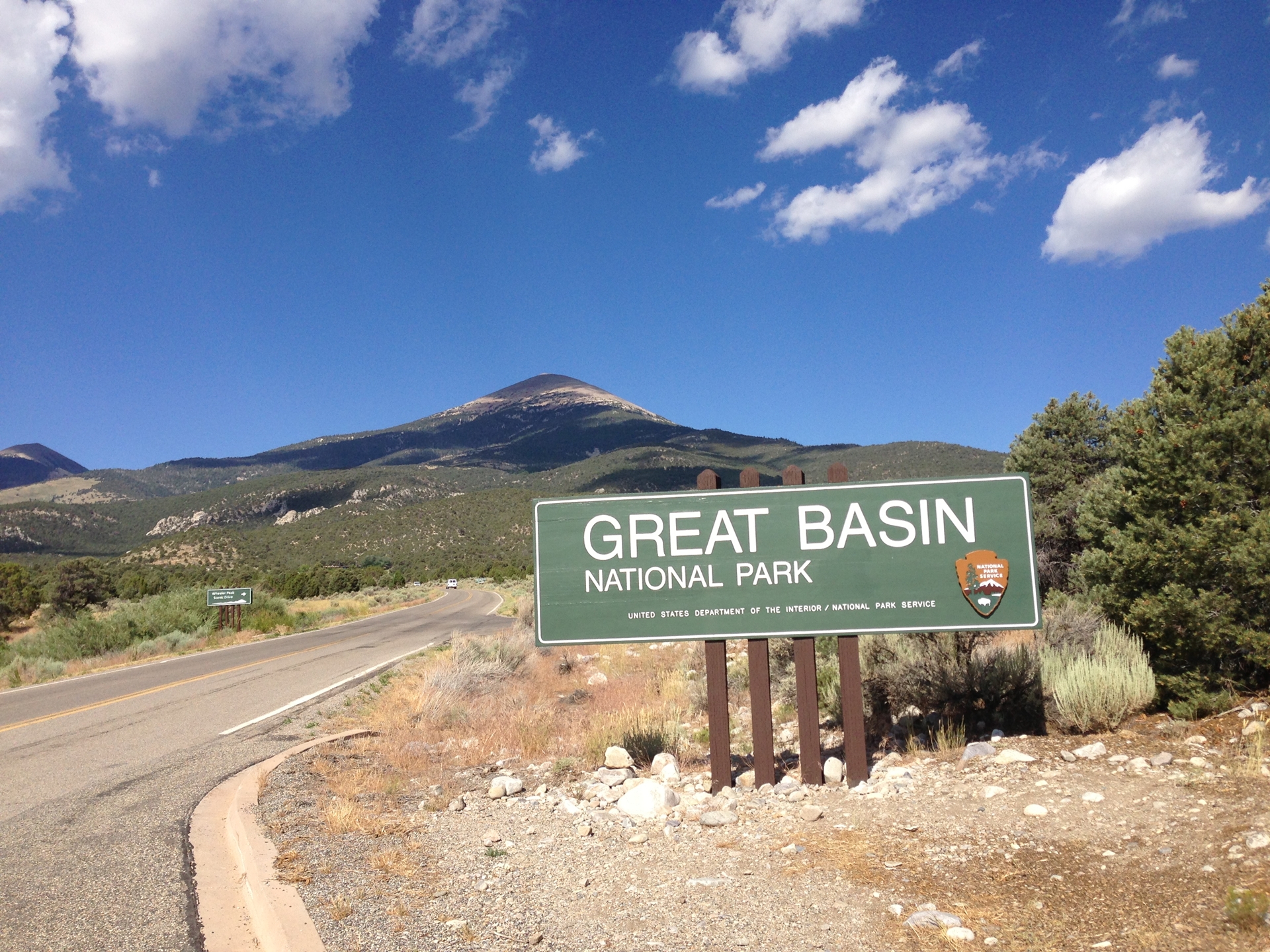
Pictured: Entrance to Great Basin National Park near Lehman Caves Visitor Center on Nevada State Route 488 . Famartin, July 2013. Licensed under the Creative Commons Attribution-Share Alike 3.0 Unported license.