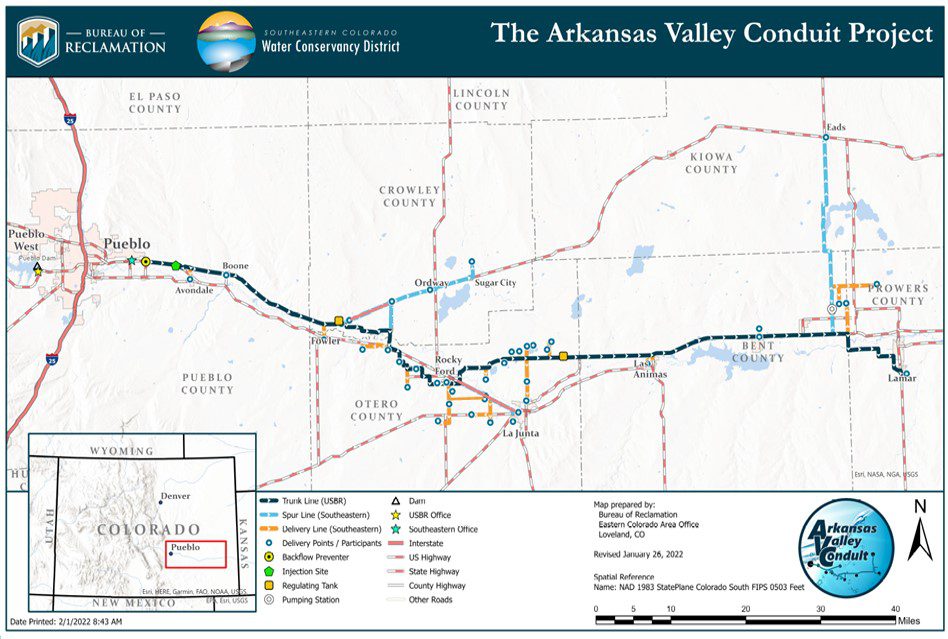
- The Arkansas Valley Conduit is a 130-mile pipeline serving 39 communities in southeastern Colorado.
- The veto blocks changes that would have extended repayment terms and reduced interest costs.
- Federal officials cited taxpayer cost concerns, while Colorado lawmakers emphasized drinking water needs.
- Construction began in 2023 after decades of delays tied to financing challenges.
Thursday, January 1, 2026 — On December 29, 2025, President Donald J. Trump vetoed H.R. 131, known as the Finish the Arkansas Valley Conduit Act. The decision returned national attention to the Arkansas Valley Conduit, a water infrastructure project first authorized more than 60 years ago and still under construction in southeastern Colorado.
According to a White House statement dated December 30, 2025 , Trump said the bill would have extended repayment terms for local communities and reduced interest rates, shifting more financial responsibility to federal taxpayers. The Administration argued that the project was originally intended to be repaid by local users and that further federal concessions would repeat what it described as “failed policies of the past.”
What the Arkansas Valley Conduit Is Designed to Do.
The Arkansas Valley Conduit is a planned 130-mile pipeline with multiple spurs that will deliver water from Pueblo Reservoir to 39 towns and rural water systems east of Pueblo. When complete, it is expected to serve roughly 50,000 people.
Many of these communities currently rely on groundwater that contains naturally occurring salinity or radionuclides, which can create regulatory compliance challenges for drinking water systems. Project sponsors have described the conduit as a way to supplement existing supplies with a more reliable and treatable surface water source.
Why the Project Was Delayed for Decades.
Congress authorized the conduit in 1962 as part of the Fryingpan–Arkansas Project. Under the original plan, the federal government would front construction costs, but local participants were required to repay 100 percent of those costs with interest over 50 years. That repayment structure proved unworkable, and the project remained largely unbuilt for decades.
In 2009, Congress amended the cost-sharing arrangement, reducing the local repayment obligation to 35 percent and allowing certain revenues from the broader Fryingpan–Arkansas Project to count toward repayment. Even with those changes, construction did not begin until after Colorado approved $90 million in loans and $10 million in grants in 2020.
Construction Progress and Current Costs.
Federal and local officials marked a ceremonial groundbreaking at Pueblo Dam in 2020, with full construction activities beginning in 2023. The Bureau of Reclamation issued a final environmental impact statement in 2013 and a record of decision in 2014, establishing the route and scope of work.
More than $249 million has already been spent on the project, and total costs are currently estimated at approximately $1.3 billion. Federal funding to date totals about $221 million, according to the Southeastern Colorado Water Conservancy District.
What the Vetoed Bill Would Have Changed.
H.R. 131 would have extended the repayment period for the already reduced local cost share by an additional 25 years, creating a 75-year repayment timeline. It also would have cut the applicable interest rate in half. Supporters argued these changes would help small rural systems manage long-term costs without increasing near-term federal spending.
The nonpartisan Congressional Budget Office estimated that the bill would have cost the federal government less than $500,000 over time. The Administration disagreed with that framing, emphasizing the cumulative burden of federal participation in what it characterized as a local water project.
Reaction From Colorado Lawmakers.
In a December 31, 2025 statement, U.S. Senators John Hickenlooper and Michael Bennet criticized the veto, calling it a denial of clean drinking water to rural communities that had waited decades for the project’s completion. They described the legislation as bipartisan and said it had passed both chambers of Congress unanimously.
Members of Colorado’s House delegation who supported the bill also expressed disappointment, arguing that delaying or complicating financing could strand investments already made and slow progress on essential water infrastructure.
Sara Wilson of Colorado Newsline reports,
“President Trump decided to veto a completely non-controversial, bipartisan bill that passed both the House and Senate unanimously,” [Lauren] Boebert said. “If this administration wants to make its legacy blocking projects that deliver water to rural Americans; that’s on them.”
In another statement on social media
, Bennet categorized the veto as “payback because Colorado won’t bend to his corruption.” Trump earlier this year threatened “harsh measures” if the state didn’t move to release Peters, who is serving a nine-year prison sentence. Boebert also recently voted to release the Epstein files
Broader Implications for Rural Water Projects.
The veto highlights an ongoing national debate over how rural water infrastructure should be financed, particularly when projects involve long timelines, high costs, and communities with limited ratepayer bases. Large-scale water pipelines often require some level of federal participation, but disagreements remain over where financial responsibility should ultimately rest.
For southeastern Colorado communities, the decision does not halt construction but leaves existing financing arrangements in place. Project sponsors have indicated they will continue working within the current framework while exploring future legislative options.
Image: Arkansas Valley Conduit Project map from the Southeastern Colorado Water Conservancy District project website.
Frequently Asked Questions
What is the Arkansas Valley Conduit?
It is a planned 130-mile water pipeline designed to deliver water from Pueblo Reservoir to 39 communities in southeastern Colorado that face drinking water quality challenges.
Why was the project delayed for so long?
The original repayment requirement required local communities to repay 100 percent of construction costs with interest, which proved economically unworkable for decades.
What did H.R. 131 propose to change?
The bill would have extended the repayment period and reduced interest rates on the local share of project costs.
Did the veto stop construction of the conduit?
No. Construction began in 2023 and continues under existing funding and repayment arrangements.
Why did the Administration oppose the bill?
The White House stated that the bill would shift more costs to federal taxpayers and extend financial support for a project originally intended to be locally repaid.
Who benefits from the completed project?
Approximately 50,000 residents in rural southeastern Colorado communities are expected to receive improved access to reliable drinking water once the conduit is fully operational.