- Reservoir storage reached 91 percent of capacity as of January 14, 2026.
- Total storage stands at 128 percent of the 12 year average.
- Snowpack conditions remain critical for summer water reliability.
- Updated water management plans will guide supply planning through 2046.
Thursday, January 22, 2025 — Recent January storms significantly improved water storage conditions for the Nevada Irrigation District , which serves communities in and around Grass Valley and Nevada City in Northern California. As of January 14, 2026, the District reported combined reservoir storage of 246,953 acre feet. That amount represents 91 percent of total capacity and 128 percent of the District’s 12 year average for this time of year.
The measurement includes water stored in Jackson Meadows, Jackson, French, Faucherie, Sawmill, Bowman, Canyon Creek, Scotts Flat, and Rollins reservoirs. District officials described the storage levels as encouraging following a warm and dry start to winter.
Why Snowpack Still Matters.
While reservoir levels are high, District managers emphasized that continued cold temperatures are essential to long-term water reliability. Snowpack acts as a natural storage system, holding winter precipitation and releasing it gradually as temperatures warm. That slow release helps refill rivers and reservoirs and supports farms, businesses, and households during the dry summer months.
High elevation conditions remain closely watched. At Bowman Lake, which sits at approximately 5,567 feet, precipitation was measured at 91 percent of average as of mid January 2026. Historically, Bowman Lake receives about 69 inches of rain and snow annually, compared with about 56 inches near Nevada City and 52 inches in Grass Valley.
The District has maintained precipitation records at Bowman Lake since 1929, providing a long term data set used to track trends and inform planning decisions.
Annual Snow Surveys Begin in February.
Beginning in February 2026, Nevada Irrigation District will conduct its annual snow surveys. These surveys measure snow depth and water content in the mountains and help estimate how much runoff may be available later in the year.
Survey results are expected to be shared publicly in early February through the District’s General Manager Newsletter and official communications. These findings often play an important role in shaping operational decisions for spring and summer water deliveries.
Updating Long Term Water Management Plans.
In parallel with monitoring winter conditions, the District is updating its required long-range planning documents. As a provider of both drinking water and agricultural water, Nevada Irrigation District prepares two separate plans every five years.
The Urban Water Management Plan outlines how customer needs will be met over the next 20 years. It addresses projected supply and demand, conservation programs, drought planning, and water shortage response measures. The Agricultural Water Management Plan focuses on similar issues for agricultural users, including irrigation practices, conservation efforts, and system management strategies.
The Agricultural Water Management Plan is due to the state by April 30, 2026. The Urban Water Management Plan must be completed by July 31, 2026.
Public Review and Board Workshops Ahead.
District officials have scheduled multiple opportunities for public input before the plans are finalized. A draft Agricultural Water Management Plan is expected to be available for public review by mid February 2026, with a Board Workshop scheduled for March 25, 2026.
The draft Urban Water Management Plan is anticipated to be released in mid March 2026, followed by a Board Workshop on June 10, 2026. Community feedback gathered during these meetings will be considered before the District’s Board takes formal action.
A System Built on Snowmelt and Storage.
Nevada Irrigation District’s water supply originates as snowmelt across roughly 70,000 acres of high elevation watershed near the headwaters of the Yuba River, Bear River, and Deer Creek. Water is managed around the clock and stored in 29 reservoirs before being delivered for drinking water, irrigation, hydropower generation, recreation, and environmental stewardship.
The District supplies drinking water to about 25,000 homes and businesses and irrigation water for roughly 30,000 acres of agricultural land. It also operates hydroelectric facilities that generate renewable energy, with revenue helping offset customer water rates.
Looking Ahead.
Current storage levels provide a strong starting point for 2026, but District officials continue to stress that winter conditions in the coming months will shape how much water is available during the dry season. Snowpack accumulation, spring runoff timing, and temperature patterns will all influence water management decisions later in the year.
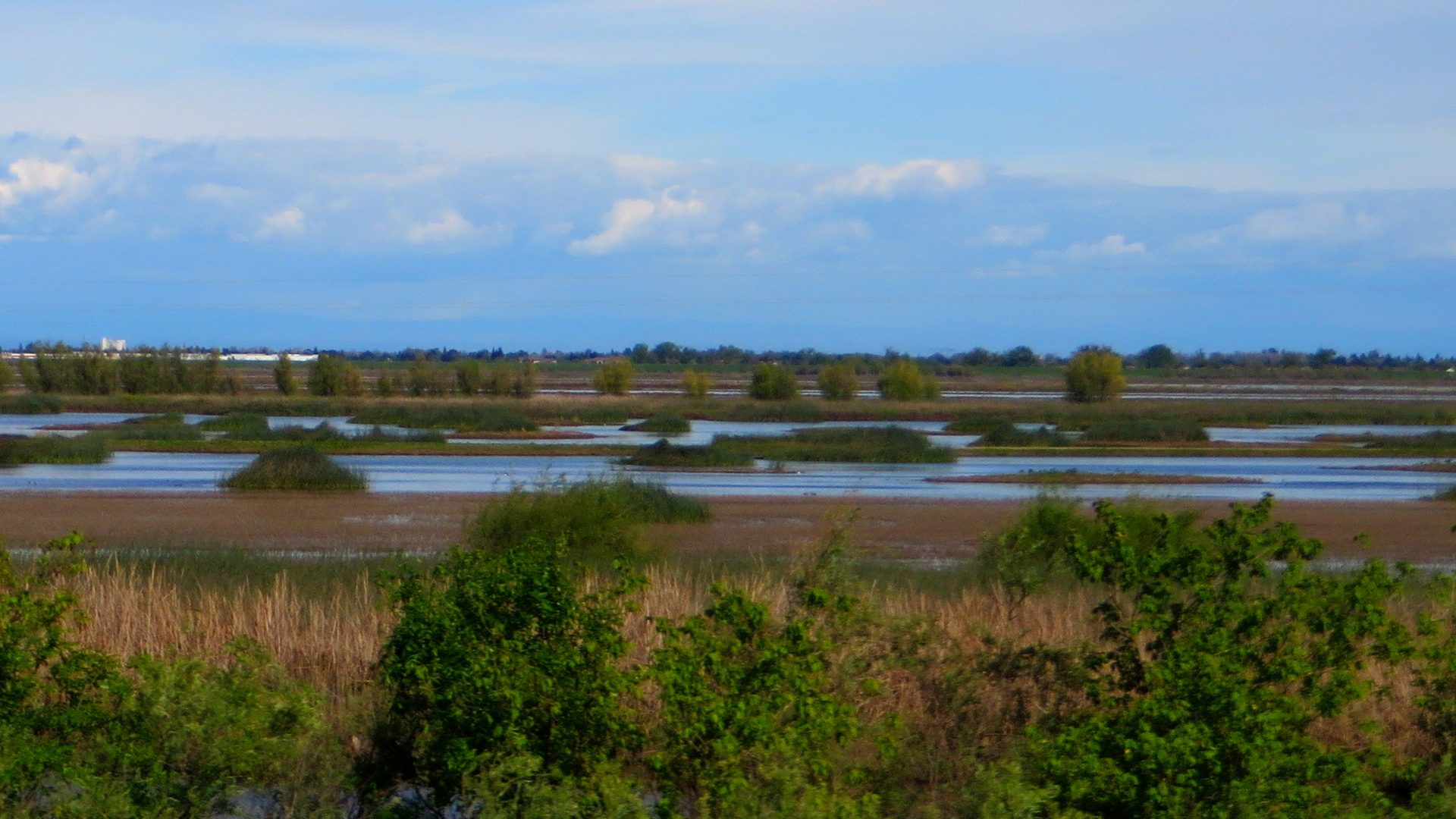
Image: Yolo Bypass Near Davis, California.jpg "Opens in a new tab.") , Ken Lund, March 2016. Licensed under the Creative Commons Attribution-Share Alike 2.0 Generic license.
, Ken Lund, March 2016. Licensed under the Creative Commons Attribution-Share Alike 2.0 Generic license.