
- The Colorado Supreme Court ruled on January 26, 2026 that private landowners lack standing to sue under Colorado’s statutory “water waste” law.
- The court held that Colorado Revised Statutes section 37-84-108 does not create a private right of action, and enforcement belongs to the state.
- The court also said Colorado Revised Statutes sections 37-84-124 and 37-84-125 address protection of water rights, not damages from irrigation runoff or flooding onto a neighbor’s land.
- Because the statutory water claims failed, the court concluded the water court lacked jurisdiction over related trespass and nuisance claims tied to flooding, and it vacated the operational injunction.
- The ruling leaves open the possibility that common-law claims such as trespass and nuisance could be pursued in Colorado district court, without commenting on their merits.
Wednesday, January 28, 2026 — In Byers Peak Properties v. Byers Peak Land & Cattle, LLC, the Colorado Supreme Court reviewed a long-running conflict involving two ranch parcels in Grand County that were once a single property. After the ranch was split into “East” and “West” parcels in 1974, the owners granted reciprocal easements and continued cooperative irrigation practices for years.
Two ditches supplied irrigation water from St. Louis Creek: the Beaver Dam Ditch and the Gaskill Ditch. The case focused heavily on how diversions and ditch operations affected downstream conditions, including allegations that excess water was run through the system and ended up as irrigation runoff flowing downhill onto the neighboring parcel.
The plaintiffs, who owned the East Ranch, alleged that the West Ranch operators diverted more water than needed, causing water to run off and flood the plaintiffs’ land. They sued under several theories, including claims framed as statutory violations related to water waste and excess diversions, and also asserted common-law claims including trespass and nuisance. A Colorado water court largely sided with the plaintiffs on the runoff-related claims, issued an operational injunction restricting diversions, and awarded attorney fees linked to one of the statutes.
The Colorado Supreme Court’s January 26, 2026 decision affirmed in part and reversed in part, and it directed the water court to dismiss the runoff-related claims and vacate the operational injunction.
Key holding 1: No standing for a statutory “waste” declaration.
The Supreme Court first addressed whether the plaintiffs had standing to pursue a declaration of water waste under Colorado’s irrigation waste statute, Colorado Revised Statutes section 37-84-108.
The court acknowledged that the plaintiffs alleged a real-world injury, flooding on their property, but emphasized that standing also requires an injury to a legally protected interest. The court concluded the plaintiffs did not have that legally protected interest under the waste statute because the statute is enforced through state mechanisms rather than private lawsuits.
Key holding 2: The “water waste” statute is enforced by the state, not neighbors.
A central issue was whether Colorado Revised Statutes section 37-84-108 allows a private lawsuit. The court held it does not.
The opinion pointed to a companion enforcement provision, Colorado Revised Statutes section 37-84-109, which states that penalty suits “shall be brought in the name of the people of the state of Colorado.” The court treated that as a strong signal that the legislature chose public enforcement and did not authorize courts to create additional private remedies.
A January 27, 2026, Clark Hill summary of the ruling described the decision this way: the court “unanimously held that Colorado’s water waste statute does not create a private right of action, meaning only the state engineer, not individual landowners, can bring enforcement actions.” (Clark Hill, January 27, 2026.)
The Supreme Court also highlighted that when the legislature intends to allow private lawsuits in other water-related provisions, it has said so explicitly elsewhere, and that language is absent from the waste statute.
Key holding 3: Two “excess water” statutes do not cover runoff flooding onto a neighbor.
The plaintiffs also relied on Colorado Revised Statutes sections 37-84-124 and 37-84-125, statutes that describe duties related to receiving no more water than entitled through a headgate and taking steps to prevent over-receipt.
The Supreme Court concluded these provisions are directed at protecting water rights from over-diversion, not at providing a statutory cause of action for property damage from irrigation runoff or flooding onto someone else’s land. The court focused on the statutory phrasing about preventing extra water from coming upon “his land,” reading the provisions as addressing the irrigator’s receipt of excess water onto the irrigator’s own land and the resulting infringement on others’ water rights.
Because the statutes did not apply to the flooding injury theory as pleaded, the court held the water court erred in applying them and in awarding attorney fees under section 37-84-125.
 : Back row left to right: Carlos A. Samour, Jr., Richard J. Gabriel, Melissa Hart (retired), Maria Berkenkotter
Front row left to right: Brian D. Boatright, Monica M. Márquez, William H. Hood, III.
Key holding 4: No water court jurisdiction for trespass and nuisance without a valid “water matter.”
After rejecting the statutory waste and excess-diversion claims, the Supreme Court addressed what that meant for the plaintiffs’ related common-law claims for trespass and nuisance tied to flooding.
Colorado water courts have exclusive jurisdiction over “water matters,” meaning issues about the right to use water, quantification of water rights, or changes to decreed water rights. Water courts can also sometimes hear closely connected non-water issues under a doctrine called ancillary jurisdiction, but only when resolving those issues would directly affect the outcome of a properly presented water matter.
Here, the Supreme Court concluded that because the plaintiffs did not have viable statutory claims for waste or flooding, there was no remaining water matter to support water court jurisdiction over the trespass and nuisance claims related to runoff. The court therefore directed dismissal of those claims from water court, while stating it expressed “no opinion” on the merits of any common-law claims that might be pursued in Colorado district court.
Clark Hill summarized the jurisdiction point by quoting the court’s reasoning that, without a valid water matter, trespass and nuisance claims were “only tangentially related to a water matter,” which was not enough for water court jurisdiction. (Clark Hill, January 27, 2026.)
The operational injunction was vacated.
The water court had issued an operational injunction that restricted the defendant’s ability to divert water in excess of its decreed rights and imposed conditions even during “free river” conditions. The Supreme Court vacated that injunction because it was tied to the waste and flooding theories the court ruled could not proceed as pleaded in water court.
The Supreme Court did not need to decide the defendant’s constitutional arguments about free river diversions because the injunction failed once the underlying claims were dismissed.
What the decision changes for future disputes.
The opinion draws a clearer line between two different tracks that often overlap in day-to-day irrigation conflicts:
1) Statutory “waste” enforcement runs through state officials
If a landowner believes a neighbor is wasting water by running more through a ditch than necessary under Colorado’s irrigation waste statute, the Supreme Court’s decision indicates that enforcement is channeled through the state framework, including the state engineer, rather than through private lawsuits under that statute.
2) Property damage claims may belong in district court, not water court
When the alleged harm is flooding, runoff damage, or other impacts on land, the ruling indicates that a plaintiff may need to rely on traditional civil claims such as trespass or nuisance in Colorado district court, unless the claim is part of a properly presented water matter within water court jurisdiction.
The Supreme Court emphasized that it was not ruling on whether the plaintiffs would ultimately win or lose on those common-law theories, only that the runoff-related tort claims were not properly in water court once the statutory water claims were rejected. Link to Supreme Court Decision.
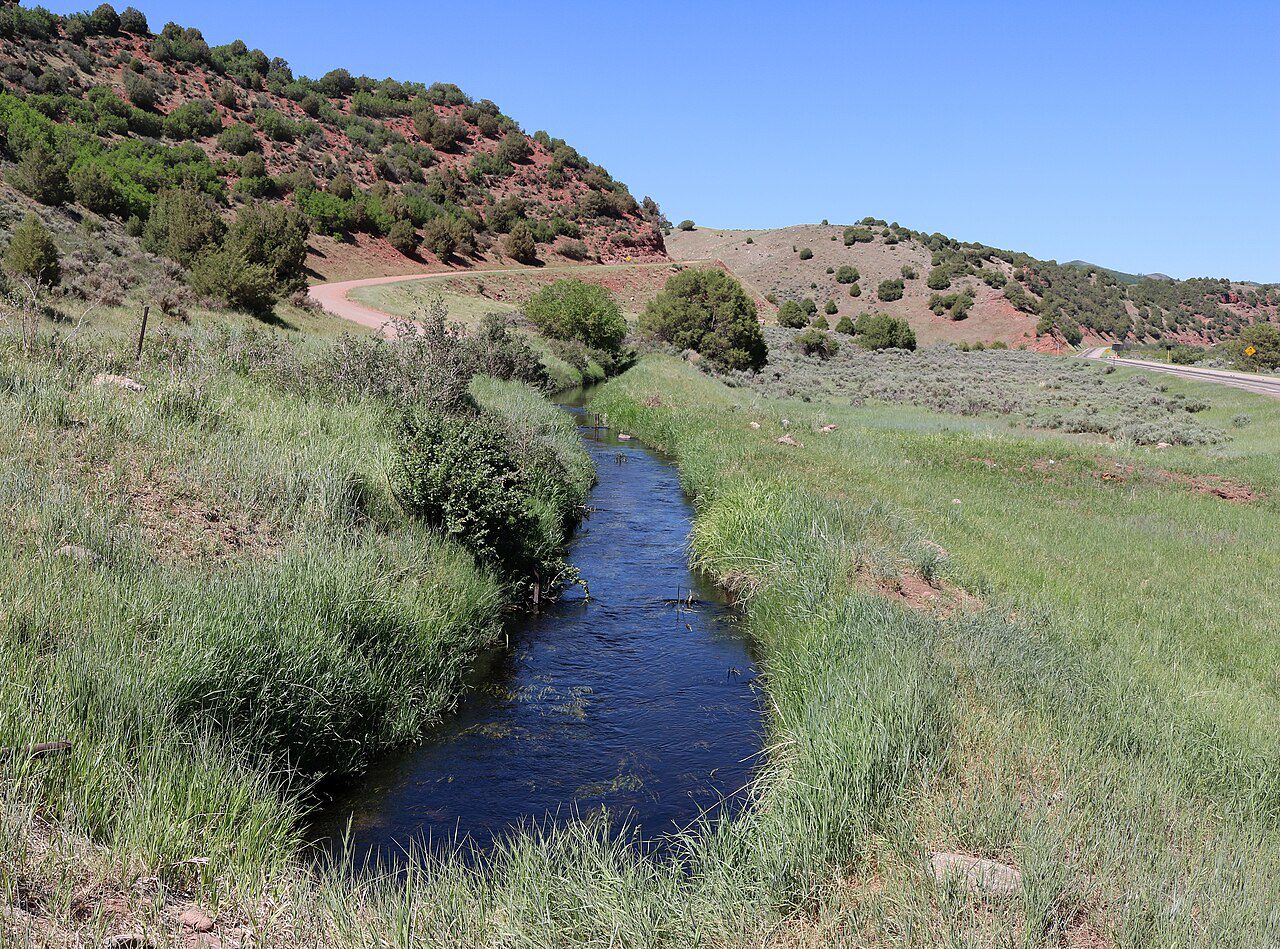
Image (Top) — The Big Beaver Ditch in Rio Blanco County, Colorado . The ditch takes water from the Big Beaver Creek through an outlet in the Big Beaver Dam, which is not visible in the picture, but is around the first hill to the left. Rio Blanco County Road 8 is on the right. Jeffrey Beall, June 2021. Licensed under the Creative Commons Attribution 4.0 International license.
FAQ
What did the Colorado Supreme Court decide on January 26, 2026?
In Byers Peak Properties v. Byers Peak Land & Cattle, LLC, 2026 CO 7 (Jan. 26, 2026), the court held that private landowners lacked standing to bring statutory claims for “water waste” under Colorado Revised Statutes section 37-84-108, and it directed dismissal of related runoff and flooding claims from water court.
Can a neighbor sue under Colorado’s water waste statute?
Not under the theory presented in this case. The court concluded that Colorado Revised Statutes section 37-84-108 does not create a private right of action, and that penalty enforcement is brought in the name of the people of the state of Colorado.
What about Colorado Revised Statutes sections 37-84-124 and 37-84-125?
The court concluded those statutes protect water rights from over-diversion and do not create causes of action for injuries framed as irrigation runoff or flooding damage onto a neighbor’s land, as pleaded in this case.
Why did the court throw out trespass and nuisance claims from water court?
The court said that without a viable “water matter” concerning waste or flooding, the water court lacked ancillary jurisdiction over the runoff-related trespass and nuisance claims. The opinion left open the possibility that such claims could be pursued in Colorado district court.
Did the Supreme Court decide who was right about the flooding facts?
The decision focused on standing, statutory interpretation, and court jurisdiction. The court did not decide the merits of any district-court tort claims the plaintiffs might bring, and it stated it expressed no opinion on those merits.
What happened to the injunction that restricted water diversions?
The Supreme Court directed the water court to vacate the operational injunction because it was tied to waste and flooding claims the Supreme Court ordered dismissed.
Does the decision affect ditch easements between the properties?
The Supreme Court affirmed the water court’s decision not to address a post-trial attempt to limit the extent of the plaintiffs’ Lower Gaskill Ditch easement, because the issue was not properly raised at trial.



That’s so frustrating, especially with the ongoing drought. Is there a ditch master who monitors the GVIC diversions?