
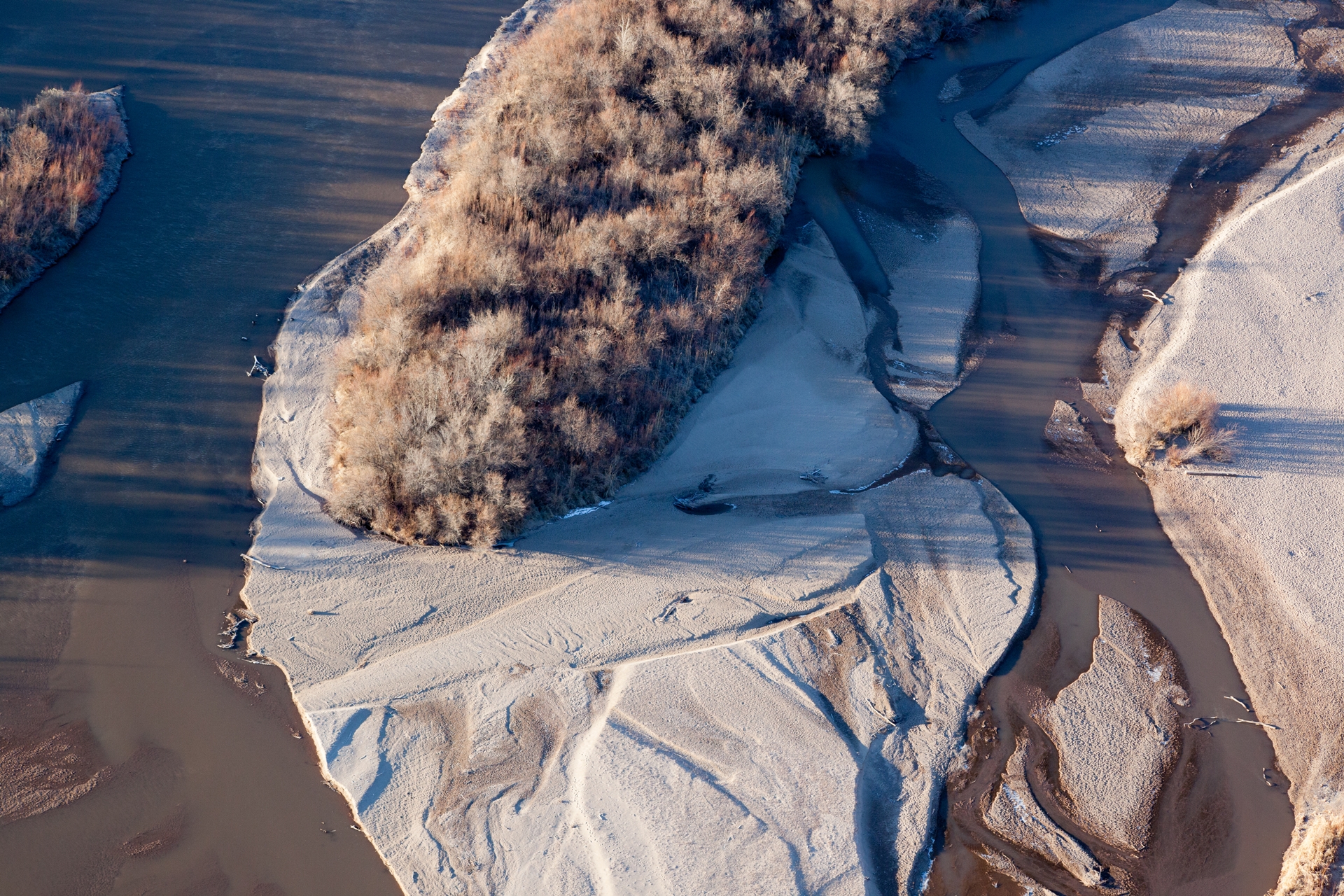
- Water managers expect sections of the Rio Grande to dry again this year.
- Snowpack melted early after unusually warm spring temperatures.
- Irrigators may see fewer canal deliveries and longer wait times.
- Some reservoirs along the Rio Grande are holding less than 15% capacity.
- Corrales irrigation deliveries were suspended in April because river levels dropped too low.
Wednesday, May 13, 2026 — The Rio Grande is heading into another difficult summer as water managers across central New Mexico warn of shrinking river flows, stressed reservoirs, and possible drying along parts of the river.
Officials say the problems began during the winter and early spring. Snowpack in the mountains was below normal, and warmer temperatures caused the snow to melt faster than usual. That created an early runoff season that moved water through the system quickly instead of spreading it across the spring and summer months.
The Middle Rio Grande Conservancy District announced May 12 that conditions this year are among the most difficult seen in recent years. The district said the Rio Grande in Albuquerque dried for the first time in more than 40 years during 2022, and similar drying happened again in 2025. Water managers now expect another drying event during the coming weeks unless weather patterns improve significantly.
Irrigators May See Longer Waits.
Farmers and irrigators in the Middle Rio Grande Valley are already beginning to feel the effects.
According to the conservancy district, water supplies have been limited since the irrigation season began. As conditions worsen, residents may notice lower river levels, fewer canals operating at the same time, and longer gaps between irrigation deliveries.
“Our priority is to manage the limited water supply as efficiently as possible across the district,” said Jason Casuga, chief engineer and chief executive officer of the Middle Rio Grande Conservancy District. “Conditions this year are shaping up to be very challenging, and irrigators should be prepared for reduced deliveries and longer intervals between water availability.”
The problems are already affecting some communities directly.
On April 21, the conservancy district suspended irrigation deliveries to the Corrales service area after Rio Grande levels fell too low for temporary pumps to operate. Those pumps are used to lift water from the river into the Corrales Main Canal. Once the river dropped below operational limits, deliveries had to stop.
District officials said they will continue monitoring river conditions and hope to restart deliveries if flows improve.
Groundwater Becoming More Important.
The Albuquerque Bernalillo County Water Utility Authority warned that low river flows could force greater reliance on groundwater reserves.
The utility depends heavily on surface water imported through the San Juan-Chama Project and delivered through the Rio Grande system. When river flows become too low, groundwater pumping increases to help meet demand.
Barbara Baca, chair of the Water Authority governing board, said preserving groundwater reserves is becoming increasingly important as drought conditions continue.
She encouraged residents to conserve water during the summer months by limiting lawn watering and avoiding sprinkler use during the hottest parts of the day.
Reservoirs Running Critically Low.
Federal officials say storage conditions across the basin are especially concerning this year.
The Bureau of Reclamation reported that many reservoirs along the Rio Chama and Rio Grande are currently holding less than 15% of their capacity. That leaves very little stored water available to support irrigation, city water supplies, recreation, or endangered species protection later in the season.
Drying along the San Acacia reach of the Rio Grande began March 27, the earliest start recorded in roughly 30 years, according to Reclamation officials.
“Being faced with a third dry year in a row is a big challenge,” said Albuquerque Area Office Acting Area Manager John Irizarry. “Our Reclamation team will work closely with stakeholders to make the available water supply stretch as far as possible.”
Threatened Species Also at Risk.
Low river flows are also creating challenges for wildlife.
The U.S. Fish and Wildlife Service said five threatened or endangered species live in and along the Rio Grande. If sections of the river dry and become disconnected, crews may once again need to rescue Rio Grande silvery minnows trapped in isolated pools and move them to areas where water is still flowing.
Despite the difficult conditions, forecasters say there is still some hope for relief later this summer if the monsoon season develops favorably. National Weather Service outlooks show improving chances for above-average precipitation during the summer months.
This is a serious issue affecting much of the United States. The good news in the West, if it happens, is that El Nino may deliver significant precipitation over the summer. We shall see.