
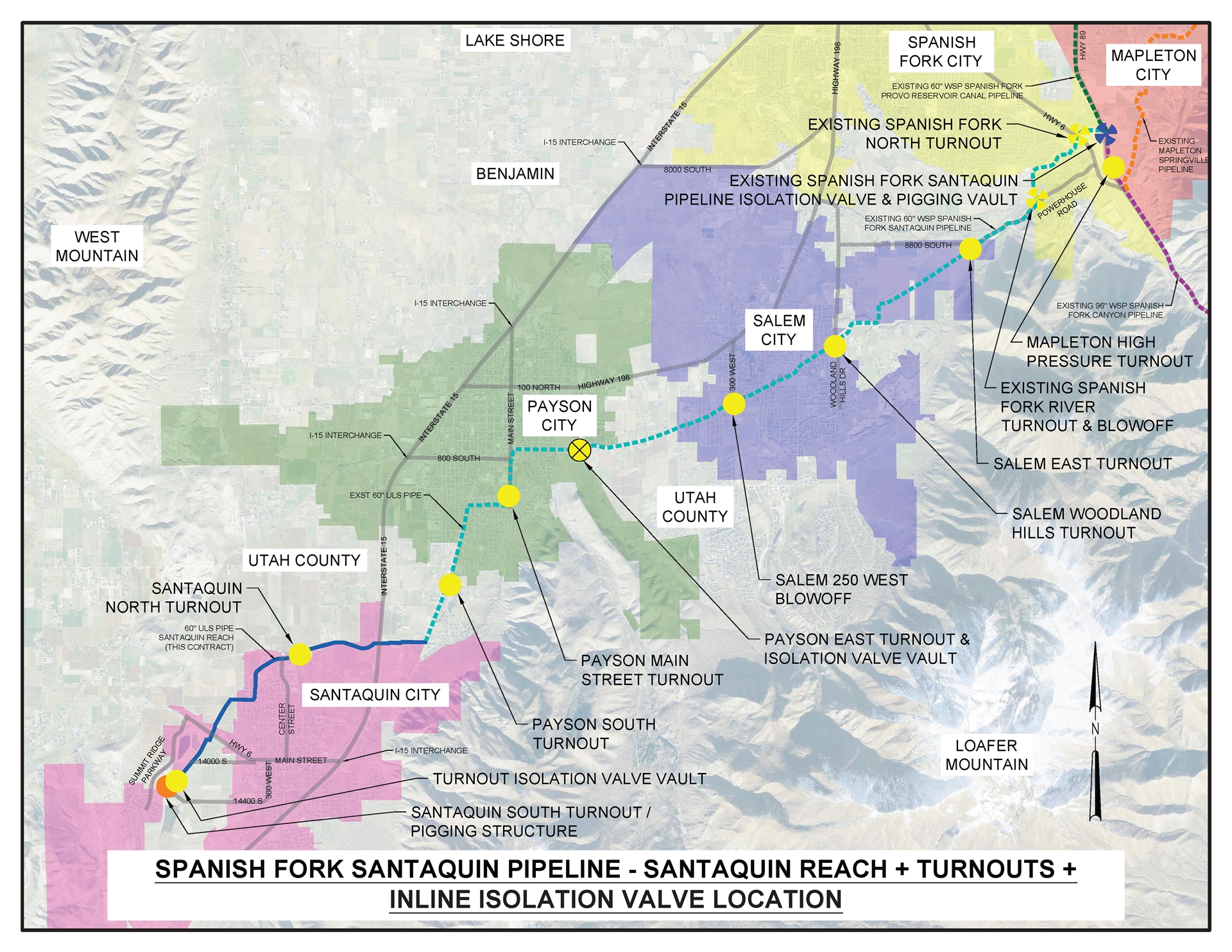
- A 49-mile Utah pipeline project is nearing completion after 17 years.
- The system is designed to deliver Colorado River water to fast-growing communities.
- Officials say the pipeline could help support water supplies for about 240,000 residents.
- The final section includes massive 60-inch steel pipe buried deep underground.
- Construction is expected to wrap up in 2026.
Tuesday, May 12, 2026 — Southern Utah County is nearing the end of one of the region’s largest long-term water infrastructure projects as crews complete the final section of the Spanish Fork-Santaquin Pipeline , a system designed to move Colorado River water from Strawberry Reservoir to growing communities along Utah’s Wasatch Front.
The project, which traces its roots back to the federally authorized Central Utah Project of 1956, has taken roughly 17 years to build and will eventually help deliver up to 23,090 acre-feet of water annually for municipal and industrial use in South Utah County. According to the Central Utah Water Conservancy District, the final “Santaquin Reach” includes more than 23,000 feet of 60-inch steel pipe and marks the last major segment needed to complete the system.
In November 2025, the Bureau of Reclamation announced that the final 60-inch pipe had been installed, calling it a major milestone achieved through years of cooperation between federal, state, and local agencies. Industry publication ENR.com reported yesterday that crews are now finishing the last 4.3-mile stretch, including turnout vaults, control systems, and valve integration needed before full operation begins.
The pipeline uses large spiral-welded steel sections weighing up to 30,000 pounds each and buried as deep as 20 feet in some locations. Engineers and contractors also used corrosion protection systems, reinforced coatings, ultrasonic weld testing, and cathodic protection to help extend the pipeline’s lifespan. Officials involved with the project say the completed system will create a continuous water delivery corridor stretching from Orem to Santaquin and connecting into broader regional water systems serving northern Utah communities.