
- A Colorado mountain district has declared emergency drought conditions through the end of 2026.
- Residents in the Ruby Ranch community near Silverthorne are now banned from outdoor watering and car washing.
- Hot tubs and pools can only be filled with water hauled in from outside the district.
- Low snowpack and extreme heat are also raising fears about fish kills in Colorado rivers this summer.
- Fishing guides warn that warming rivers could threaten trout and hurt local economies.
Thursday, May 6, 2026 — Colorado’s drought problems are no longer showing up only in reservoirs and snowpack reports. In parts of the state, the impacts are now reaching neighborhoods, trout streams, and everyday water use.
A small mountain community water district near Silverthorne has officially declared emergency drought conditions and adopted strict water restrictions that could remain in place through the end of 2026.
The Willow Brook Metropolitan District , which serves homes in the Ruby Ranch community in Summit County, approved the emergency resolution on May 1. According to the district, severe drought conditions across the Upper Colorado River Basin and Summit County forced officials to take action to protect limited water supplies.
The restrictions are sweeping.
Under the emergency rules, residents are prohibited from using district water for irrigation, landscaping, car washing, outdoor cleaning, or other exterior uses. The district also banned the use of its water for filling swimming pools or hot tubs.
Instead, residents who want to fill pools or hot tubs must purchase and haul in water from outside the district.
The resolution states that water should be limited to “in-home beneficial purposes” and warns against what it describes as “wasteful use.”
District officials also gave themselves strong enforcement powers. According to the resolution, water service can be suspended for violations involving outdoor watering or unauthorized pool filling. Property owners accused of wasting water could face fines starting at up to $1,000, with penalties doubling for repeated violations.
The Summit Daily reported that the restrictions remain in effect until either the end of 2026 or until the district board votes to remove them.
Drought Stress Spreads Beyond Neighborhoods.
The restrictions come as drought conditions continue to intensify across much of Colorado and the broader West.
Another report from Summit Daily highlighted growing concern among Colorado anglers and fishing guides, who fear low river flows and rising water temperatures could create deadly conditions for trout this summer.
In an article by Ryan Spencer of Summit Daily, Kirk Klancke, president of the Colorado Headwaters Chapter of Trout Unlimited, warned that conditions could become severe if the state does not receive significant summer moisture. “If this summer is anything like this past winter was, the chances are pretty good that there’s going to be fish kills in our streams,” Klancke told Summit Daily.
Colorado experienced one of its hottest and driest winters on record. A March heatwave rapidly melted much of the state’s already weak snowpack, leaving rivers with far less runoff heading into summer.
According to Colorado Water Supply Outlook projections cited by Summit Daily, many rivers may see only about half their normal flows this year, while some streams could drop to roughly one-quarter of normal levels.
That creates major problems for trout.
As river levels shrink, streams become shallower and warmer. Warm water holds less oxygen, placing heavy stress on cold-water fish species like trout. Klancke explained the danger in simple terms.
“Your river is built like a solar collector,” he told Summit Daily. “When your flows are depleted, it’s the same width of streambed, but the river spreads out over that width, and it’s very shallow.”
Colorado Parks and Wildlife says trout become stressed when water temperatures approach 71 degrees Fahrenheit. Many fly fishing groups recommend anglers stop fishing entirely once temperatures reach 68 degrees to avoid unintentionally killing fish during catch-and-release fishing.
“At 68 degrees, it really becomes catch and kill, instead of catch and release,” Klancke said.
Economic Effects Could Follow.
The concerns extend beyond fish populations.
Colorado’s angling industry generates nearly $2 billion annually and supports more than 15,000 jobs statewide, according to state figures cited by Summit Daily.
Fishing guides are already adjusting schedules.
Patrick Gamble, a fly fishing guide in Steamboat Springs, said some clients have been rescheduled to earlier dates because of concerns about summer river conditions. Guides may also shift to morning-only trips when water temperatures rise.
“This is particularly hard on our guides because our guides now are going to half day,” Klancke said. “To have your work hours cut in half is just really hard on professional guides.”
For now, conservation groups are urging anglers to carry thermometers, fish during cooler morning hours, avoid overcrowding rivers, and consider targeting warm-water fish species instead of trout.
Meanwhile, the Willow Brook restrictions offer a visible reminder of how drought is beginning to reshape daily life in parts of the Colorado high country. What once may have seemed like seasonal conservation messaging is increasingly becoming mandatory policy.
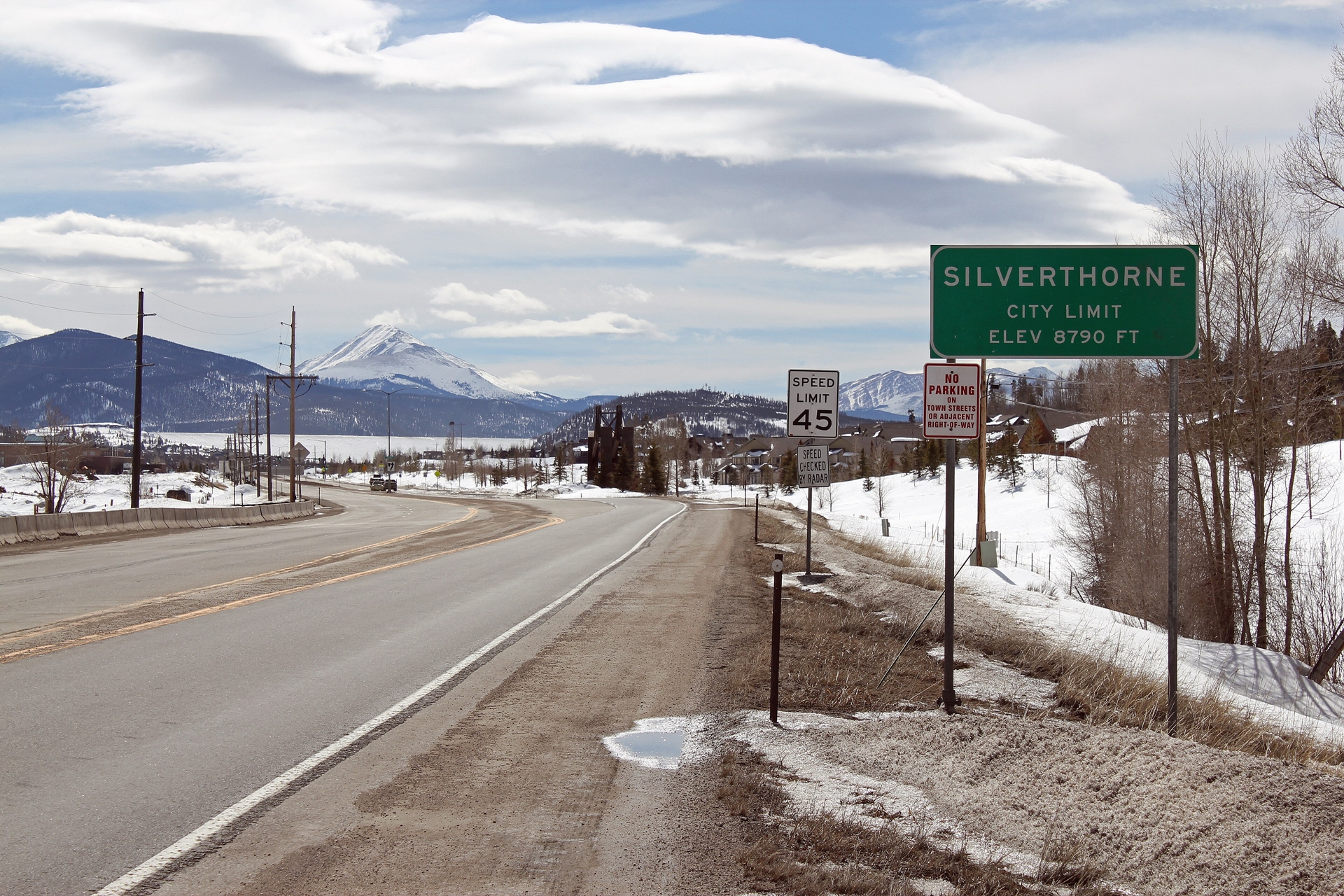
Pictured: Silverthorne, Colorado , looking southwards, entering Silverthorne from the north on Colorado Highway 9 by Jeffrey Beall (March 2011). Licensed under the Creative Commons Attribution-Share Alike 3.0 Unported license.

 wpDiscuz