
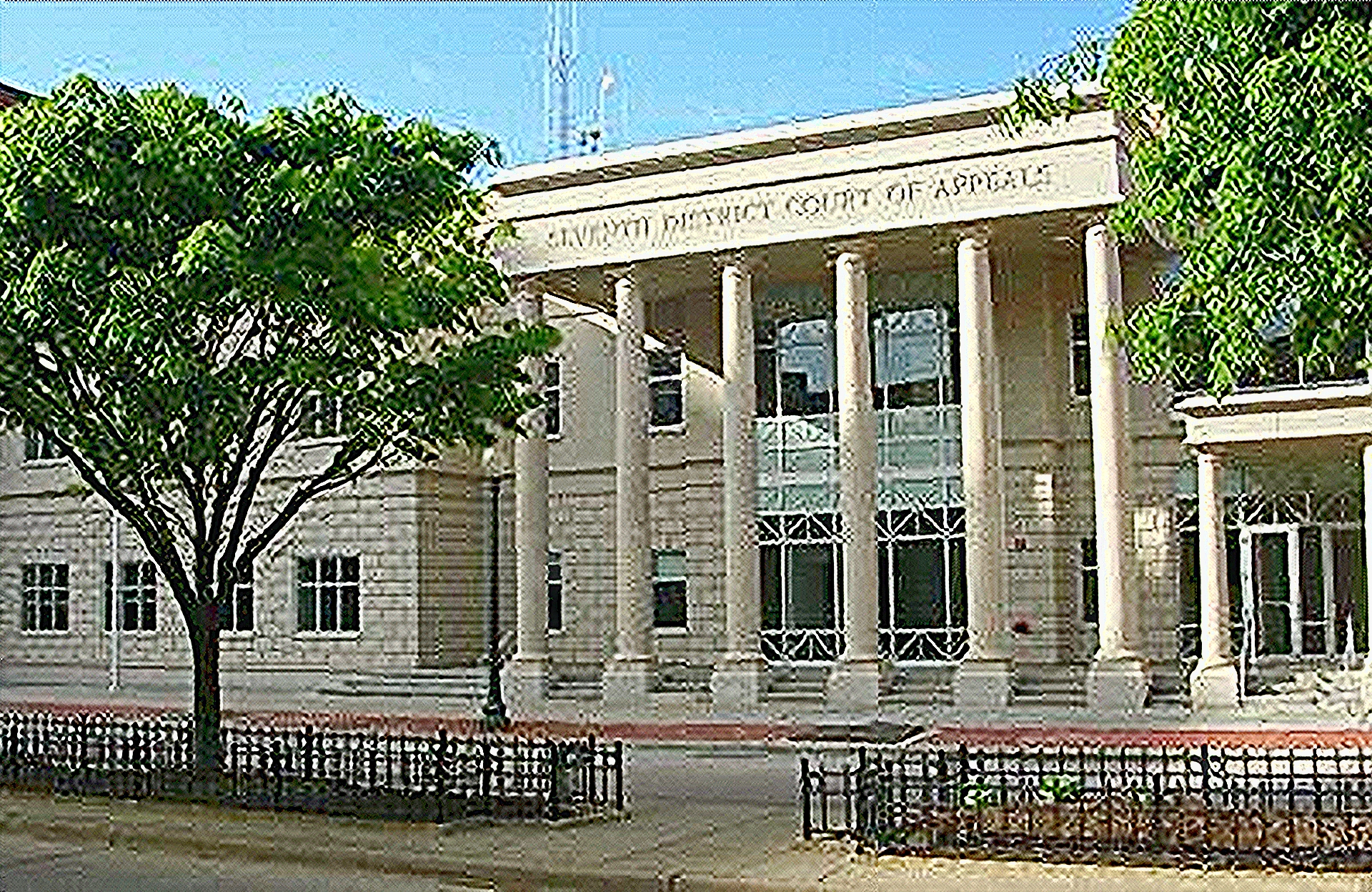
- A federal appeals court ruled against Dupont Water Company on August 5, 2026.
- Dupont spent years without giving the county a water plan or a firm price.
- Jefferson County, Indiana bought water from the City of Madison instead.
- The court found Dupont never made its service available in a reasonable time.
- The judges also hinted that the law behind rural water monopolies may need a fresh look.
Thursday, August 6, 2026 — Every new building needs water, and a county jail needs a lot of it. That simple fact sits at the center of a court fight that ended on August 5, 2026, when the United States Court of Appeals for the Seventh Circuit ruled in Dupont Water Company, Inc. v. City of Madison, Indiana .
.
Jefferson County, Indiana built a new jail on an empty piece of land just outside Madison, a small town on the Indiana-Kentucky border. Two water providers sat close by. Dupont Water Company had a small pipe, about three or four inches wide, right at the property. The City of Madison had a much larger twelve-inch pipe across the street. Neither one was serving the site yet.
The county needed to pick one. What followed stretched across several years and ended in a courtroom.
The special law at the heart of the case.
To understand the fight, it helps to know about a federal law from 1961. Congress passed the Consolidated Farmers Home Administration Act to help bring safe, affordable water to farms and rural areas. Under that law, the United States Department of Agriculture can lend money to local water associations so they can build and run water systems.
There is a catch that comes with the loan. As long as a water association still owes money on that federal loan, a section of the law known as Section 1926(b) shields it from certain competition. In plain terms, a town or city is not supposed to swoop in and take water customers inside that association’s service area while the loan is still being paid off.
Dupont is one of those federally indebted associations. It is a non-profit owned by its members. Because of its loan, Dupont argued that it held, in its own words, “the absolute right to be the exclusive seller of water within their service area.” The jail, Dupont said, sat inside that protected area.
But the courts have added an important condition over the years. To claim the protection, the association has to show it actually “provided or made available” water to the spot in question. That means having pipes close enough to serve the area within a reasonable time after someone asks for service. Judges call it the “pipes in the ground” test.
Years of waiting.
Here is where Dupont ran into trouble.
The county started planning early. In July of 2020, an engineer from DLZ Corporation, the firm managing the jail’s construction, reached out to Dupont and said the firm looked forward to working together. Over the following months, the two sides talked about the jail’s water needs, the size of pipe required, and pricing.
The problem surfaced fast. Dupont’s small pipe was not big enough for a building that would use about 36,000 gallons of water a day. The engineers suggested Dupont connect to Madison’s large twelve-inch pipe to get the job done. They asked for a plan. A deadline in November of 2020 passed with no answer.
Dupont was quick to claim its rights, though. In January of 2021, it sent Jefferson County a letter pointing to Section 1926(b) and calling itself the only company allowed to sell water to the jail.
Talk about price went in circles too. The county asked for Dupont’s rate for such a large user. Dupont did not have a high-volume price on its books, so it said it would hire an accounting firm to build one. That rate never arrived. The accountant later explained he could not finish the math until Dupont’s engineer estimated the cost of the new pipes. Dupont never handed over that estimate.
Madison, by contrast, moved quickly. It already had the big pipe and a high-volume price. When the county asked for its rates, Madison replied within days.
The price gap was wide. Court records show that for the first tier of use, Madison charged about $2.37 while Dupont charged $9.68. Dupont’s rates were higher across every level of use.
By May of 2021, county officials worried the jail would open with no water lined up. The county council voted to support buying from Madison. Even so, the county kept trying to work with Dupont through the summer, asking for updates in June and August. Nothing came back. The court noted that Dupont seemed “content to rest on its legal monopoly.”
The county finally connected the jail to Madison’s pipe in December of 2022. Madison has served the jail since. Dupont sued Madison in March of 2023.
What the court decided.
Only after the lawsuit began did Dupont start figuring out how it could physically serve the jail. In August of 2023, it asked DLZ Corporation for building drawings, the same ones it had received more than two years earlier. In December of 2023, its board voted to hire an engineer to show it could serve the jail. That expert later said Dupont had three options, ranging from a quick tie-in to Madison’s pipe for about $10,000 to building its own pipe for roughly $482,000 to $524,160.
The trial judge, Sarah Evans Barker, was not persuaded. She granted summary judgment to Madison and Jefferson County, finding that Dupont had not made service available. The appeals court agreed.
Writing for the three-judge panel, Circuit Judge Taibleson described Dupont’s main argument as having “a Kafkaesque feel to it.” Dupont claimed the county had never really requested service, so its own delay did not matter. The court rejected that idea. Years of letters, meetings, and emails, the panel said, added up to a clear request. Dupont simply did not answer it in time. Expert reports written during the lawsuit, the court held, could not erase that history.
A bigger question about the law.
The panel did not stop at the jail. Madison had asked the court to throw out an older ruling, known as Jennings Water, that reads Section 1926(b) broadly. The court declined to go that far in this case, but it signaled real doubts.
The judges pointed to a difference between using the law as a shield and using it as a sword. As a shield, the law protects an association’s existing customers so it can pay off its federal loan. As a sword, the court said, Dupont tried to claim a brand new, very large customer it had never served. Quoting an earlier case, the panel warned that such a reading could turn a water association into the “kudzu vine” of utilities, spreading wherever it lays pipe.
The panel also quoted Dupont’s own words from oral argument, that potential customers “do[] not get to shop for rates and find the utility that’s going to give them the best deal.” The court suggested that result may not serve the rural users the law was written to help. It closed with a note for the future: “In an appropriate case, we should consider revisiting our precedent interpreting this statute.”
What it could mean for the Colorado River Basin.
Although this case comes from Indiana and the Seventh Circuit, the law at its center is federal, so the same rules reach every state, including the Colorado River Basin states of Colorado, Wyoming, Utah, New Mexico, Arizona, Nevada, and California. The Tenth Circuit, which covers the Upper Basin states of Colorado, Wyoming, Utah, and New Mexico, uses the very same “pipes in the ground” test, as seen in the 2023 decision Deer Creek Water Corporation v. City of Oklahoma City. As small towns across the dry West grow toward land near federally indebted rural water associations, disputes over who gets to sell water to a new subdivision, plant, or public building could unfold much as this one did. A source that supports this point is available at https://www.jdsupra.com/legalnews/1926-b-rural-water-associations-federal-5748206/.
Pictured: Court of Appeals, 7th District . Jeff Hendrickson, 2006. Licensed under the Creative Commons Attribution-Share Alike 3.0 Unported license.



 wpDiscuz