
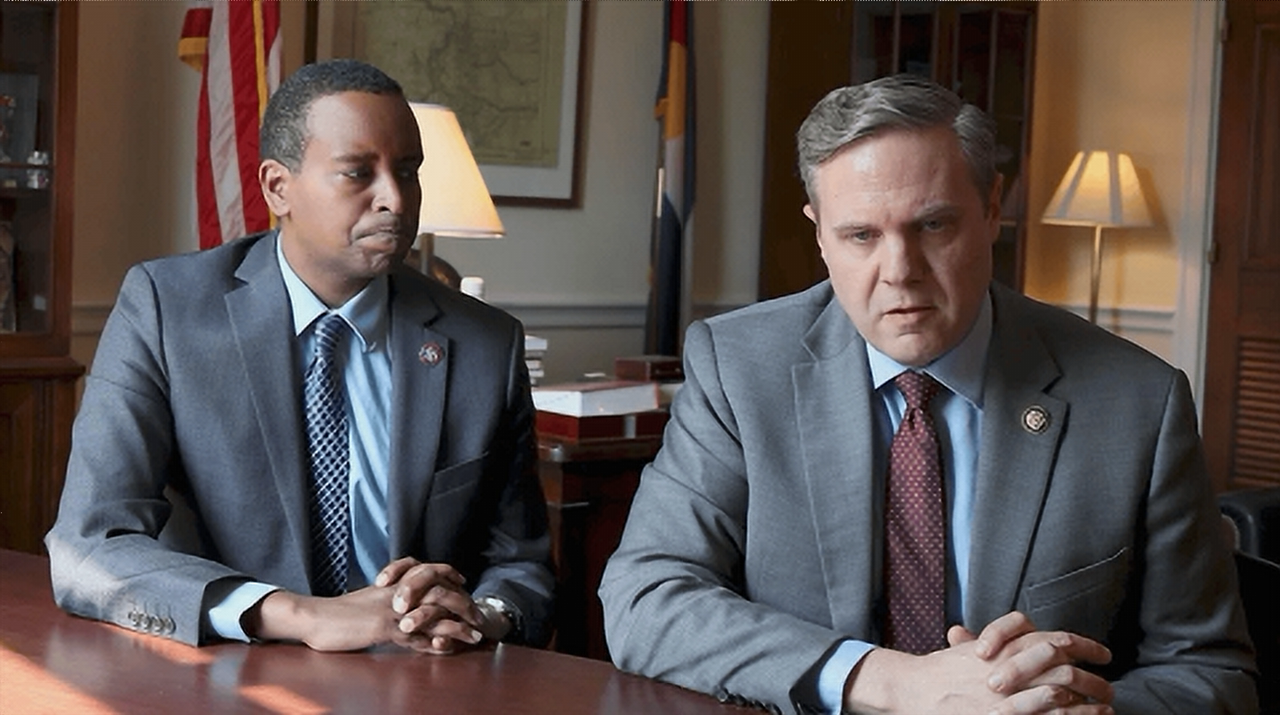
- Bipartisan leaders are working together on Colorado River issues.
- Lawmakers are urging release of delayed federal drought funding.
- Projects focus on water reliability, ecosystems, and infrastructure.
- The Colorado River Compact deadline is approaching in 2026.
Thursday, April 16, 2026 — At a time when political division often dominates headlines, two Colorado lawmakers are taking a different path. Democratic Representative Joe Neguse and Republican Representative Jeff Hurd have been working side by side on water issues that affect millions of people across the state.
Their partnership, highlighted in an April 10, 2026 report by journalist Shaun Boyd for CBS Colorado, stands out because it crosses party lines. Both represent Colorado’s Western Slope, where the Colorado River begins its journey and where water concerns are deeply personal and economic.
Neguse described the effort simply, saying leaders must be willing to work “with anybody and everybody in good faith” to solve real problems.
A growing concern: less water, more pressure.
The Colorado River, which supports seven Western states, is producing far less water than it did in the past. That shrinking supply is creating tension among states that rely on it for cities, farms, and industry.
Behind the scenes, Neguse and Hurd are involved in discussions about how that limited water will be divided in the future. The current operating agreement is set to expire in October 2026. If states cannot agree on a new plan, the federal government may step in and impose one.
Hurd emphasized the stakes, noting that without unity, Colorado could lose ground in negotiations over the river’s future.
The fight over delayed funding.
One of the most immediate issues is federal drought funding that has been approved but not yet released.
In August 2025, members of Colorado’s congressional delegation sent a formal letter urging federal officials to move forward with funding for multiple drought-related projects across the state.
That letter described more than a dozen projects designed to strengthen water systems, improve habitat, and support agriculture. Together, they represent about $140 million in remaining funds tied to a larger federal drought package.
The projects are not just about pipes and canals. The letter makes clear that Colorado’s water system also depends on natural features such as forests, wetlands, and rivers, which help store and move water across the landscape.
Lawmakers argue that delaying this funding risks long-term damage, especially during a drought that has lasted more than two decades.
A major project with statewide impact.
Another key focus is the Shoshone water rights project. This effort would allow Colorado to secure some of the oldest and most important water rights on the Colorado River.
The goal is to maintain steady river flows that affect as many as 3 million people. State and local groups have already raised tens of millions of dollars, and Congress approved an additional $40 million. However, that federal portion has not yet been released.
Hurd pointed out that once funding is approved by Congress, there is an expectation it will be carried out as intended.
Beyond funding: forests, snowpack, and public lands.
The cooperation between Neguse and Hurd extends beyond funding disputes. They have also worked together on several related efforts, including:
- Improving snowpack monitoring to better predict water supply.
- Opposing the sale of public lands in Colorado.
- Supporting the rehiring of forest workers who help reduce wildfire risks.
These efforts reflect a broader understanding that water supply is tied to land management, climate conditions, and infrastructure.
“Be like water.”
Hurd summed up their approach with a simple idea: be flexible and persistent.
“When water meets an obstacle, it either goes around it or wears it down,” he said in the CBS Colorado interview.
That mindset may be what allows the two lawmakers to navigate both political challenges and the growing water crisis in the West.
As the 2026 deadline for a new Colorado River agreement approaches, that kind of persistence may prove just as important as the water itself.
Pictured: Reps. Joe Neguse (D-CO-02) and Jeff Hurd (R-CO-03) sat down with Shaun Boyd to speak about their bipartisan efforts to safeguard the Colorado River, via Rep. Neguse’s press release.