
- Record-early snowmelt is straining water supplies.
- Reservoirs are below 15 percent of capacity.
- Some stretches of the Rio Grande could run dry.
- Officials are preparing for a third straight dry year.
Friday, April 17, 2026 — Water managers across New Mexico are heading into the 2026 irrigation season with unusually difficult conditions. According to federal officials, the region is dealing with one of the lowest snowpacks on record, combined with the earliest snowmelt ever observed.
That combination means less water is flowing into rivers and reservoirs at a time when it is needed most.
“Being faced with a third dry year in a row is a big challenge,” said Acting Area Manager John Irizarry of the Bureau of Reclamation’s Albuquerque office . “I am confident our team will work closely with all stakeholders to make the available water supply stretch as far as possible.”
Reservoirs Running Low.
Storage levels across key reservoirs are already critically low. Most are sitting at less than 15 percent of their capacity.
- Heron Reservoir is at 11 percent.
- El Vado Reservoir is at 13 percent.
- Elephant Butte Reservoir is at 13 percent.
These low levels leave little backup water to support farming, cities, recreation, or wildlife if river flows drop further.
Compounding the issue, El Vado Reservoir is currently restricted due to dam safety concerns, limiting how much water it can hold even if conditions improve.
Snowpack Nearly Gone.
By mid-April 2026, snow levels across the region had fallen far below normal.
- Rio Chama Basin: 4 percent of average.
- Rio Grande headwaters: 13 percent of average.
- Sangre de Cristo Mountains: 21 percent of average.
- Jemez Mountains: snow completely melted.
The early melt means runoff has already peaked, leaving little additional water expected from snow this season.
River Drying Already Underway.
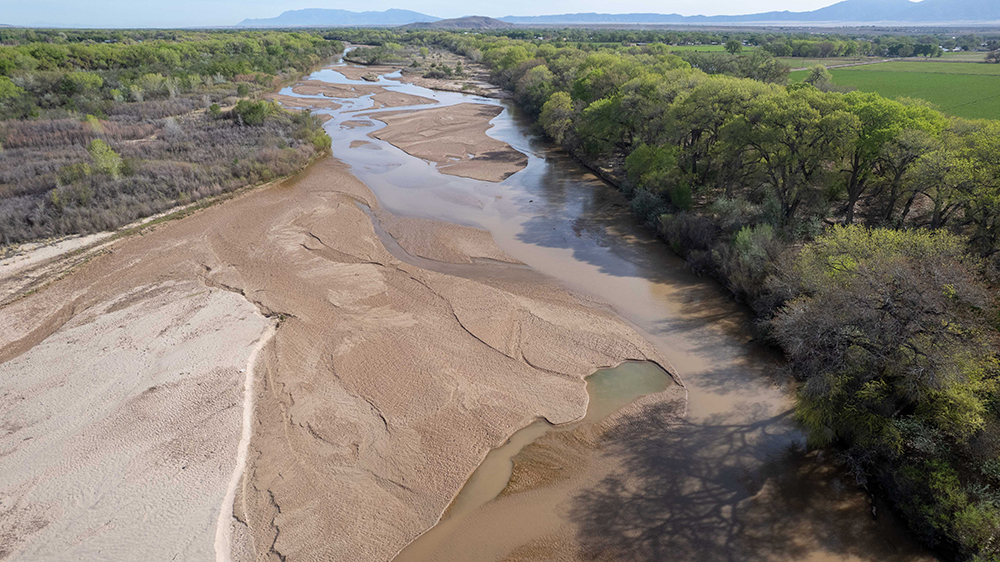
Some parts of the Rio Grande are already showing signs of stress. Drying began in the San Acacia stretch on March 27, the earliest date recorded in the past 30 years.
Officials warn that sections of the river flowing through Albuquerque could dry up later this summer if conditions remain hot and dry.
To protect wildlife, crews are preparing to rescue endangered fish from shrinking pools and isolated stretches of the river.
Irrigation Season Starts Early.
Farmers are also feeling the effects.
Irrigation diversions in Colorado began earlier than usual in mid-March. In New Mexico, the Middle Rio Grande Conservancy District started staggered irrigation in late March using natural river flows.
On the Pecos River, farmers received limited allocations of 2.5 acre-feet per acre, reflecting the tight supply.
In another sign of how dry conditions have become, snowmelt in the Pecos Basin failed to reach Santa Rosa Reservoir at all. Any additional water there will depend entirely on rainfall.
Waiting on the Monsoon.
Forecasters expect hot, dry weather to continue through May. There is some hope for relief later in the summer if the monsoon season brings above-average rainfall.
If those rains do not materialize, Elephant Butte Reservoir could drop to about 2 percent of capacity by late August. That would be even lower than levels seen during severe drought conditions in 2013.
A Delicate Balance Ahead.
Water managers are now working to stretch limited supplies across competing needs, including agriculture, cities, recreation, and endangered species protection.
With little margin for error, the months ahead will depend heavily on weather patterns and careful coordination among agencies and water users.
The 2026 season is shaping up as another test of how the Rio Grande system handles prolonged drought in the modern West.
Pictured: Diminishing flows in the Rio Grande Isleta reach April 9, 2026. Photo by GeoSystems Analysis and published in the Bureau of Reclamation’s news release.
It will certainly not be good for crops!