
- Most water in western Colorado begins as mountain snow.
- The U.S. Forest Service manages much of this critical land.
- Forest health directly affects water supply and quality.
- Thinning and controlled burns help protect watersheds.
- Local partnerships connect restoration with jobs.
Wednesday, April 22, 2026 — Across western Colorado, water begins in the mountains. Snow gathers across forests like the Grand Mesa, then slowly melts into creeks, reservoirs and irrigation systems that support communities across the Western Slope.
An April 16, 2026, article from the U.S. Forest Service highlights how much of this water originates on federally managed forest lands, making those landscapes central to life downstream.
Snowpack: Natural Storage for the West.
Snowpack acts as a natural reservoir. It stores water through winter and releases it gradually in warmer months, keeping rivers flowing and reservoirs supplied.
Much of this land is managed by the U.S. Forest Service, placing the agency at the center of water protection across the region. Decisions made in these headwaters can shape water conditions far downstream.
That system is under strain. Drought, insect damage and decades of fire suppression have left forests overcrowded and vulnerable to severe wildfire. These conditions can threaten both water quantity and quality.
Forest Health and Water Supply.
Water managers point to a clear link: healthy forests support reliable water.
About 80 percent of Colorado residents rely on water that begins in forested areas, according to the Ute Water Conservancy District. That reliance underscores the importance of active forest management.
On the Grand Mesa, the U.S. Forest Service is part of a broad partnership with state agencies, local governments, industry and nonprofit groups. The focus is watershed resilience. The goal is to keep forests strong enough to handle drought, fire and changing conditions while continuing to supply clean water.
Managing Forests to Reduce Risk.
Work on the ground includes thinning dense stands of trees, using controlled burns and supporting timber harvest. These steps reduce fuel buildup and help restore a more natural forest structure.
The intent is not to stop fire, but to prepare for it. Managers are working to create conditions where fire can occur without causing lasting damage to watersheds.
Projects often cross public and private land, allowing partners to work at a larger, more effective scale.
Economic Benefits Alongside Restoration.
Forest restoration also supports local economies. Timber removed during treatments is used by regional mills, helping sustain jobs in logging, transportation and equipment operations.
This link between restoration and industry helps keep projects moving and provides stability for nearby communities.
Why It Matters.
Recent wildfires across the West have shown how quickly watersheds can be damaged. Burned areas can lead to erosion and sediment that affect water systems for years.
On the Grand Mesa, where communities depend on forest-fed water, protecting these landscapes is tied directly to long-term stability.
A Working Model.
The Grand Mesa effort shows how collaboration can strengthen both land and water systems. The U.S. Forest Service remains a central player, managing large portions of the headwaters that supply the region.
The takeaway is simple. Healthy forests help secure the West’s water future.
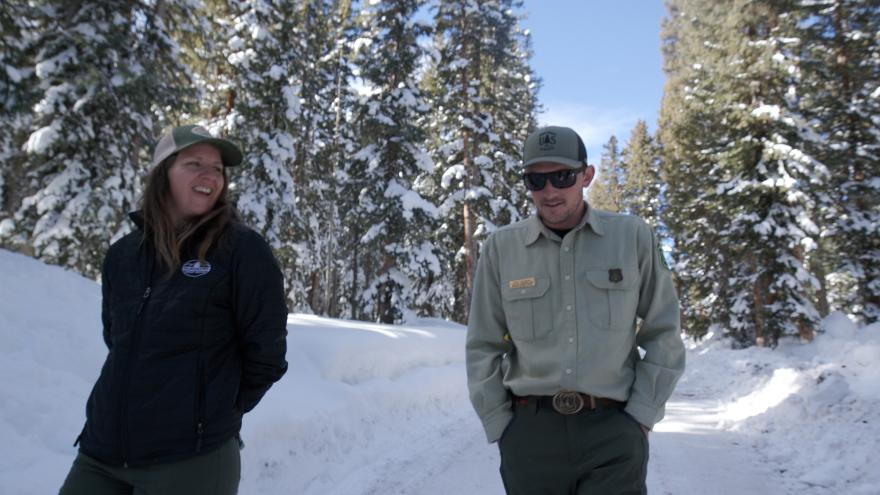
Pictured via the U.S. Forest Service article: Hallie Flynn, forester with Colorado State Forest Service, and Kyle Rogers, timber sales administration with USDA Forest Service, discuss active timber management on the Grand Mesa National Forest. To improve conditions, crews are thinning dense areas, using prescribed fire and supporting commercial timber harvest. The goal is to reduce overcrowding, restore more a natural forest structure and give the ecosystems a better chance to withstand natural occurrences, including wildfire. (Forest Service photo by Travis Weger).