
- California headwaters provide more than two-thirds of the state’s water supply.
- Severe wildfires are damaging snowpack, water quality, and reservoirs.
- State and federal agencies treated about 591,000 acres per year between 2021 and 2024.
- Officials say better long-term treatment strategies may improve wildfire resilience.
- Some rural landowners, Tribes, and local groups still face challenges reporting wildfire treatment data.
Wednesday, May 6, 2026 –– California’s battle against severe wildfires is no longer just about protecting forests or homes. Increasingly, it is about protecting the state’s water supply.
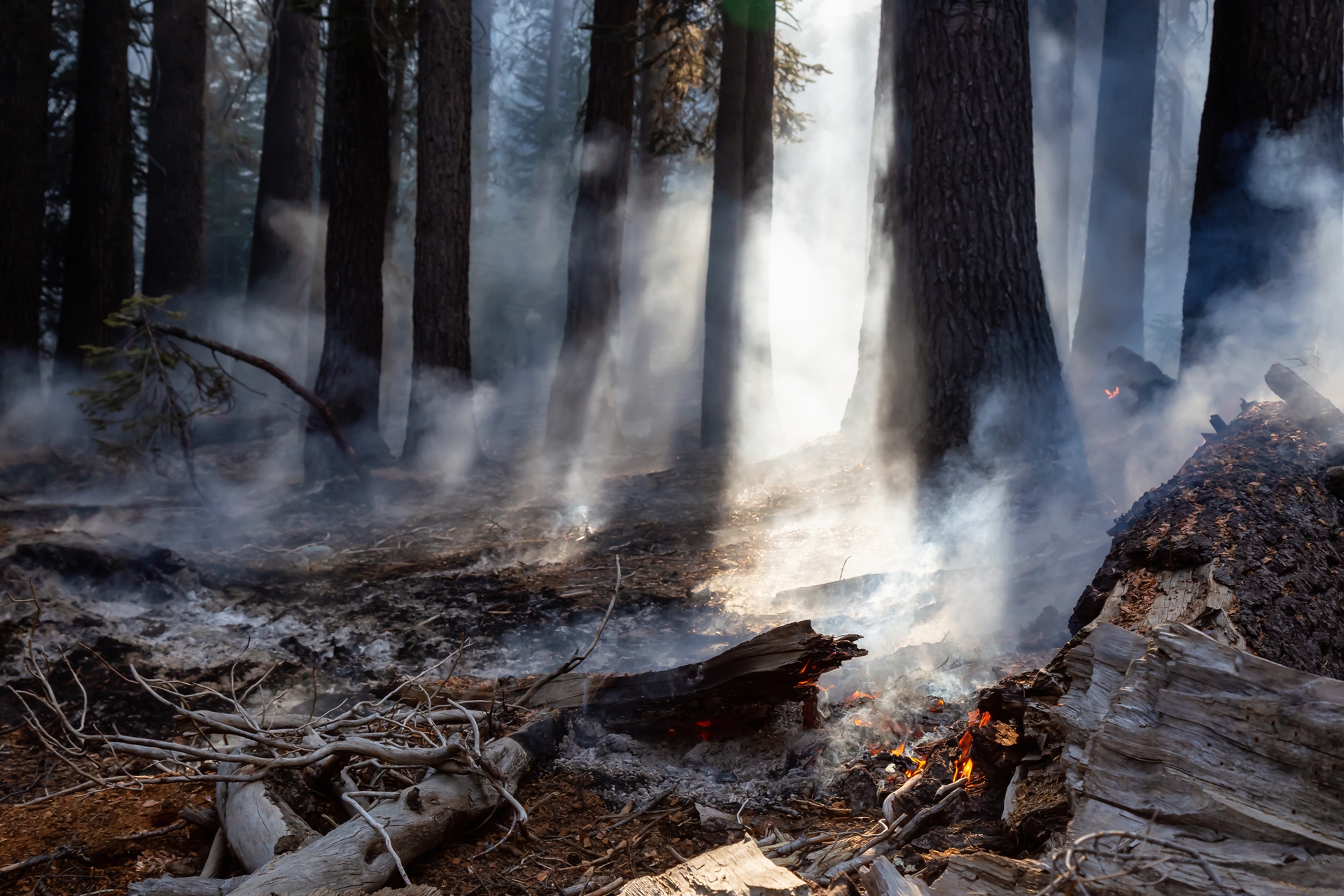
A new policy brief from the Public Policy Institute of California warns that California’s mountain headwaters, where rivers and streams begin, are under growing pressure from larger and more destructive wildfires.
Those headwaters play a critical role in everyday life across the state. Snowpack, soils, and mountain meadows slowly release water through the spring and early summer, helping supply cities, farms, and communities during California’s long dry season.
According to the report, headwaters provide more than two-thirds of the water Californians use each year.
Why Wildfires Matter to Water.
Researchers say California’s forests once experienced frequent, lower-intensity fires that naturally cleared out brush and smaller vegetation. Those fires helped maintain healthier forests with mature trees that were more resistant to catastrophic burns.
But decades of fire suppression changed that balance.
Vegetation built up over time, creating heavier fuel loads that can feed intense wildfires. The report notes that before 1800, between 4.5 million and 12 million acres burned annually across California landscapes. By comparison, only about 250,000 to 300,000 acres burned annually during the second half of the twentieth century because of suppression efforts and land-use changes.
Now, when large high-severity fires move through headwater regions, the impacts can ripple far beyond the burn scar.
The report explains that severe wildfires can reduce snowpack, damage downstream water quality, and increase sediment flowing into reservoirs.
That matters because reservoirs and mountain runoff are deeply tied to California’s drinking water, irrigation systems, and hydroelectric operations.
A Massive Statewide Effort.
California and federal agencies have responded with what researchers describe as an “unprecedented multi-agency effort” to reduce wildfire risks across one million acres of wildlands each year.
The work includes thinning vegetation, prescribed burns, and other wildfire hazard reduction projects designed to make forests more resilient.
According to the policy brief, a state-federal task force treated an average of about 591,000 acres annually between 2021 and 2024.
Researchers credited the effort with improving coordination, partnerships, and data sharing between agencies and organizations.
Still, the report says the state has not yet reached its million-acre annual target.
Not All Treatments Last the Same Length of Time.
One of the more important findings in the report is that not all wildfire treatments are equally effective over the long term.
Some projects may reduce wildfire danger only temporarily, while others can provide protection for many years. Researchers suggested that focusing on “higher-quality treatments with longer-lasting effects” may produce better results than spreading limited resources across broader areas with shorter-lived impacts.
The report also recommends improving how treatment projects are tracked.
Researchers called for clearer definitions of priority treatment areas, better mapping standards, and improved reporting systems so officials can better measure whether projects are actually reducing wildfire risks over time.
Gaps Remain in Rural and Tribal Areas.
The report noted that some wildfire treatment work may not be fully captured in state tracking systems.
Small organizations, Tribes, and private landowners often lack the staffing or technical resources needed to report treatment data consistently.
Researchers said the task force could help by supporting those groups and improving reporting capacity across underserved regions.
The policy brief also pointed to limited reporting in some headwater regions outside the Sierra-Cascades area.
A Growing Water Challenge.
The report comes as California and other Western states continue facing rising temperatures, shifting snowpack patterns, and more frequent extreme weather.
Researchers noted that the amount of Sierra-Cascades land burned in severe wildfires annually has tripled over the past 30 years.
For water managers, that trend raises difficult questions about long-term reliability.
Forests are no longer viewed only as wildlife habitat or recreation areas. Increasingly, they are being treated as part of California’s water infrastructure itself.
And as wildfire seasons grow longer and more intense, the condition of those forests may play a major role in determining how much clean water reaches communities downstream in the years ahead.
Source:
Adapted by Sarah Bardeen from Tracking Headwaters Management for Wildfire Resilience in California by Bradley Franklin and Kyle Greenspan.