
- Snowmelt runoff is forecast at just 17% of normal.
- Reservoir storage across the system remains far below average.
- Irrigation deliveries could start late and end early.
- Some reservoirs are expected to stay unusually low through summer.
- Extreme drought conditions continue in parts of Wyoming.
Friday, May 8, 2026 — The snow that normally helps feed the North Platte River Basin is simply not there this year, and federal officials are warning that the impacts could stretch across farms, reservoirs, recreation areas, and hydropower operations throughout the region.
Yesterday, the Bureau of Reclamation released a new forecast showing that spring runoff from mountain snowmelt above Glendo Dam is expected to be dramatically below normal. The agency estimates total runoff between April and July will reach only about 155,000 acre-feet. That is just 17% of the basin’s 30-year average.
An acre-foot is enough water to supply roughly two to three households for a year.
The forecast includes about 70,300 acre-feet of inflow that already entered the system during April. Even with that water included, the basin remains under severe stress.
Snowpack Problems Continue Across Wyoming.
Officials said snowpack across the basin is well below average, especially in the Upper North Platte Basin, where extreme drought persists.
Mountain snowpack acts like a natural reservoir in the West. Snow slowly melts during spring and summer, feeding rivers and reservoirs when demand increases. When snowpack is weak, rivers receive less water during the hottest and driest part of the year.
That appears to be exactly what is unfolding in 2026.
The Bureau of Reclamation said storage conditions across the North Platte Reservoir System are also lagging far behind normal levels.
The entire reservoir system can hold about 2.8 million acre-feet of conservation storage. But as of April 30, 2026, combined storage stood at roughly 1.25 million acre-feet. That is only 67% of the 30-year average.
Reservoir Levels Expected to Stay Low.
Federal officials warned that several key reservoirs are likely to remain unusually low throughout the summer.
Seminoe Reservoir and Pathfinder Reservoir are both expected to stay at depressed levels. Pathfinder Reservoir is not expected to spill this spring, something that typically happens during stronger runoff years.
Officials also said Pathfinder Reservoir could drop sharply once irrigation deliveries begin in late June.
Further downstream, Glendo Reservoir and Guernsey Reservoir are also expected to struggle.
According to Reclamation, those reservoirs are not expected to fill as early or as high as normal. Water levels are also expected to decline sooner than usual during late summer.
Because of changing water levels, boaters were advised to use caution and monitor reservoir conditions closely.
Farmers Could Face Shorter Irrigation Season.
The poor runoff forecast is also expected to affect irrigation deliveries across the North Platte Project.
Reclamation said an allocation is expected based on current water supply forecasts, though exact details were not included in the release.
Officials warned that limited water supplies will likely delay irrigation releases from Guernsey Reservoir until June. Releases are also expected to end earlier than normal later in the season.
That could create difficult conditions for agricultural producers who rely on the system during peak summer growing months.
The North Platte Project supports hundreds of thousands of acres of farmland across the region.
River Releases Expected to Increase Later This Summer.
Current releases from the reservoir system remain relatively modest.
As of May 7, 2026:
- Seminoe Reservoir was releasing 530 cubic feet per second through the Miracle Mile.
- Gray Reef Reservoir releases were 500 cubic feet per second.
- Glendo Reservoir releases were 25 cubic feet per second.
- Guernsey Reservoir had no active releases.
Summer releases are expected to increase significantly in some locations.
Gray Reef Reservoir releases are projected to range between about 1,000 and 2,500 cubic feet per second. Guernsey Reservoir releases could range from roughly 1,600 to 5,000 cubic feet per second, depending on irrigation demand and system operations.
Seminoe Reservoir releases are expected to remain near 530 cubic feet per second.
Hydropower and Regional Water Supply at Stake.
The North Platte River reservoir system plays a major role in both agriculture and electricity generation across Wyoming and surrounding states.
The Bureau of Reclamation operates seven reservoirs along the river system, stretching from Seminoe Reservoir upstream to Guernsey Reservoir downstream.
In addition to irrigation, the system supports six hydropower plants that provide electricity to tens of thousands of homes.
The new forecast highlights how quickly drought conditions and weak snowpack can ripple through nearly every part of the western water system, from farming and recreation to energy production and reservoir management.
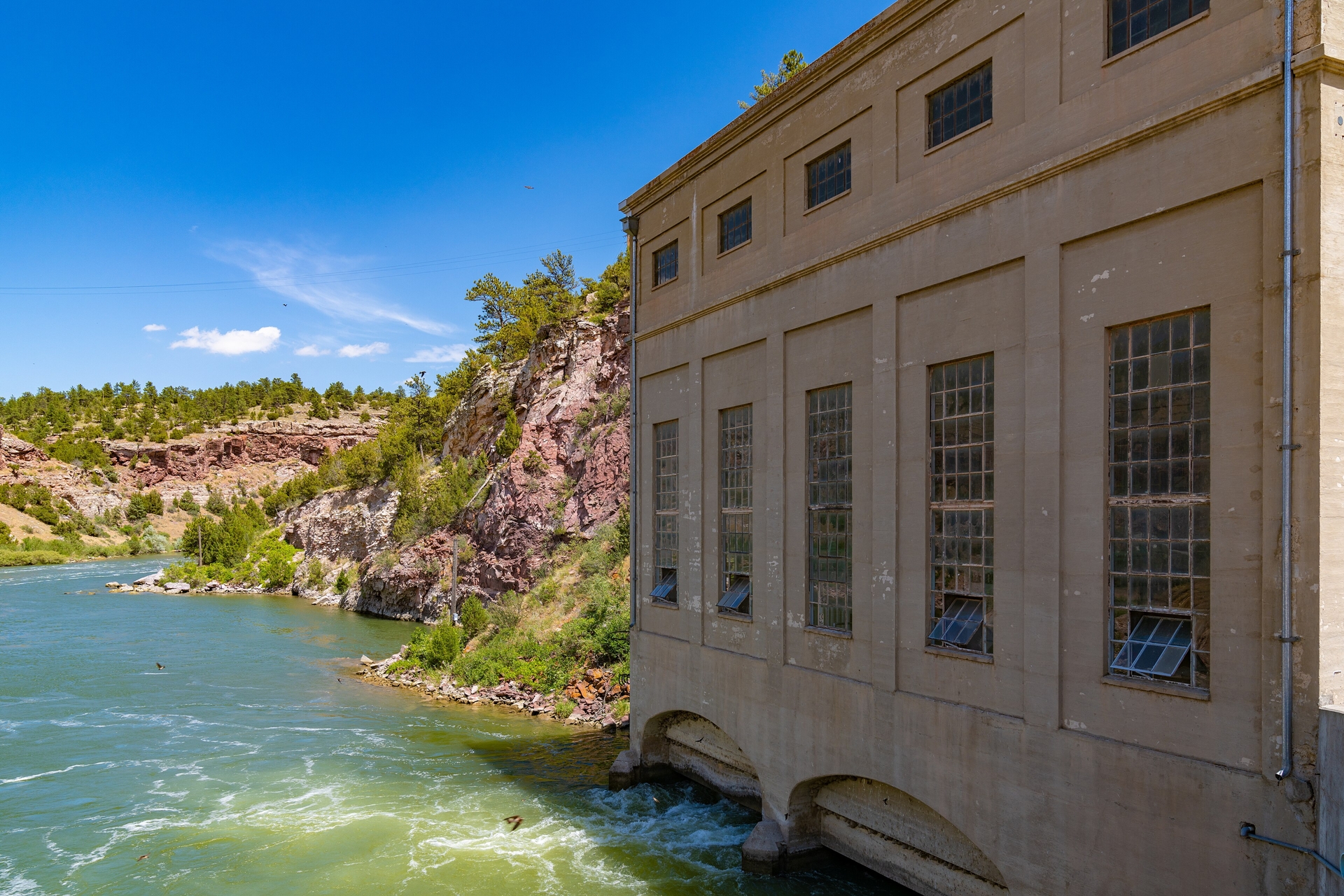
Pictured: The North Platte River rushes down a valley after passing through the Guernsey Dam.jpg "Opens in a new tab.") near Guernsey, Wyoming (July 2022), by Tony Webster. Licensed under the Creative Commons Attribution 2.0 Generic license.
near Guernsey, Wyoming (July 2022), by Tony Webster. Licensed under the Creative Commons Attribution 2.0 Generic license.