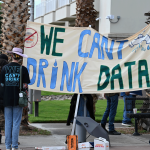

- Senate Bill 1046 has passed the California Legislature.
- The measure addresses workers exposed to pollution near the border.
- Lifeguards, park rangers, and other high-risk workers could be covered.
- Proposed standards could include protective equipment and health monitoring.
- The bill now goes to Gov. Gavin Newsom for consideration.
Saturday, August 28, 2026 —For lifeguards and park rangers working near California’s southern border, pollution from the Tijuana River is not simply an environmental problem. It can be part of the workplace.
California lawmakers have now approved legislation intended to give those workers stronger protections from polluted water and air.
Senate Bill 1046 passed the California Senate on August 28 after previously clearing the Assembly. The Assembly vote was 76-0, while the Senate approved the measure on concurrence by a vote of 39-0. The bill next goes to the governor for consideration.
Pollution That Crosses the Border.
The legislation addresses what California calls “transboundary pollution,” meaning environmental pollutants or toxins that cross the border with Mexico into the state.
According to the Legislature, untreated sewage and industrial wastewater containing toxic chemicals, bacteria from fecal matter, and pathogens frequently cross the border because of inadequate sewage infrastructure, population growth, and wet weather.
The Tijuana River carries millions of gallons of untreated wastewater, including sewage and industrial waste, from Tijuana into California each year, according to an August 28 news release from state Sen. Catherine Blakespear’s office.
The pollution problem has contributed to more than 1,300 consecutive days of beach closures along the South Bay coastline.
But contaminated water is only part of the concern.
Research cited by Blakespear’s office indicates that pollutants in contaminated river water can become airborne. The polluted air can contain high concentrations of hydrogen sulfide, a gas associated with the strong odors reported around the river valley.
Heavy rain and flooding can worsen the problem. Blakespear’s office also noted that such events have become increasingly common because of climate change.
Workers Report Headaches, Nausea and Other Symptoms.
People who work outdoors in the affected areas may face repeated exposure.
California lawmakers cited reports from workers in the Tijuana River Valley who have experienced headaches, fatigue, nausea and bloody noses. The Legislature also found that long-term exposure to known contaminants may lead to gastrointestinal illness, skin infections, and respiratory and neurological disorders.
“The untreated wastewater pouring into the Tijuana River Valley has been an environmental nightmare for decades, polluting the surrounding air and water, and we need to protect any workers exposed to it,” Blakespear said in yesterday’s news release.
She said the legislation is intended to ensure that lifeguards, park rangers and other people required to work outdoors in the area are adequately protected.
What Senate Bill 1046 Would Do.
Senate Bill 1046 would require the California Division of Occupational Safety and Health to propose worker-protection standards to the Occupational Safety and Health Standards Board by January 1, 2030.
The standards would address employees who face high or prolonged exposure to transboundary pollution while working outdoors.
The legislation specifically identifies lifeguards and park rangers, along with other employees determined by the division to be at high risk. It applies to qualifying workers within 10 miles of the Tijuana River Valley Regional Park, Tijuana Slough National Wildlife Refuge, Tijuana River or New River.
The proposed workplace protections could cover several areas, including personal protective equipment such as respiratory protection and protective clothing.
They could also address medical monitoring, warnings about wet weather or other periods when exposure could be particularly high, and reporting and recordkeeping requirements.
Training could include information about environmental hazards, possible health effects and symptoms, proper use of protective equipment, and procedures for reporting exposure.
Hydrogen Sulfide Could Get Special Attention.
One pollutant receives particular attention in the legislation: hydrogen sulfide.
The Division of Occupational Safety and Health would be directed to consider identifying a hydrogen sulfide exposure level at which short-term or long-term health effects occur. Officials could also consider exposure thresholds for other pollutants.
The standards could be developed with input from a broad group of people and organizations, including lifeguards, park rangers, labor unions, local governments, employers, air districts, environmental and public health agencies, universities and state agencies.
The Occupational Safety and Health Standards Board would also be allowed to adopt emergency regulations to implement the law.
California Says the Problem Could Continue for Years.
The legislation recognizes that work is already underway at the federal level to address much of the pollution crossing the international border.
But California lawmakers said hazardous conditions are expected to continue for years. The Legislature also found that increasingly frequent and intense wet weather could worsen hazardous conditions even after binational projects are in place.
Lawmakers said employers currently lack adequate guidance and tools for protecting employees working outdoors in the affected areas.
That finding forms the basis for Senate Bill 1046’s approach: treating exposure to transboundary pollution not only as an environmental and public health problem, but also as an occupational safety issue.
The legislation was introduced by Sens. Catherine Blakespear and Steve Padilla in February and was most recently amended on August 21.
With passage by both houses of the California Legislature, the next decision belongs to the governor.