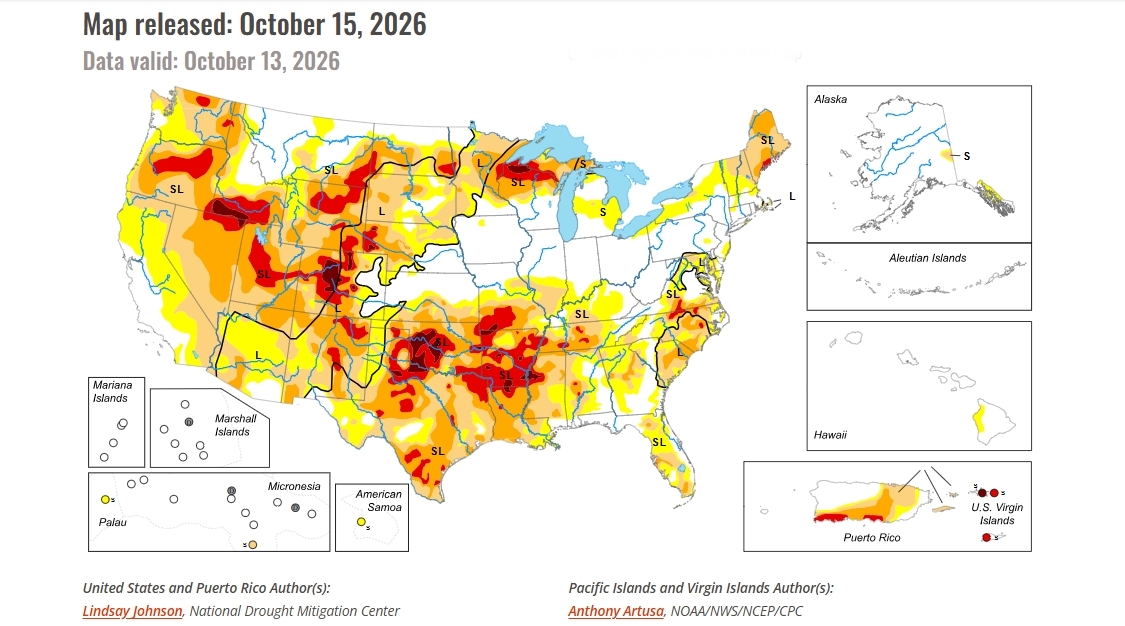
- Rain and early-season snow brought drought relief to parts of the West.
- Arizona, New Mexico, Utah, Colorado and Wyoming saw improvements.
- Significant drought conditions persisted across the Southwest and Great Basin.
- Forecasters expect additional precipitation opportunities in parts of the West.
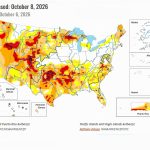
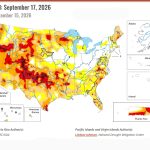
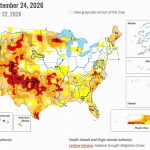
Saturday, October 17, 2026 –– Drought conditions shifted considerably across the United States during the week of October 7–13, 2026, according to the latest U.S. Drought Monitor Report . Heavy rain and early-season snow brought relief to portions of the West and Southeast, while unusually warm and dry weather worsened drought in parts of the Midwest and South.
Some of the greatest improvements occurred in the Southeast, where Hurricane Isaias delivered heavy rainfall to several states. Parts of Florida and Alabama received more than 12 inches of rain. Although the storm caused localized flooding, it also reduced drought conditions across much of the region.
Elsewhere, the picture was less encouraging. Temperatures climbed 8 to 16 degrees above normal in portions of the Plains and Midwest. Combined with limited rainfall, the unusual warmth contributed to worsening drought in several states.
Across the West, however, a combination of tropical moisture, rain and mountain snow brought welcome relief to portions of the Colorado River Basin.
Tropical Moisture Brings Relief to the Colorado River Basin.
A strong storm system combined with moisture left behind by Hurricane Rachel delivered precipitation across portions of the Southwest and Rocky Mountains from October 10–12.
According to the October 15 U.S. Drought Monitor report, Rachel dissipated over the southwestern United States on October 11. Its remaining moisture continued to produce heavy rainfall and gusty winds across the region.
The storm also brought early-season snow to higher elevations of the northern Rockies, including portions of Wyoming and Utah. Rainfall reached parts of Colorado and the Southwest.
The precipitation helped improve drought conditions in portions of five Colorado River Basin states: Arizona, New Mexico, Utah, Colorado and Wyoming.
In northern New Mexico, areas experiencing extreme drought (D3) decreased. Utah also recorded reductions in severe drought (D2) and extreme drought (D3).
Arizona experienced additional localized improvements following substantial drought relief during the preceding week.
Parts of the Rocky Mountains in Colorado and Wyoming also saw improvements as recent precipitation helped reduce short- and medium-term moisture shortages.
Drought Remains Despite Recent Storms.
Although the October storms brought measurable improvements, drought conditions remained a concern across much of the Colorado River Basin.
The U.S. Drought Monitor reported that significant drought persisted across portions of the Southwest, Great Basin and northern Rockies.
In Arizona, recent rainfall improved conditions in some areas, but longer-term precipitation shortages remained.
Colorado and Wyoming faced similar challenges. While some mountain areas received beneficial precipitation, much of the eastern plains experienced little change. Longer-term rainfall shortages and depleted soil moisture continued to limit recovery.
California and much of Nevada also saw little improvement during the reporting period. Both states remained relatively dry, and drought classifications were largely unchanged.
The contrast illustrates an important feature of the week’s weather: Some areas received enough precipitation to reduce drought severity, while others experienced little change.
What the Forecast Shows for the West.
The October 15 report also included weather outlooks extending into the following week.
For October 15–20, the National Weather Service’s Weather Prediction Center forecast a broad area of precipitation stretching from the Southwest and southern Plains toward the Midwest and Great Lakes.
However, much of California, Nevada and the interior Southwest was expected to remain relatively dry during that period.
The longer-range outlook offered a somewhat different picture.
For October 19–23, the Climate Prediction Center favored below-normal temperatures across portions of the western United States, particularly along the West Coast and into the Great Basin and Southwest.
The same outlook favored above-normal precipitation across much of the western and central United States.
These conditions could provide additional opportunities for drought relief, especially in locations where recent rainfall and snow had already reduced moisture shortages.
The forecasts describe expected weather patterns rather than observed conditions.
A Mixed Start to Autumn.
The October 15 U.S. Drought Monitor report documented both improvement and persistent drought across the seven Colorado River Basin states.
Rainfall and mountain snow reduced drought severity in portions of Arizona, New Mexico, Utah, Colorado and Wyoming. Meanwhile, California and much of Nevada experienced little change.
Longer-term moisture shortages remained in several areas despite the recent precipitation.
The next reporting periods will show whether additional autumn storms bring further improvements to the drought-affected West.