- Arizona researchers found that thinning forests helped soil retain moisture during severe winter drought.
- Adding mulch provided additional protection against dry soil conditions.
- Some untreated forest soils remained critically dry for up to 293 days.
- Researchers studied forests and woodlands near Flagstaff, Payson and Paulden.
- The benefits of forest treatments were most noticeable during drought conditions.
Monday, October 19, 2026 — A dry winter can leave Arizona’s forests struggling for water long after spring arrives. But new research suggests that removing some trees and spreading shredded wood across the ground can help forests hold onto valuable soil moisture during extended droughts.
A study published October 10, 2026, in the scientific journal Scientific Reports found that forest thinning, especially when combined with mulching, reduced the effects of the severe winter drought of 2024–2025.
Researchers examined soil moisture in three Arizona forest and woodland areas. Their findings showed that untreated forests experienced longer periods of extremely dry soil, while thinned areas generally retained more moisture.
In some locations, adding mulch made an even greater difference.
A Winter Drought That Lasted Into Spring.
Arizona’s forests depend on winter precipitation to replenish soil moisture before the hot, dry months arrive.
During a typical year, winter rain and snow help saturate the ground. As temperatures rise in April and May, the soil gradually dries until summer monsoon rains return.
The winter of 2024–2025 followed a different pattern.
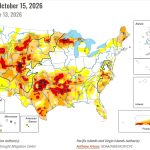
Precipitation from November 2024 through February 2025 was substantially below average at all three research locations. By the end of that winter, approximately 91% of Arizona was experiencing severe or exceptional drought, according to figures cited in the study.
The winter moisture shortage had lasting effects.
Instead of beginning to dry in April or May, soils at the research locations started losing moisture in November 2024. Dry conditions continued through much of the following spring.
Researchers found that the drought affected soil as deep as approximately three feet below the surface, where trees obtain water through their roots.
In some areas, the soil remained dry enough to cause significant vegetation stress for most of the study period.
How Researchers Measured the Drought.
The research team, led by Temuulen Tsagaan Sankey, used 118 soil moisture sensors distributed across three locations:
-
Northern Arizona: Ponderosa pine forests in Coconino National Forest near Flagstaff.
-
Central Arizona: Ponderosa pine forests and woodlands in Tonto National Forest near Payson.
-
Western Arizona: Pinyon pine and juniper woodlands in Prescott National Forest near Paulden.
The locations represented different elevations, temperatures, and precipitation patterns.
Researchers collected measurements from July 2024 through August 2025. Sensors were installed approximately 10 to 12 inches below the surface and at a deeper level of about 39 inches.
Rather than simply measuring how much water was present, the instruments measured how difficult it was for plant roots to draw water from the soil.
This measurement is called soil matric potential.
When soil becomes extremely dry, soil particles hold the remaining water more tightly. Plant roots must work harder to extract it.
The researchers identified critical dryness levels linked to significant plant water stress. They then counted how many days each study area remained below those thresholds.
The results revealed substantial differences between treated and untreated forests.
Near Flagstaff: 293 Days of Water Stress.
At the northern Arizona study location near Flagstaff, researchers compared three areas: a forest thinned in 2018, an untreated forest, and an area burned by the 2022 Pipeline Fire.
The untreated ponderosa pine forest experienced the longest period of critical soil dryness.
At a depth of approximately 39 inches, the results showed:
| Forest condition | Days of critical soil dryness |
|---|---|
| Untreated forest | 293 |
| Thinned forest | 244 |
| Wildfire-burned area | 68 |
The wildfire-burned area had the wettest soil during the winter drought, followed by the thinned forest. The untreated forest was the driest.
However, the burned area had lost nearly all of its tree canopy. The study measured soil moisture differences rather than evaluating wildfire as a forest management treatment.
Researchers also found that the differences between the three areas were most pronounced during the winter drought. During the warmer months, those differences were no longer statistically significant.
Near Payson: Mulching Made a Major Difference.
The central Arizona study area produced some of the most striking results.
Located in Tonto National Forest near Payson, the research site included an untreated ponderosa pine forest, an area thinned in 2014, and an area thinned and mulched in 2024.
At approximately 39 inches below the surface, the untreated forest experienced 177 days of critical soil dryness.
The area thinned and mulched in 2024 experienced zero days below the same critical dryness threshold during the study period.
The area thinned in 2014, however, experienced 222 days below the threshold.
Researchers suggested that soil conditions, including clay layers that can restrict downward water movement, might help explain the difference. The amount of time since thinning may also have played a role.
The 2024 treatment was different because workers shredded the removed vegetation and spread the material across the ground.
During the winter drought, soil in that thinned and mulched area was significantly wetter than soil in either the untreated forest or the area thinned a decade earlier.
The study also noted that the 2024 treatment area had previously burned in the 1990 Dude Fire and had developed into brush-dominated vegetation. That history distinguished it from the neighboring forest areas.
Near Paulden: Mulch Helped Dry Woodlands.
Researchers found similar moisture patterns in the warmer, drier pinyon pine and juniper woodlands near Paulden.
Three areas were compared: a densely wooded area treated as essentially unthinned, a site cleared in the 1950s, and an area thinned and mulched in 2022.
At approximately 39 inches below the surface, the results showed:
| Woodland condition | Days of critical soil dryness |
|---|---|
| Essentially untreated woodland | 260 |
| Cleared in the 1950s | 170 |
| Thinned and mulched in 2022 | 118 |
The thinned and mulched area experienced the fewest days of critical dryness.
However, the statistical analysis did not establish a significant additional mulching effect at this western Arizona location. Researchers suggested that the severity of the winter drought may have overwhelmed some treatment differences.
The findings nevertheless showed that the thinned and mulched area experienced fewer days of critical soil dryness than the neighboring woodland areas.
Why Thinning and Mulching Can Help.
Forest thinning involves removing selected trees to reduce the density of vegetation.
In dense forests, trees compete for available soil moisture. Thinning reduces that competition and can leave more water available for the remaining vegetation.
Previous research cited in the study also found that thinning can increase snow accumulation on the ground and help snow remain longer into the season.
Mulching adds another layer of protection.
After thinning, workers can shred removed trees and woody vegetation into smaller pieces and spread the material over the soil.
That covering can help reduce evaporation, moderate soil temperatures, and improve the soil’s ability to retain moisture.
The Arizona research found that combining thinning with mulching provided additional moisture benefits, particularly during winter drought.
The benefits were especially clear at the central Arizona research location.
Drought Conditions Made the Difference.
One of the study’s important findings involved when forest treatments provided the greatest benefits.
Researchers found that differences in soil moisture between treated and untreated forests were often much more noticeable during drought conditions.
During periods of average precipitation, those differences might be small or difficult to detect.
This was particularly evident in northern Arizona, where differences between treated and untreated areas were significant during the winter drought but not during the warmer season.
The researchers also found that winter drought affected more than the upper layers of soil.
Dry conditions extended about three feet below the surface, affecting the deeper soil moisture trees use.
The study explained that reduced winter snow and earlier snowmelt can contribute to prolonged water stress. Previous research has also connected these conditions with reduced streamflow and lower water yields.
The new research focused on soil moisture rather than directly measuring changes in streamflow or groundwater supplies.
What the Findings Mean for Forest Restoration.
Forest thinning is already used across Arizona and other western states, primarily to reduce wildfire risks and improve forest conditions.
Arizona’s Four Forest Restoration Initiative, commonly known as 4FRI, is a large-scale effort involving four national forests.
The new research adds information about how those treatments affect soil moisture during drought.
Researchers found that thinning helped reduce winter drought impacts across different forest and woodland environments. Combining thinning with mulching provided further benefits, although the results varied by location.
The study also identified limitations.
The study examined only three Arizona research areas, and the areas receiving more recent thinning and mulching treatments had relatively short monitoring records.
The researchers noted that additional study could help determine how treatment benefits change over time and how frequently forest restoration work might need to be repeated.
The findings were based on the unusually dry winter of 2024–2025, when soil moisture shortages extended well into the following spring.
The research team concluded that thinning and mulching improved Arizona’s dryland forests and woodlands’ ability to withstand winter drought, with the strongest benefits during periods of unusually low precipitation.
Citation:
Sankey, Temuulen Tsagaan, Julia Tatum, Logan Ozment, and Kenna Dinsdale. (2026). “Thinning and mulching reduce winter drought impacts on dryland forest soil moisture.” Scientific Reports. Published October 10, 2026. DOI: 10.1038/s41598-026-72948-3.
Source note: The research was released as an accepted, peer-reviewed Article in Press. The journal states that the version may undergo further editorial changes before publication of the final Version of Record.