
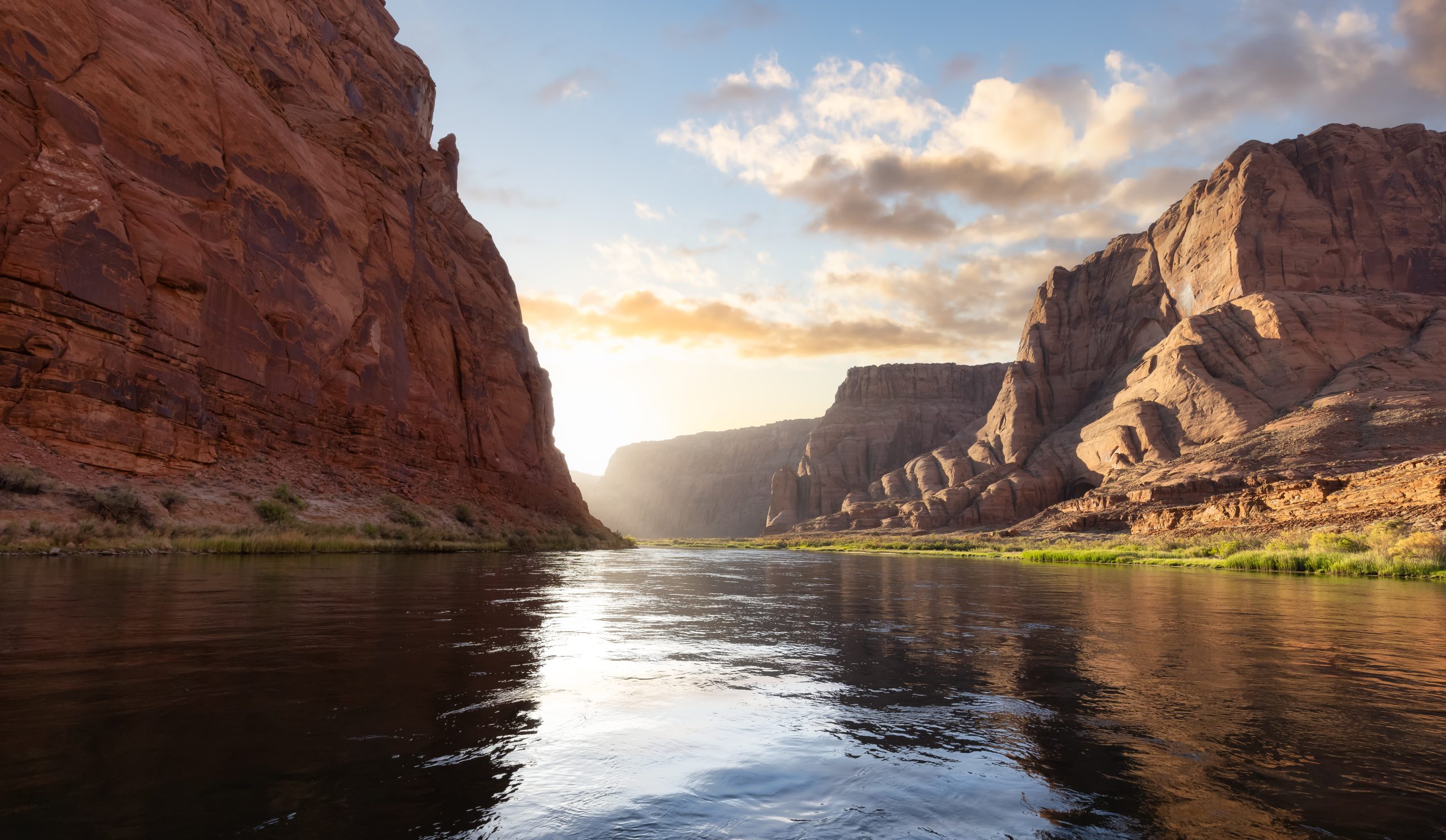
- Lower Basin states offered 1.5 million acre-feet in cuts.
- Arizona has put 27 percent of its supply on the table.
- Legal action is possible if no agreement is reached.
- Public comment period and federal decisions are approaching.
Thursday, February 12, 2026 — Arizona water leaders gathered yesterday to discuss high-stakes negotiations over the future of the Colorado River as the February 14 federal deadline draws closer.
At the meeting of the Arizona Reconsultation Committee , Governor Katie Hobbs called the river central to Arizona’s economy and identity.
“The Colorado River is everything to Arizona,” the Governor said. It supports winter vegetable production, supplies drinking water to millions of residents, holds cultural significance for 22 of the 30 Colorado River Basin tribes located in Arizona, and generates hydropower at both Glen Canyon Dam and Hoover Dam.
The Arizona Reconsultation Committee includes tribal leaders, farmers, municipal officials, and major water suppliers. The group serves as a forum for shaping Arizona’s position as negotiations intensify among the seven Colorado River Basin states.
Lower Basin Cuts Already on the Table.
The Lower Basin states of Arizona, California, and Nevada have offered to reduce river use by 1.5 million acre-feet collectively. According to Governor Hobbs, Arizona alone has offered to reduce its water supply by 27 percent as part of that proposal.
An acre-foot is enough water to supply roughly two to three households for a year. In practical terms, 1.5 million acre-feet represents a significant volume intended to help stabilize reservoir levels.
Tom Buschatzke, Director of the Arizona Department of Water Resources, told committee members that Arizona has already contributed nearly half of the water surrendered over the past decade to stabilize Lake Mead.
He expressed frustration that Upper Basin proposals continue to shift. The Upper Basin includes Colorado, New Mexico, Utah, and Wyoming.
“When we get into the assumptions about how the Powell to Lake Mead releases perform and it starts to get really weedy and I start to see magic occurring and it’s hard to assess the reality,” Buschatzke said.
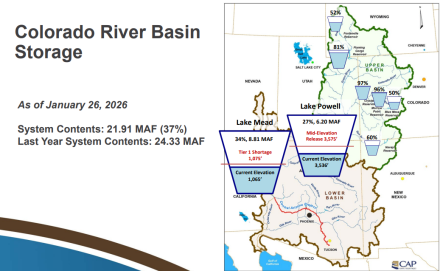 , from ADWR Report on the meeting
Proposed Phased Agreement.
Buschatzke outlined a possible phased agreement among the seven states that could begin with a one- to five-year first phase. He said Lake Mead could be stabilized with annual flows of 8 million acre-feet, combined with the 1.5 million acre-feet of proposed Lower Basin cuts.
He also credited the federal government for proposing movement of water from Upper Basin storage to help stabilize the system’s two largest reservoirs, Lake Mead and Lake Powell.
“We believe the federal government has the authority and the obligation to operate those reservoirs to try to meet the Compact obligations of the Upper Basin to the Lower Basin,” Buschatzke said.
Governor Hobbs stated that she made clear to Interior Secretary Doug Burgum that federally owned reservoirs in the Upper Basin, which hold millions of acre-feet in storage, should be used to satisfy Compact obligations and protect Lake Powell.
“They have the authority, and they need to act,” she said.
Legal Action Possible Under 1922 Compact.
If no consensus agreement is reached among the seven states, Arizona has indicated it is prepared to pursue legal remedies under the 1922 Colorado River Compact.
“Absent a consensus agreement, Compact compliance action is likely,” Buschatzke told reporters. “Can’t tell you when, but that seems to be the path we’re on.”
Ted Cooke Burman, General Manager of the Central Arizona Project, warned that a breach of the century-old compact is a looming possibility by 2026 or 2027 if current trends continue.
“We need everyone to be taking on some risk,” Burman said. “All of the risk cannot fall to the Central Arizona Project and Arizona. That’s simply not acceptable.”
The Upper Basin has sought some form of waiver or temporary waiver of Compact claims from the Lower Basin. Buschatzke said Arizona would consider a waiver only if Upper Basin actions are commensurate.
Federal Plan Expected by Late Summer.
If the states fail to reach agreement, the federal government is expected to finalize its own reservoir management plan by late summer 2026.
That plan could shape water allocations, reservoir operations, and reduction requirements for years to come.
For farmers, cities, tribes, and water districts, the outcome will determine how shortages are shared and whether reservoir levels can be stabilized in time to avoid deeper cuts.
What This Means for Arizona.
Arizona relies heavily on the Colorado River for municipal supply, agriculture, tribal water rights settlements, and hydropower.
The coming months will determine whether the Basin states can craft a compromise or whether the dispute moves into litigation and federally imposed management rules.
Either path carries long-term implications for water pricing, agricultural production, infrastructure planning, and interstate relations across the Southwest.
Q&A
What is the 1922 Colorado River Compact?
The 1922 Colorado River Compact is an agreement among seven Basin states that divides the river’s water between the Upper Basin and Lower Basin. It forms the legal foundation for Colorado River management.
How much water have the Lower Basin states offered to cut?
Arizona, California, and Nevada have offered to reduce their use by 1.5 million acre-feet collectively. Arizona’s share includes placing 27 percent of its water supply on the table.
Why are Lake Mead and Lake Powell important?
Lake Mead and Lake Powell store water for millions of people across the Southwest. They also generate hydropower and help ensure compliance with interstate water delivery obligations.
What happens if the states cannot agree?
If no agreement is reached, Arizona has indicated it may pursue legal action under the Compact. The federal government is expected to finalize a reservoir management plan by late summer 2026 if negotiations fail.
Is there a deadline to act or comment?
Federal action is expected by late summer 2026 if the states do not reach agreement. Stakeholders and water users should closely monitor federal announcements and public comment opportunities tied to that forthcoming management plan, as those deadlines could shape the final outcome.