
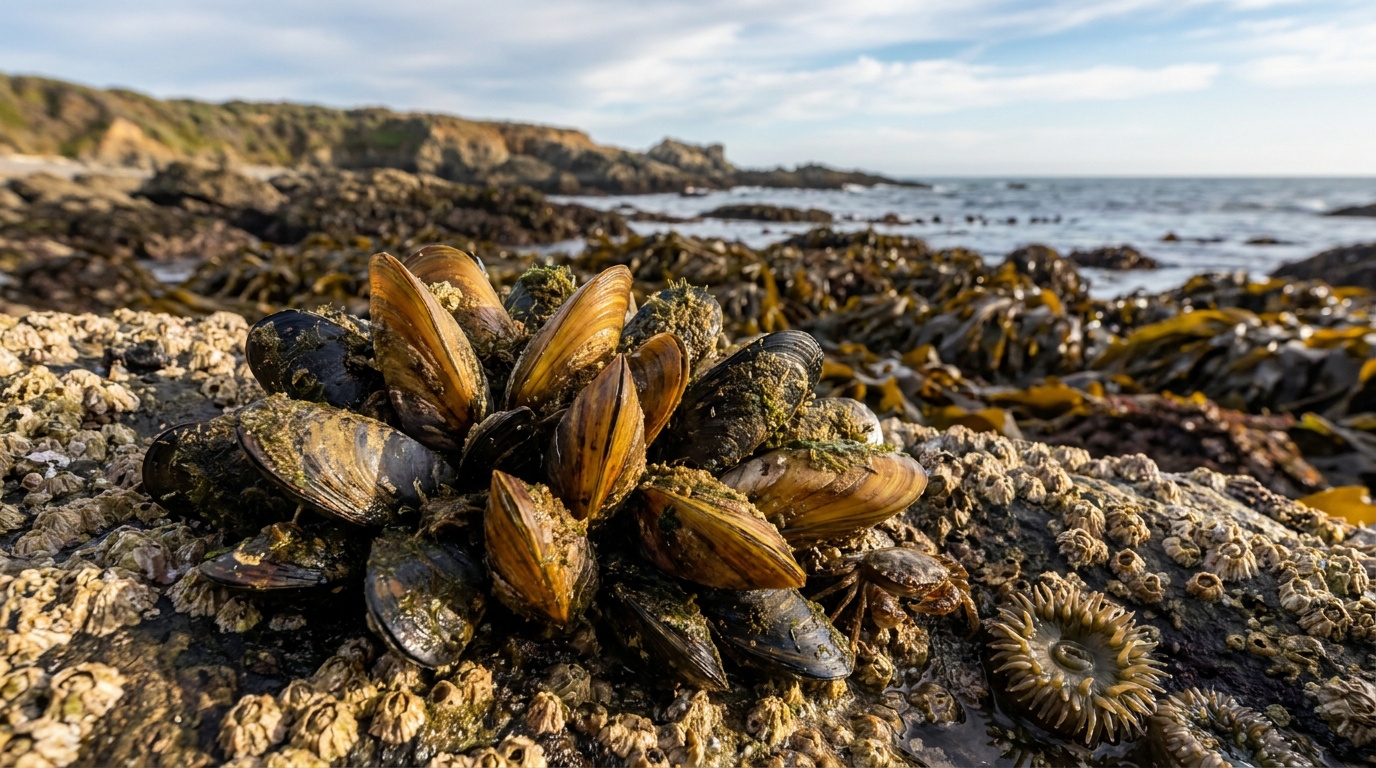
- California Governor Gavin Newsom signed a budget last week that includes $6 million to fight the spread of golden mussels across the state’s waterways.
- The invasive species, first detected at the Port of Stockton in October 2024, has now spread more than 500 miles through California’s connected waterways in under two years.
- State wildlife officials confirmed the northernmost detection of the species at the Port of West Sacramento on June 25, 2026.
- Two California senators introduced federal legislation in May to fund eradication and control efforts, with companion legislation already active in the House.
- Experts warn that once golden mussels establish themselves in a large, protected body of water, there is no known tool to remove them.
Tuesday, July 7, 2026 — It can fit between two fingers. But the golden mussel is becoming one of the most serious threats California’s water system has ever faced.
First spotted in the Sacramento-San Joaquin Delta in October 2024 , this tiny invasive shellfish has wasted no time spreading through the state. In less than two years, it has pushed more than 500 miles through California’s waterways, reaching as far south as San Diego and, as of late June 2026, as far north as the Port of West Sacramento.
The California Department of Fish and Wildlife confirmed on June 25, 2026 that golden mussels had been found near the Jefferson Boulevard overpass and at a second location near the intersection of Boathouse Road and Stone Boulevard in West Sacramento. Additional mussels were found in surveys around nearby Washington Lake. According to the department, the discovery marked the northernmost detection of the species since it first arrived at the Port of Stockton.
The mussels are believed to have originally arrived in California through ballast water discharged from a ship traveling from Asia.
What Makes These Mussels So Dangerous?
A single female golden mussel can produce thousands of offspring at each spawning, and the species reproduces multiple times each year. The larvae are microscopic and float invisibly through moving water. Once they find a hard surface, they attach themselves and grow into thick colonies that coat pipes, pumps, water intake screens, and power-generation equipment.
Senior scientist David Hammond, currently with the environmental services company SePRO, described what the larvae look like when they attach to a surface. “Smaller than a period on a page,” he told SFGate. “You wouldn’t see them if you just looked at a surface. You could run your fingers over a smooth surface, and it would start to feel like sandpaper.”
The consequences go beyond infrastructure damage. The mussels release nitrogen and phosphorus as byproducts, which can fuel the growth of harmful algal blooms that threaten both drinking water quality and aquatic life.
In plain terms, these are creatures that clog pipes, overheat pumps, cloud drinking water, and crowd out the native wildlife that California’s ecosystems depend on.
Emergencies Declared, Budgets Stretched.
Three California counties declared states of emergency this year over the golden mussel threat: Kern, Sacramento, and San Joaquin. San Joaquin County, where the mussels were first detected, was the first to declare an emergency, doing so in April 2026.
In Stockton, city officials declared a local emergency after a Stockton Municipal Utilities Department official reported that intake pipe screens were between 30 and 40 percent covered with mussels. Travis Small, the city’s deputy director of water resources, told the city council that common treatments such as copper and ultraviolet light were not feasible for the intake infrastructure. Workers were essentially left with mechanical removal, meaning divers had to scrape the mussels off the pipes by hand.
A $100 million floodgate in San Joaquin County also required expensive cleaning after golden mussels coated the structure.
San Joaquin County Supervisor Paul Canepa told SFGate that officials are exploring options including a vibration device designed to prevent mussel attachment, and different types of pipe coatings. “We’re trying to just get our arms around it and figure out best practices,” he said.
$6 Million From the State.
Writing for Stocktonia, journalist Chris Woodward reports that the California budget signed last week by Governor Gavin Newsom includes $6 million to combat the golden mussel threat. The funds are intended to support decontamination sites for boats and equipment in the Sacramento-San Joaquin Delta, with the goal of keeping the mussels from reaching additional lakes and rivers across the state.
Assemblymember Rhodesia Ransom, whose district includes Tracy and portions of San Joaquin County, said the funding is long overdue. “This funding brings critical state support to San Joaquin County and the Delta, where our communities have been experiencing the impacts of golden mussels since day one,” she said in a statement. “Without urgent action, golden mussels will continue to spread through California waterways, and families will bear the cost of this crisis through higher water rates and increased food prices.”
Woodward also notes that the state funding comes as federal legislators push for additional resources. The spread of golden mussels, Woodward reports, has so far seemed like a losing battle, with the invasive species reaching deep into California and officials deciding to give up containment efforts at Lake Oroville.
Federal Legislation Takes Shape.
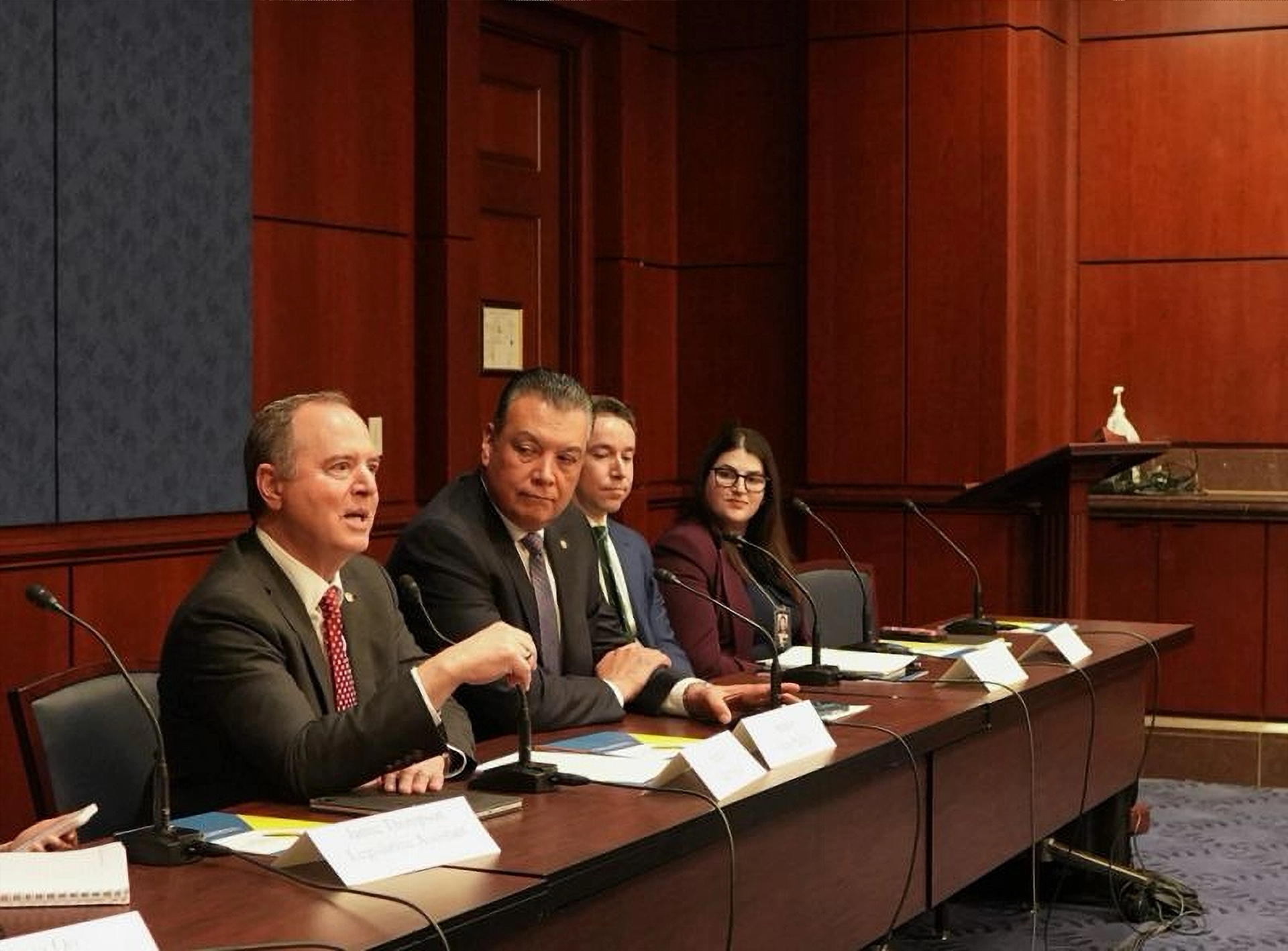
On May 20, 2026, United States Senators Alex Padilla and Adam Schiff, both California Democrats and members of the Senate Committee on Environment and Public Works, introduced the Golden Mussel Eradication and Control Act of 2026. The bill targets a species that, according to the senators, threatens water quality for 27 million Californians and puts more than $50 billion in agricultural production at risk.
The legislation would establish a demonstration program for prevention, monitoring, control, eradication, research, and education related to golden mussels. It would also create a competitive grant program for state and local agencies, universities, nonprofit organizations, and industry partners. An early warning system to track the species’ spread and alert communities to future infestations would also be developed under the bill, along with investment in new technology funded through the grant program.
“Golden mussels pose a threat to our water infrastructure by rapidly infesting our waterways across the state and releasing byproducts like nitrogen and phosphorus that can cause harmful algal blooms,” Senator Padilla said. “Our bill would invest in immediate steps to prevent their invasion, including by deploying new technology, inspection stations, and rapid response programs to better address this invasive species and protect our fragile Delta ecosystems.”
Senator Schiff described the spread as alarming. “It is clear that we must intensify efforts with local, state, and federal partners to prevent further spread of this invasive species to our water systems, and to address threats to our water quality,” he said. “As millions of Californians depend on the Delta and other critical sources of clean drinking water, we must strengthen our response to eradicating this problem once and for all.”
United States Representative Josh Harder, a Democrat representing California’s 9th Congressional District, introduced companion legislation in the House. Several other California House members signed on as co-sponsors.
Water agencies across the state have endorsed the bill. Rachel Murphy, general manager of the Contra Costa Water District, said her agency is “situated within the Delta and dependent on the Delta as our primary source of water supply” and is “at the forefront of developing monitoring, control and mitigation strategies.” Julie Regan, executive director of the Tahoe Regional Planning Agency, expressed support for the bill’s potential to protect both already-infested waterways and those that have not yet been reached. “Lake Tahoe does not have golden mussels, but if introduced, golden mussels would irreversibly harm the lake’s famed clarity, $5 billion annual outdoor recreation-based economy, and water supply infrastructure,” she said.
The Lake Oroville Question.
Perhaps the most surprising recent development in the golden mussel story involves what California decided not to do.
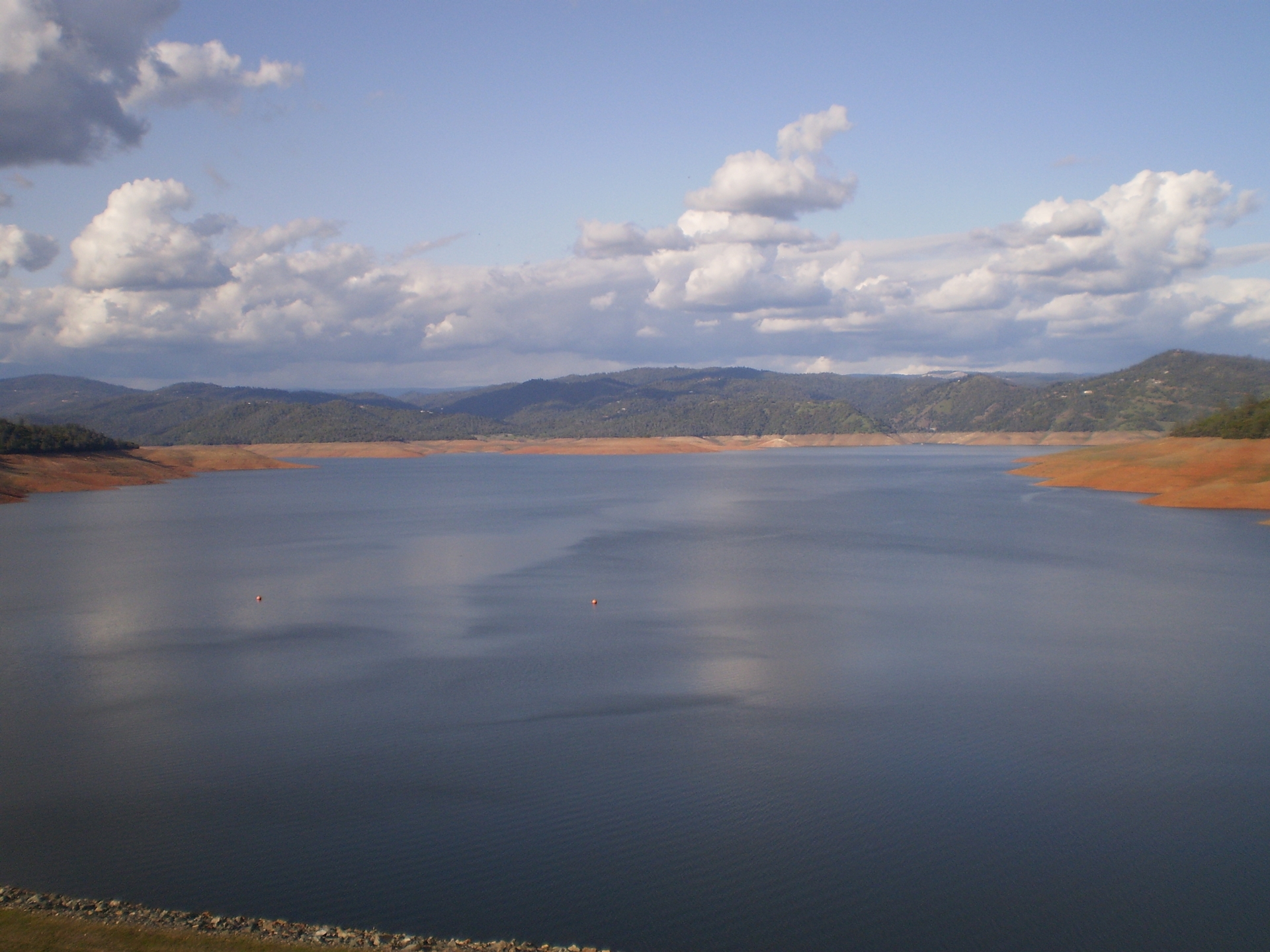
In April 2026, the California Department of Water Resources quietly ended mandatory boat inspections at Lake Oroville, the state’s second-largest reservoir. The decision came even as the agency was ramping up inspections at other water bodies across the state.
Gillian Mohney, news editor at SFGate, reports that state officials justified the rollback by citing a new risk assessment indicating a lower likelihood that golden mussels will become permanently established at Oroville. The reasoning centers on climate and the nature of the reservoir: colder temperatures mean mussels would likely survive only in the top 60 feet of a lake that currently measures 876 feet deep. Because Lake Oroville functions as an active reservoir, its water levels fluctuate significantly. Officials believe those fluctuations will periodically expose and dry out any mussels that attach before they can gain a permanent foothold.
David Hammond supported the reasoning. “I do understand their logic,” Hammond told SFGate, explaining that cooler temperatures make a permanent population unlikely. “Therefore it won’t become a vector for spread, which is normally what you’d be most concerned about with a large lake like that.”
Andrea Schreier, director of the Genomic Variation Laboratory at the University of California, Davis, told SFGate that the decision reflects the reality of managing a vast state with limited resources. “They do have ecological, physiological underpinning to that decision,” Schreier said. “They have limited resources, and they have to sort of triage what the greatest concerns are.”
But not everyone is satisfied. The California Department of Water Resources has not yet detected golden mussels in Lake Oroville, though monitoring continues. Experts caution that a warming climate could change conditions at the reservoir over time, and mussels are known to survive in waters ranging from 41 to 95 degrees Fahrenheit, according to the California Department of Fish and Wildlife.
Lake Oroville is a critical component of the state’s water delivery network. It holds up to 3.5 million acre-feet of water and helps supply water to 27 million Californians and over 750,000 acres of farmland. If golden mussels do take hold there, state officials say they have contingency plans, including a special ultraviolet disinfection system to protect the Oroville-Thermalito power plants and the Feather River Fish Hatchery, at a cost of about $1 million.
A Patchwork Approach Raises Alarms.
Critics of the Lake Oroville decision argue it exposes a fundamental weakness in California’s response: the lack of a unified, statewide strategy.
Laura Patten, natural resource director of Keep Tahoe Blue, told SFGate that the state’s approach is creating a “patchwork” of protections that leaves the overall system vulnerable. “Golden mussels don’t care which agency actually manages a reservoir. These things are spreading like wildfire right now,” Patten said. “And our concern is that once they get in, invasive mussels do have the potential to really destroy an ecosystem in a place like Lake Tahoe and we can’t fully protect ourselves, as the protections elsewhere are inconsistent.”
Patten’s concern is not theoretical. Last month, six boaters at Lake Tahoe were caught attempting to launch without proper inspections, and officials found that some inspection seals had been tampered with.
Patten was direct about the stakes. “If one of these golden mussels get in, they can multiply at a really extreme rate. There’s really no point of return, because we don’t have the tools to be able to get rid of these. There’s no eradication tool that we can deploy in Lake Tahoe, so prevention is our only cure.”
To address the inconsistency, advocates including Keep Tahoe Blue, the California Outdoor Recreation Partnership, and the National Marine Manufacturers Association are supporting Assembly Bill 1772, authored by state Assemblymember Diane Papan. The bill would require the California Department of Fish and Wildlife to develop and implement a statewide program to inspect and decontaminate boats and watercraft. California would also join a database shared with other Western states to track mussel movement. The bill would additionally expand a sticker-based funding program to include nonmotorized vessels, generating more revenue to cover program costs.
Papan described her reasoning in an email to SFGate. “An ounce of prevention is worth a pound of cure,” she wrote. “While some areas may not currently have the conditions that support the spread of invasive mussels, that may not be true tomorrow. That is why I believe Assembly Bill 1772 is so important. By establishing a uniform management strategy, we can prevent the spread before it occurs rather than relying on a piecemeal approach, which may carry more risk and cost.”
State Agency Releases Guidance, Asks Public for Help.
On July 3, 2026, the California Department of Fish and Wildlife released a new guidance document to help public and private water agencies develop invasive mussel control plans. The document is intended to assist agencies operating water supply systems where invasive mussels have been detected, providing a template for developing a control plan that meets state legal requirements. Department staff are available to assist agencies through the process.
The department is also asking the public to help track the spread of golden mussels by reporting any suspected sightings. Reports should include the specific location of the observation, at least one clear close-up photograph, and contact information. Sightings can be submitted online, by email at invasives@wildlife.ca.gov, or by telephone at (866) 440-9530.
Boaters and anyone using California waterways are urged to follow the Clean, Drain, Dry protocol: inspect all watercraft and gear that touched the water, remove all debris and plant material, and dispose of it in the trash, drain all water from ballasts and bilges, and allow everything to fully dry before moving to another water body.
The stakes are significant. The State Water Project and the Central Valley Project, the two largest water delivery systems in California, together supply water to millions of residents and support irrigation across more than four million acres of farmland that feeds much of the nation. The golden mussel, small enough to fit between two fingers, now threatens the infrastructure that holds it all together.