
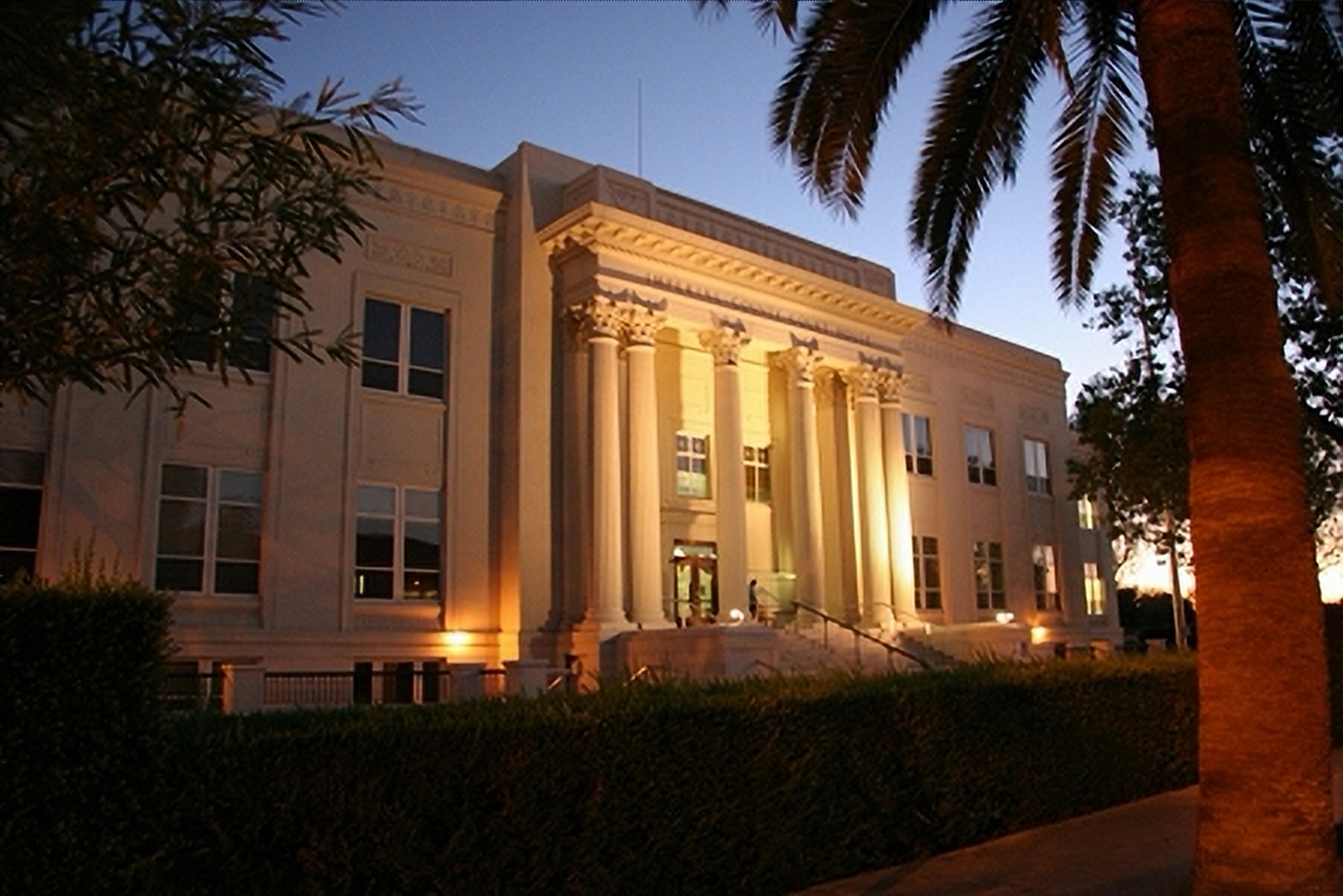
- The proposed Imperial Valley Data Center would be California’s largest, at nearly one million square feet.
- Its developer wants Colorado River water from the Imperial Irrigation District after a recycled water deal collapsed.
- The district denied the request on May 1, 2026, and the company sued in June.
- Imperial County paused new data centers, and the developer is now fighting that freeze in court.
- A separate case will decide whether the project needs a full environmental review.
Tuesday, August 4, 2026 — A fight over water, electricity, and a giant computing campus is unfolding in one of California’s driest farming regions. As of early August 2026, the proposed Imperial Valley Data Center faces several lawsuits, a county freeze, and two court rulings that could decide its future.
A giant campus in a small desert county.
The project comes from Imperial Valley Computer Manufacturing, a limited liability company led by Sebastian Rucci. Court records list its home base in Riverside County. The plan is a large data center built for artificial intelligence and machine learning, placed at Aten and Clark Roads in unincorporated Imperial County, close to the city of Imperial and a residential neighborhood.
CalMatters reported the facility would be the largest data center in the state, at about 950,000 square feet, close to one million. The company says the project would bring 2,500 construction jobs and 100 permanent jobs, a one-time sales tax of $72.5 million, and roughly $28.7 million a year in taxes, according to CalMatters. Many residents and local leaders worry the health, environmental, and economic costs could outweigh those gains.
The disagreement rests on one hard fact. Imperial County depends on the Colorado River. Court records describe the project as a 330 megawatt data center. State Senator Steve Padilla has said it could use almost double the electricity the entire county used in 2024, and could need 750,000 gallons of water a day, figures cited by the Sierra Club.
The recycled water plan falls apart.
According to the company’s June court petition, the plan first relied on recycled water. The company arranged to treat wastewater from the cities of Imperial and El Centro, agreed to pay millions and to upgrade the treatment plants, and planned to send most of the cleaned water, about 87 percent, to the Salton Sea.
That plan came undone. On November 26, 2025, the City of Imperial backed out. On December 4, 2025, the city filed a court challenge to the project’s exemption from the California Environmental Quality Act, a state law known as CEQA. About a week later, the City of El Centro backed out as well. After four more months of trying to save the deal, the company turned to the Imperial Irrigation District, the local agency that delivers Colorado River water.
The company’s new idea was to supply its own water. It controls a 160-acre farm next to the 75-acre industrial site. Court records say the company offered to idle, or “fallow,” that farm and move its water to the data center. The company argues this adds no new demand on the river, because the water already flowed to that land. It points to Water Code section 1011, which treats water saved by fallowing as conserved water that can be shifted to a new use.
The irrigation district says no.
On April 22, 2026, the company filed a complete application with the district for 880 acre-feet of water a year for cooling, an amount its petition compares to the water a 160-acre farm uses. Earlier reporting by CalMatters and Courthouse News described the request as about 260 million gallons of Colorado River water a year. The petition notes that 880 acre-feet is a very small share of the district’s supply, about 0.0284 percent of its 3.1 million acre-foot yearly entitlement.
On May 1, 2026, the district denied the request. Court records say the denial rested on Regulation 21, a rule for small parcels that blocks new water hookups within 300 feet of a city’s drinking water supply. In its denial letter, the district said the site sits inside the City of Imperial’s sphere of influence and next to areas already served with treated city water. The district pointed the company to the City of Imperial for service. The company calls that a dead end, since the city has refused to serve the project and is suing to stop it.
On June 5, 2026, the company filed a verified petition in Imperial County Superior Court against the Imperial Irrigation District. The petition lists eight legal claims. Among them, the company argues that Regulation 21 does not apply to raw water used for industrial cooling, that using drinking water for cooling would be wasteful under state law, and that its parcels already hold a right to service.
The petition also challenges the district’s newer Adaptive Water Supply Policy, adopted on December 2, 2025, which sets a separate and slower track for industrial users. Court records say only two industrial projects won water approval from the district in the past sixteen years. The company further claims the policy’s fees violate Proposition 218, the state’s rule on public charges, and cites a 2020 appeals court decision, Abatti v. Imperial Irrigation District, to argue that industrial users cannot be placed permanently behind farmers.
The county hits pause.
In early June 2026, the Imperial County Board of Supervisors reversed an earlier approval, declared a 45-day freeze on new data centers, and formed a public commission to advise on zoning, CalMatters reported. The reversal followed months of pushback and a long public hearing. The freeze was later stretched to about ten and a half months, running until June 2027, so the county could study its land use rules, according to Courthouse News.
That was a sharp turn. In April, supervisors had approved merging several parcels for the project, a step CalMatters described as a major hurdle cleared. Court records date that lot merger, Resolution 2026-057, to April 7, 2026.
The developer fights the freeze.
On June 23, 2026, Rucci said he was filing a lawsuit that day to seek a temporary restraining order against the freeze, telling CalMatters the moratorium was legally flawed. He argued that a freeze of this kind is meant for real emergencies, not for planning.
On July 28, 2026, that challenge reached Judge Jeffrey Jones in Imperial County Superior Court, Courthouse News reported. Rucci argued the county stopped projects without naming an immediate threat. “There’s no harm identified,” he told the court. The county’s attorney, Nathan George, argued the development itself is the threat, and compared the situation to a warning that a tornado is coming. The judge sounded doubtful. He pressed the county to point to a real and immediate risk to residents’ health, safety, and welfare, and suggested that public worry alone might not be enough. George answered that the freeze exists to find the harms and ways to reduce them, and that applications can still move forward in the meantime.
A separate fight over environmental review.
A day later, on July 29, 2026, a different case went before Judge Anderholt, the Imperial Valley Press reported. The City of Imperial and the Sierra Club argue the project needs a full review under CEQA, which studies a project’s effects before construction and can take a year or more. The city says the county never studied the data center’s impact.
The company and the county see it differently. They call the project “by right,” meaning the zoning already allows it, and say the same zoning permits 225 other uses, some more impactful than a data center. A company representative, Hector Casas, said the zoning that allows a data center dates back to 2017. The Sierra Club raised concerns about battery storage, backup generators, water use, and strain on the power grid. Imperial City Manager Dennis Morita said the judge took the case under submission, and that the matter is now “in the judge’s hands.” Judge Anderholt is expected to rule within 90 days.
Lawmakers and neighbors take sides.
The dispute has pulled in state lawmakers. Senator Padilla introduced several bills to tighten oversight, CalMatters reported. One would change the Imperial County Air Pollution Control District from its current makeup of the five county supervisors to a broader panel of 10 local members. Another would require large data centers to pay their energy costs up front, so those costs are not passed on to other customers. A third would bar data centers from CEQA exemptions and require zero-carbon energy, recycled water, and pollution offsets. All three passed the state Senate and await votes in the Assembly.
Not everyone welcomes more rules. Farmer Lawrence Cox said California’s regulations hurt local businesses’ ability to compete. Others focused on health. Michelle Hollinger, a vice president for Victoria Homes, pointed to the valley’s high childhood asthma rates and the cost to families of “watching children struggle to breathe.” Meanwhile, local voters are gathering signatures for a measure to ban data centers in the county. CalMatters noted that Monterey Park, in Los Angeles County, became the first city in the country to pass a data center moratorium.
Courthouse News also reported the company has filed several lawsuits, including actions against local officials, journalists, and activist groups, on top of its cases over the freeze and the water.
What happens next.
As of early August 2026, two rulings loom. Judge Jones is weighing whether the county’s freeze can stand. Judge Anderholt is weighing whether the project needs a full environmental study, with a decision expected within 90 days of the July 29 hearing. The county’s moratorium, if it holds, runs until June 2027. The company’s water case against the Imperial Irrigation District remains open. For a region that lives and farms on a single river, the outcome will shape how much room a thirsty new industry has in the desert.