
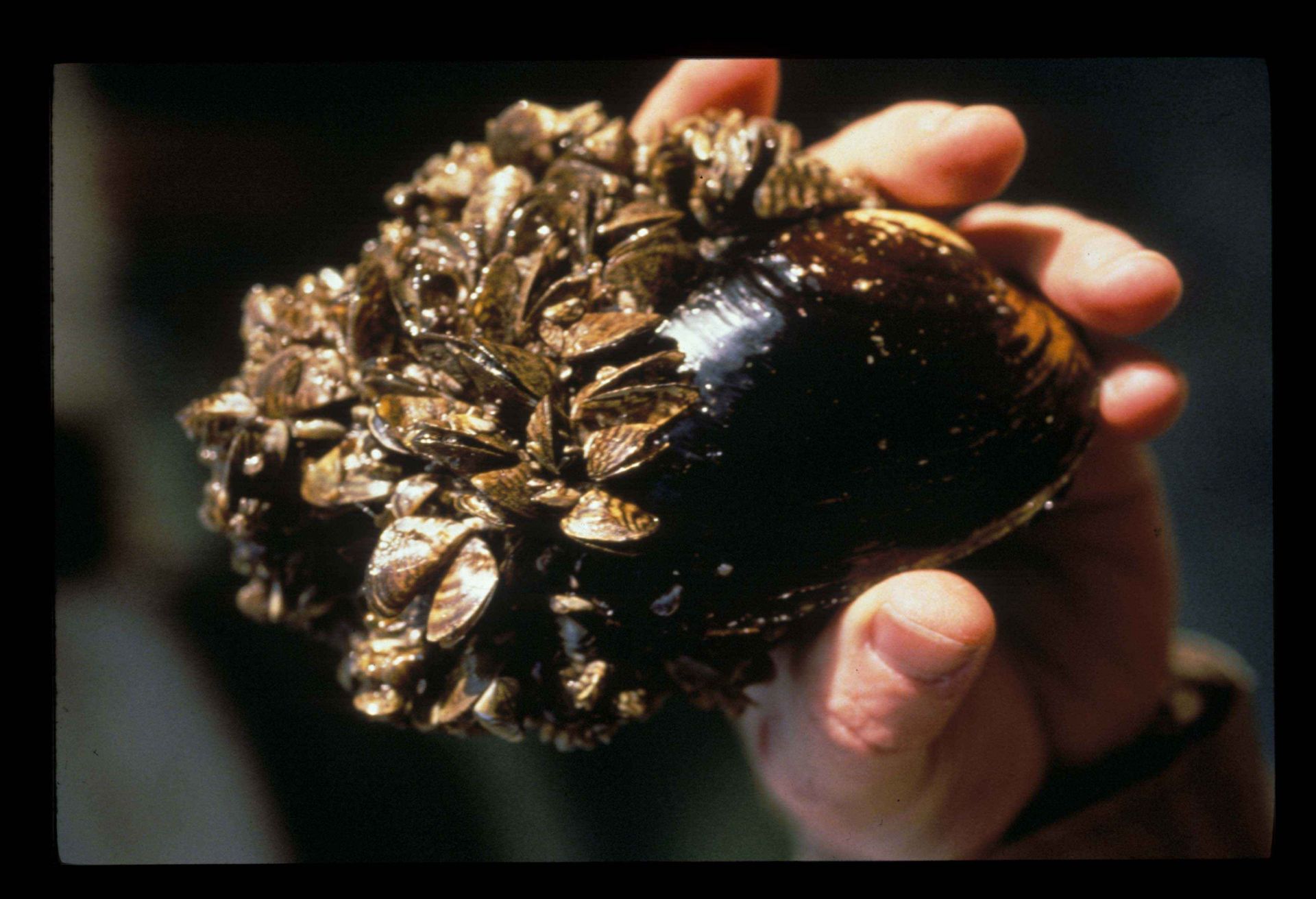
- Nearly $2 million in federal funding is available for projects targeting quagga and zebra mussels in Western waters.
- Applications for the federal funding opportunity close October 24, 2026.
- Zebra mussel DNA was recently detected in the Colorado River in Utah for the first time.
- The Utah detection does not confirm that live zebra mussels are present in the river.
- California’s experience with golden mussels shows how quickly invasive mussels can become a costly water-management problem.
Monday, September 7, 2026 — Federal wildlife officials are offering nearly $2 million for projects designed to fight the spread of invasive quagga and zebra mussels across the Western United States.
The U.S. Fish and Wildlife Service funding opportunity provides $1.95 million for projects supporting priorities in the Quagga and Zebra Mussel Action Plan for Western U.S. Waters.
The agency expects to make about 10 awards. Individual grants may range from $50,000 to $600,000, and no cost sharing or matching funds are required.
Applications are due October 24, 2026.
All legal entities are eligible to apply, but projects must focus on Western waters. The eligible area includes Arizona, California, Colorado, Nevada, New Mexico, Utah and Wyoming, along with numerous other Western and Great Plains states.
Application documents can be downloaded from the Grants.gov website.
The funding comes as invasive mussels continue to pose problems across Western waterways.
Lower Colorado River Reservoirs Are a Major Concern.
Quagga and zebra mussels are invasive aquatic species that have been expanding their range in the West.
According to the federal funding announcement, popular recreational reservoirs on or connected to the lower Colorado River are a major source of invasive mussels.
One of the biggest concerns is transportation by boat.
Mussels and their microscopic life stages can hitch rides on trailered boats and other watercraft, allowing them to move from an infested reservoir into waters where they have not yet become established.
That makes prevention particularly important.
Once invasive mussels establish reproducing populations, they can be extremely difficult to control.
Zebra Mussel DNA Detected in Utah.
Utah wildlife officials received another warning about that threat in August.
On August 25, 2026, the Utah Division of Wildlife Resources announced that fragments of zebra mussel DNA had been detected in portions of the Colorado River in Utah for the first time.
The finding does not mean that a population of live zebra mussels has been confirmed in Utah’s portion of the river.
Environmental DNA can reveal genetic material left by an organism in the environment. Utah officials said the detection indicates that an animal was present somewhere upstream, but it does not establish that living mussels are present at the sampling location.
The concern is heightened because an established zebra mussel infestation was documented near Loma, Colorado, in 2025.
Utah began sampling the Colorado River for invasive mussels in 2025, covering the river from the Colorado state line to Moab.
During June and July 2026, an environmental DNA sampler was placed near the Potash Boat Ramp, about 14 river miles downstream from Moab. It collected water samples each day for analysis by the U.S. Geological Survey.
Four of 22 samples tested positive for zebra mussel DNA.
Other environmental DNA samples and samples looking for the mussels’ microscopic larvae collected along Utah’s portion of the Colorado River during the spring and summer did not test positive.
Why Such Small Mussels Cause Big Problems.
The concern is not simply about finding a new shellfish in a river.
“Once established, zebra mussels can clog pipes and infrastructure, create recreation hazards on rocks and beaches, and alter ecosystems,” Utah Department of Natural Resources Law Enforcement Aquatic Invasive Species Statewide Operations Lt. Bruce Johnson said.
Utah officials are continuing to work with the U.S. Geological Survey, National Park Service and Bureau of Land Management to better understand the status of zebra mussels in the Colorado River.
The state is also emphasizing prevention.
People using boats, paddleboards, kayaks, canoes, rafts and other watercraft are being urged to clean, drain and dry their equipment when moving between bodies of water.
Utah requires river users, including those using nonmotorized watercraft, to complete the state’s annual mussel-aware boater course. Motorized boat owners must also pay an annual aquatic invasive species program vessel enrollment fee.
California Shows How Quickly Trouble Can Spread.
California is already dealing with another invasive mussel that illustrates how serious the problem can become.
Golden mussels were first detected in the Sacramento-San Joaquin Delta in October 2024. In less than two years, they spread more than 500 miles through California waterways, reaching as far south as San Diego and as far north as West Sacramento by June 2026.
The mussels reproduce rapidly. Their microscopic larvae move through water and eventually attach to hard surfaces, where colonies can cover pipes, pumps, intake screens and power-generation equipment.
By 2026, Kern, Sacramento and San Joaquin counties had declared emergencies related to the golden mussel threat. In Stockton, officials reported that mussels covered 30 to 40 percent of some water intake screens. Divers were being used to scrape them from the infrastructure by hand. A $100 million floodgate in San Joaquin County also required cleaning after becoming coated with mussels.
California’s experience involves golden mussels rather than the zebra and quagga mussels targeted by the new federal funding opportunity. But it demonstrates how a small invasive mussel can quickly become a much larger problem for water infrastructure once it spreads.
Prevention Remains a Major Part of the Response.
Utah officials say boaters and other river users can play an important role in limiting further movement of invasive mussels.
“As one of the primary users of the Colorado River, nonmotorized boaters are our first line of defense in helping reduce this risk of transporting this species from the Colorado River to other waters in the state,” Utah Division of Wildlife Resources Sportfish Coordinator Trina Hedrick said.
The basic message is simple: clean, drain and dry watercraft and equipment before moving from one body of water to another.
Meanwhile, the new U.S. Fish and Wildlife Service funding provides another avenue for Western organizations working on the problem.
The federal funding opportunity was posted August 25 and updated August 28, 2026. Applications close October 24.
Pictured: Zebra mussels (dreissena polymorpha) on native mussel. U.S. Fish & Wildlife Service.


 wpDiscuz