- The Navajo Nation is the first Tribe in the United States to receive a new federal designation for water pollution permitting.
- The Environmental Protection Agency announced the approval on October 21, 2026.
- The designation allows the Navajo Nation to apply for authority to manage certain water pollution and sewage sludge programs.
- The programs would give the Tribe greater control over pollution limits, monitoring, and enforcement on its lands.
- Additional federal approval is needed before the Navajo Nation can administer the programs.
Tuesday, November 3, 2026 — The Navajo Nation has reached a historic milestone in its efforts to protect water on Tribal lands.
On October 21, 2026, the U.S. Environmental Protection Agency (EPA) announced that the Navajo Nation had become the first Tribe in the country to qualify for a special designation under the federal Clean Water Act.
The approval, known as “treatment in a similar manner as a state,” allows the Navajo Nation to take the next step toward managing two federal water pollution control programs.
The designation does not immediately transfer control of those programs to the Tribe. Instead, it makes the Navajo Nation eligible to apply for that authority.
The Navajo Nation, which has the largest Tribal reservation in the United States, is the first Tribe to receive this designation for the two programs.
What Could Change?
The Clean Water Act regulates pollution entering the nation’s waters. One of its programs requires permits for certain wastewater discharges.
These permits establish how much pollution can be released into water and what testing and reporting must take place.
The Navajo Nation’s new designation covers two programs: the National Pollutant Discharge Elimination System, which regulates pollutant discharges, and a separate program governing sewage sludge.
Sewage sludge is the material left behind during wastewater treatment. Its use and disposal must be managed to protect water quality.
If the Navajo Nation receives approval to administer these programs, it could:
-
Issue permits limiting the amount of pollution discharged into Tribal waters.
-
Require monitoring and reporting to determine whether permit conditions are being met.
-
Regulate how sewage sludge is used and disposed of.
-
Carry out enforcement actions and related administrative duties.
These responsibilities would be similar to those exercised by states that administer the same federal programs.
A Step Toward Greater Tribal Authority.
Federal officials described the approval as an important step toward Tribal self-government.
“This approval brings Navajo Nation one step closer to having direct regulatory authority over the water resources on its lands,” said Mike Martucci, EPA Pacific Southwest Regional Administrator.
“EPA remains committed to strengthening collaboration with Tribes throughout the Pacific Southwest and looks forward to working with Navajo Nation on next steps.”
Usha Maria-Turner, Assistant Administrator for EPA’s Office of International and Tribal Affairs, said the designation followed years of work by the Navajo Nation.
She described the approval as an example of the federal government’s commitment to supporting Tribal sovereignty and self-governance.
The decision is also part of EPA’s approach to cooperative federalism, under which federal, state and Tribal governments share responsibilities for environmental protection.
Water Rights and Water Quality Go Hand in Hand.
For Navajo Nation officials, the announcement concerns more than the ability to issue pollution permits.
It is also about managing water throughout its use, from the original source to wastewater treatment and discharge.
Navajo Nation EPA Director Stephen B. Etsitty emphasized that protecting water quality is an important part of the Nation’s future.
“While obtaining water rights for the Navajo Nation is critical, we also need to manage all aspects of water quality protection—from our current water sources on the Nation, to how we put our water to use, to managing wastewater discharges, and then continuing the water cycle repeatedly,” Etsitty said.
“Obtaining NPDES authority now and effectively implementing it will be critical for our future growth.”
His remarks highlight the distinction between securing water rights and regulating water quality. Both are important parts of the Navajo Nation’s approach to water management.
What Happens Next?
The October 21 approval establishes the Navajo Nation’s eligibility to seek authority over the federal permitting and sludge management programs.
It does not mean that the Tribe has already taken over those responsibilities.
The next step is to pursue approval to administer the programs on Navajo Nation lands.
If that approval is granted, the Navajo Nation could directly regulate certain pollutant discharges, establish permit requirements and carry out related enforcement duties under the Clean Water Act.
For now, the federal designation marks a first for Tribal governments and opens the door to a larger Navajo Nation role in protecting its waters.
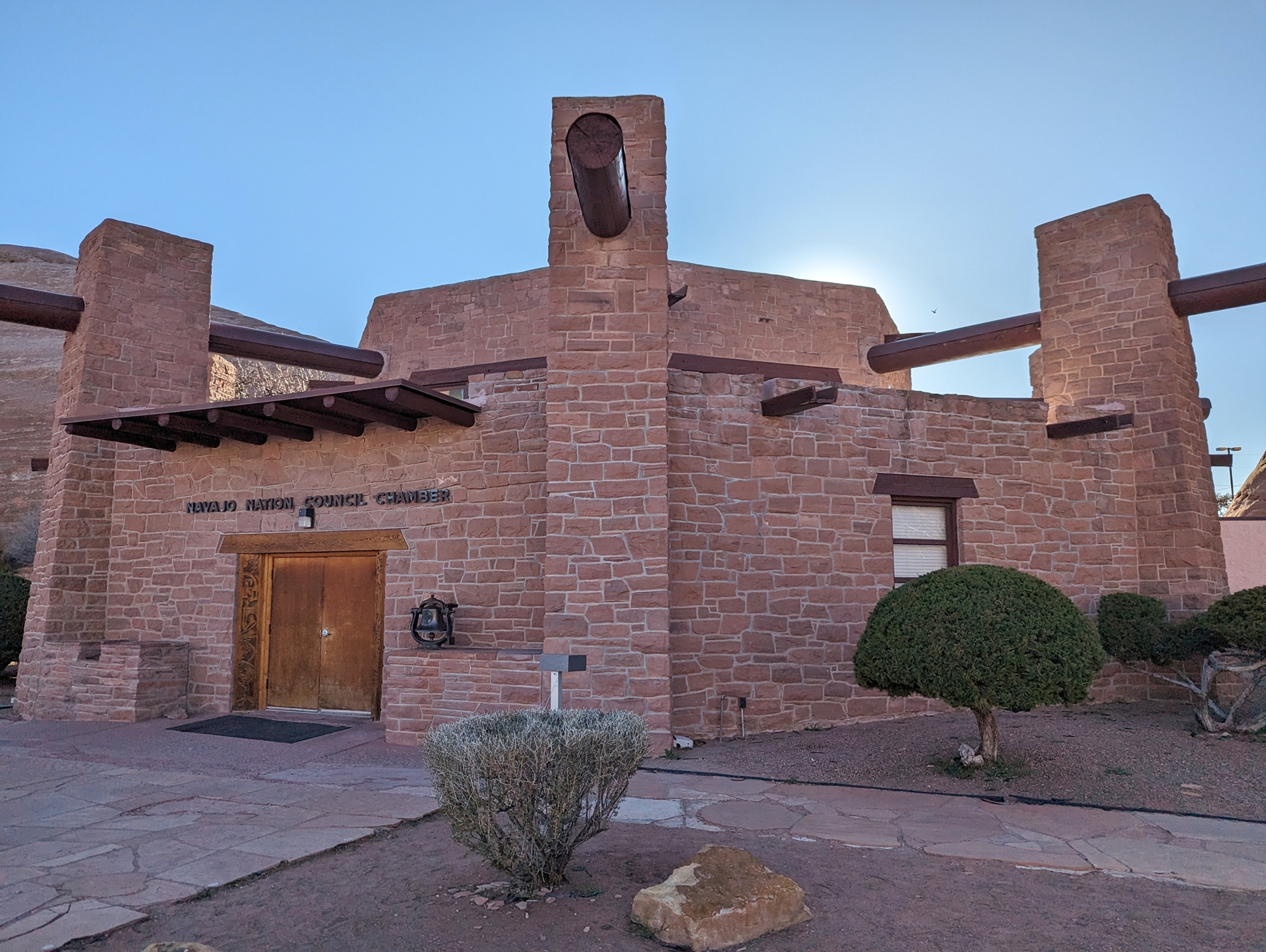
Image: Navajo Nation Council Chamber . Photo by SounderBruce, April 2024. Licensed under the Creative Commons Attribution-Share Alike 4.0 International license.