
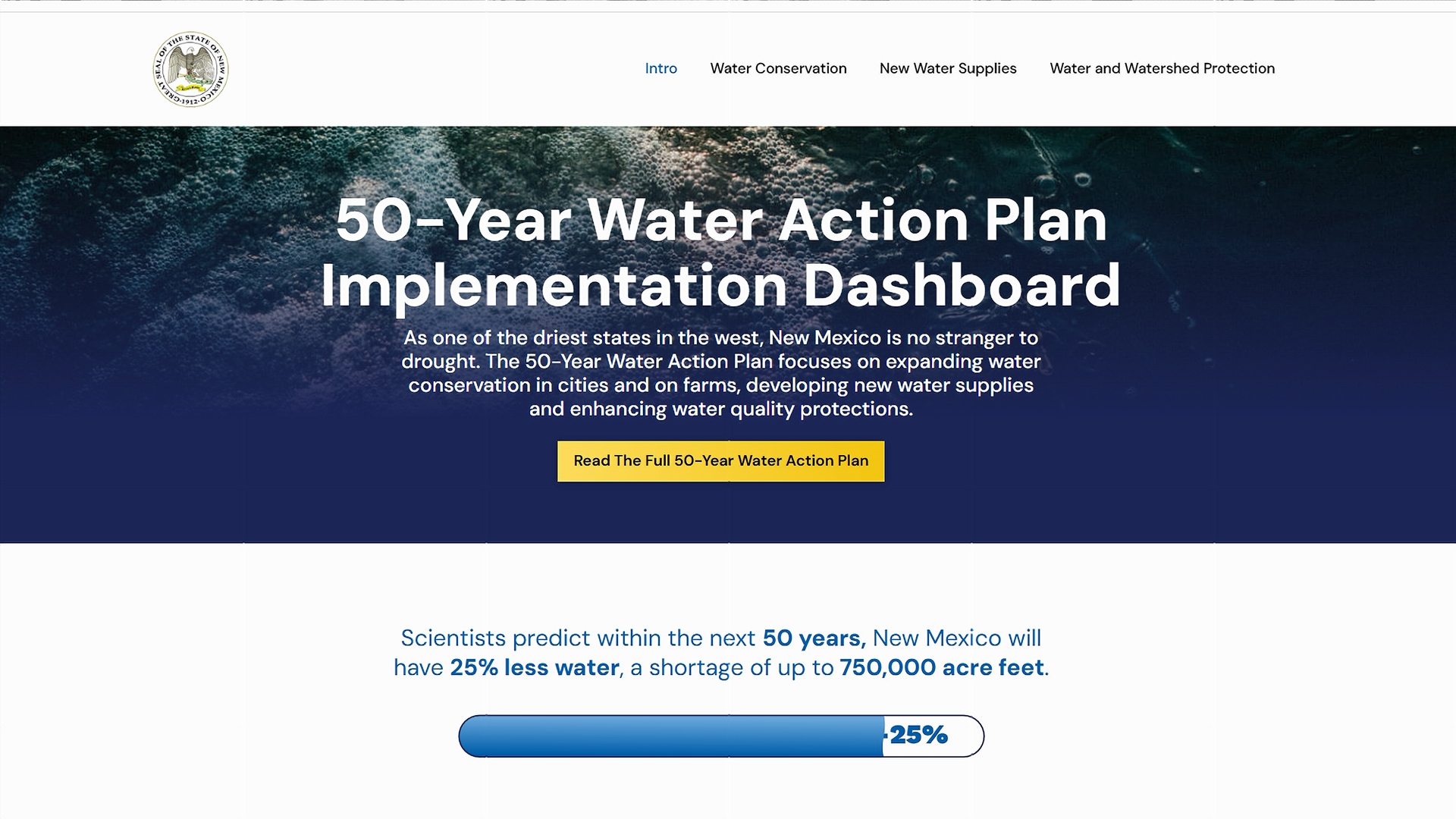
- New Mexico unveiled a public dashboard to track a 50-year water plan.
- Officials warn the state could become 25% drier over the next 50 years.
- The plan focuses on conservation, new water supplies, and water quality.
- Aging systems in some areas lose up to 70% of treated water.
Saturday, May 2, 2026 — New Mexico officials have introduced a new online dashboard designed to show the public how the state is preparing for long-term water shortages. The tool offers a real-time look at progress on a 50-year Water Action Plan, a strategy shaped by concerns that the state could become significantly drier in the decades ahead.
State leaders say the dashboard is meant to bring transparency to a complex issue. It allows residents to follow how agencies are responding to drought, climate change, and increasing demand for limited water supplies.
Governor Michelle Lujan Grisham described the effort as a commitment to managing water challenges using the best available science, both now and in the future.
A Future With Less Water.
Scientists working with the New Mexico Bureau of Geology and Mineral Resources estimate the state could face a shortage of about 750,000 acre-feet of water within 50 years. That shortfall is tied to rising temperatures, reduced snowpack, shrinking aquifers, and more intense drought conditions.
Today, New Mexico uses roughly three million acre-feet of water each year. That supply supports farms, ranches, cities, industry, and households. Without changes, demand is expected to outpace what nature can provide.
Three Pillars of the Plan.
The state’s long-term strategy rests on three main areas: conserving water, developing new supplies, and protecting water quality.
- Conservation. The plan calls for a 10 percent reduction in water use in both rural and urban areas by 2040. It also targets a 25 percent reduction in water lost through public systems. In some communities, aging pipes allow between 40 percent and 70 percent of treated drinking water to leak before it ever reaches homes.
- New Water Supplies. New Mexico has committed $75 million to develop alternative sources, including projects that treat brackish groundwater. The goal is to produce 100,000 acre-feet of new water by 2028.
- Water Quality and Watersheds. The plan also focuses on protecting rivers and groundwater, while restoring landscapes that help store and filter water. Efforts include reducing wildfire risk across 300,000 acres each year by 2035.
Building on Past Efforts.
The Water Action Plan builds on several recent laws and initiatives, including measures focused on water data, infrastructure, and long-term planning. It also reflects input from universities, national laboratories, and traditional water knowledge from Pueblo, tribal, and acequia communities.
Since 2021, the state has secured more than $1 billion in federal funding for water-related projects. Those investments are expected to play a key role in carrying out the plan.
A Public Window Into Progress.
The new dashboard brings all of these efforts into one place. By making the information public, officials hope residents can better understand both the scale of the challenge and the steps being taken to address it.
As water supplies across the West continue to face pressure, tools like this may become an increasingly important part of how states communicate, plan, and respond.
Pictured: Screenshot of New Mexico’s new water dashboard web page.