

- A Kings County judge partly granted the farm bureau’s injunction request on August 12.
- Two of the five groundwater agencies in the Tulare Lake Subbasin are shielded from probation for now.
- The other three agencies still face possible state enforcement and fees.
- The judge rejected the farm bureau’s challenge to the $20-per-acre-foot pumping fee.
- The court set the bond at a single dollar.
- A hearing on the full case is scheduled for October 6.
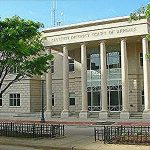
Monday, August 24, 2026 — A judge in Kings County has handed local farmers a partial win in their long-running fight over how California manages the region’s shrinking groundwater. On August 12, 2026, the Kings County Superior Court granted part of what the Kings County Farm Bureau and two landowners requested and turned down the rest.
The order from Judge R. Shane Burns temporarily blocks the State Water Resources Control Board (the State Water Board) from enforcing probation against two of the five groundwater sustainability agencies (GSAs) that manage the Tulare Lake Subbasin. That block lasts until the court hears the full case. The other three agencies receive no such protection for now.
How the region landed on probation.
The dispute reaches back several years. In April 2024, state officials moved for the first time to place the Tulare Lake area’s groundwater agencies on probation, a serious step under state law that can bring fees and, eventually, direct state control over pumping. The following month, after the State Water Board designated the subbasin as probationary, the Kings County Farm Bureau and landowners Helen Sullivan and Julie Martella sued, calling the action state overreach and asking a court to throw the designation out.
An earlier injunction favored the farmers in September 2024, but a state appeals court reversed that decision in October 2025. The August 12 ruling stems from the farm bureau’s second request to pause enforcement while the case proceeds.
The “good actor” question.
Much of the ruling turns on what the law calls a good actor exclusion. Under the Sustainable Groundwater Management Act (SGMA), areas that already meet the state’s sustainability goal can be exempted from probation. The farm bureau argued that two agencies, the Tri-County Water Authority GSA and the Southwest Kings GSA, should have been excluded.
The appeals court had earlier found that the State Water Board applied the wrong standard to those two requests. Judge Burns adopted that conclusion and wrote that the farmers are “highly likely to succeed” on the good actor claim as it applies to those two agencies. The judge declined, however, to extend the pause across the entire subbasin.
The fee challenge falls short.
The farmers also challenged a fee of $20 for every acre-foot of groundwater pumped in a probationary basin. (An acre-foot is roughly the amount of water needed to cover an acre of land one foot deep.) They argued the charge is an unlawful fee that goes beyond what the state can recover.
The judge did not block the fee. The court found that the “pay first” rule applies, which generally requires a person to pay a disputed charge and then sue to recover it. The judge also concluded that the farm bureau had not shown it was likely to win on the fee question.
Little proof of harm on either side.
The ruling notes that both sides offered thin evidence about who would be hurt. Martella, the only landowner to file a sworn statement for this motion, farms within the Mid-Kings River GSA, not within either of the two protected agencies. The State Water Board, for its part, warned that a wrongly issued injunction could mean more families, farmers, and communities lose access to water, pointing to problems such as sinking land, failing water systems, and collapsing wells.
The judge found that the farmers had not shown the balance of harms tipped heavily in their favor. Even so, the court used its discretion to grant the narrow pause, resting on the farm bureau’s strong showing that it will likely win the good actor point.
A one-dollar bond.
When a court grants this kind of order, it usually requires the winning side to post a bond. The State Water Board asked for $234,000 to cover attorney fees it might spend trying to overturn the injunction. The judge turned that request down and set the bond at a nominal $1.
What the farm bureau told growers.
On August 20, 2026, Dusty Ference, executive director of the Kings County Farm Bureau, sent a letter to GSA managers asking them to pass the news to landowners and growers. The letter explained that the court’s protection reaches two of the five agencies and does not extend to the others.
For growers in the three agencies still under probation, the letter said, state enforcement remains possible while the lawsuit continues, and the State Water Board could send invoices for probationary fees. The farm bureau said it did not know whether the State Water Board would issue those bills soon or wait until later in the case. “This is where things stand today, and it could change,” Ference wrote.
What comes next.
The court is scheduled to hear the merits of the farm bureau’s lawsuit on October 6, 2026. A final ruling may not arrive that day, but the letter noted that the court’s decision could again shift the status of probation across the Tulare Lake Subbasin. The farm bureau said it would keep growers and agencies informed as the case develops.


 wpDiscuz