

- Arizona will begin issuing fish consumption advisories for PFOS this summer.
- Testing found elevated PFOS levels in fish tissue at certain locations.
- Swimming, wading, and catch-and-release fishing are considered low risk.
- More than 25 Arizona lakes are being monitored for PFAS contamination.
- Officials say the advisories are designed to help anglers make informed choices.
Tuesday, June 2, 2026 — Arizona anglers will soon see a new type of fish consumption advisory as state agencies expand monitoring for a group of chemicals commonly known as “forever chemicals.”
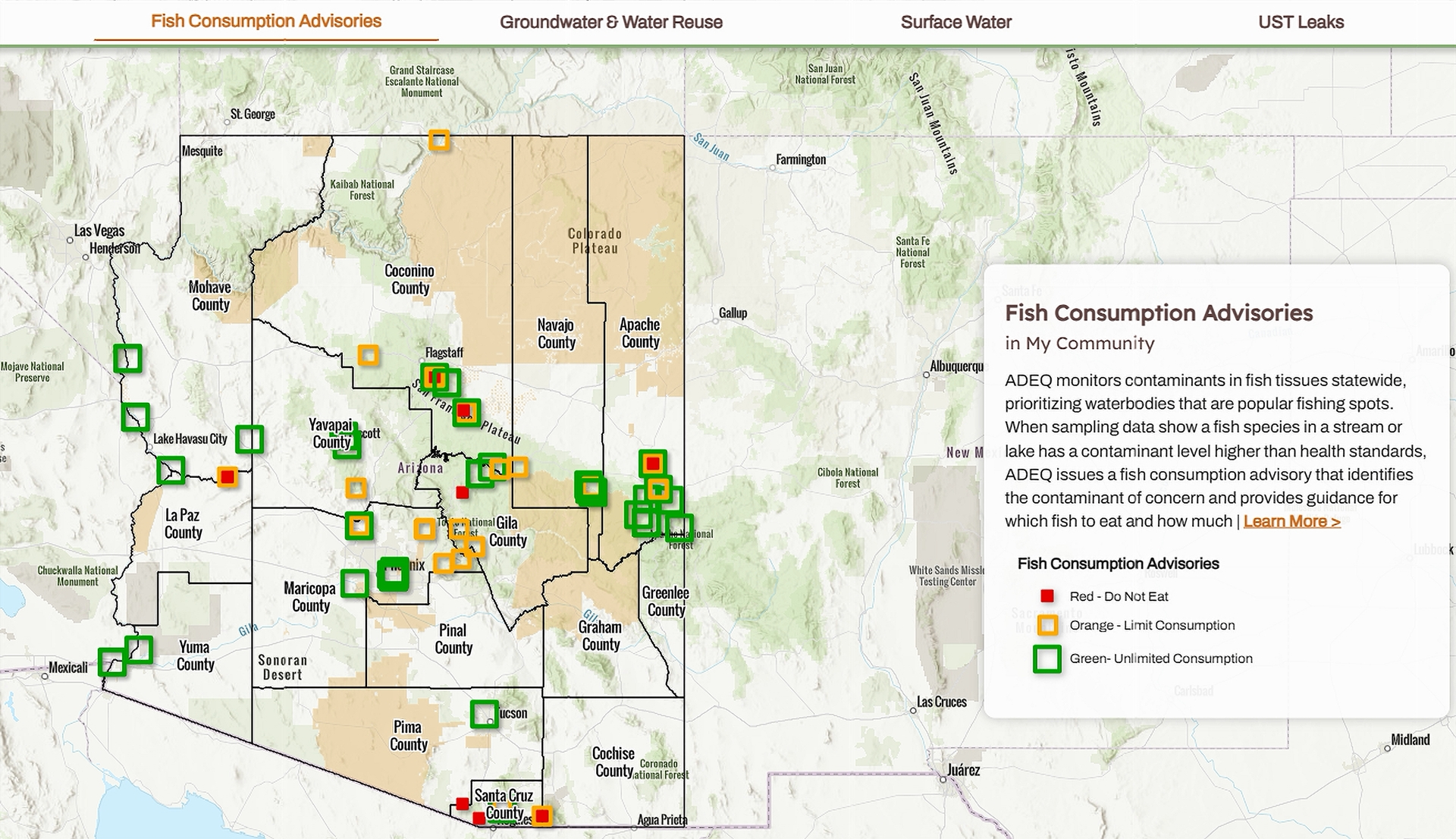
On May 28, 2026, the Arizona Department of Environmental Quality announced that it will begin issuing fish consumption advisories for perfluorooctanesulfonic acid, commonly called PFOS, through the state’s Arizona Green Light Fisheries and Fish Consumption Advisory program. The effort is being coordinated with the Arizona Department of Health Services and the Arizona Game and Fish Department.
The change follows recent testing that found elevated levels of PFOS in fish tissue at certain locations around the state. State officials said the updated advisories will provide anglers with clearer guidance about how often fish from specific waters should be eaten.
“ADEQ is committed to providing transparent, science-based information that communities can use to protect their health,” said Randy Matas, Acting Water Quality Division Director. “By adding PFOS to our existing advisory system, we are giving anglers clear guidance.”
What Is PFOS?
PFOS belongs to a larger family of chemicals known as perfluoroalkyl and polyfluoroalkyl substances, often shortened to PFAS.
These chemicals have been used since the 1940s in a wide range of products and industrial processes. They can be found in items such as stain-resistant fabrics, water-resistant materials, food packaging, and firefighting foam. Because they break down very slowly, PFAS chemicals can remain in the environment for long periods and accumulate in living organisms over time.
Researchers continue to study the long-term health impacts of PFAS exposure. According to information provided by the state, exposure has been linked to serious health concerns, including certain cancers, immune system effects, and developmental issues.
What the Advisories Mean for Anglers.
The advisories focus on potential health risks from regularly eating fish that contain elevated levels of contaminants. They do not apply to recreational activities such as swimming, boating, or catch-and-release fishing.
According to the Arizona Department of Health Services, PFAS absorption through the skin is minimal. As a result, activities such as swimming and wading are considered low risk. Officials noted that parents should still watch young children who may accidentally swallow water while swimming.
The state emphasized that fish remain an important source of protein and nutrients, including omega-3 fatty acids. The advisories are intended to help people make informed decisions rather than discourage fishing altogether.
State Monitoring Effort Continues.
The expanded monitoring program was made possible through funding provided by Governor Katie Hobbs using American Rescue Plan Act funds. That funding allowed Arizona to add PFOS testing to its existing fish tissue monitoring program.
As part of the project, ADEQ is testing fish tissue from more than 25 lakes, rivers, and streams across Arizona. Samples are being analyzed for 40 different PFAS compounds in addition to mercury, which has long been included in the state’s advisory program.
When the monitoring project is completed, ADEQ plans to release a comprehensive report and submit the data to the U.S. Environmental Protection Agency’s water quality database, making the information publicly available.
Tips for Reducing Exposure.
State officials recommend several steps for anglers who regularly eat their catch:
- Choose fish species that tend to accumulate fewer contaminants.
- Eat younger and smaller fish when possible.
- Remove organs and trim away skin where contaminants can concentrate.
- Vary fishing locations.
- Consider catch-and-release fishing.
- Prioritize stocked fish, which generally spend less time accumulating contaminants in the wild.
Officials encourage anglers to review Arizona’s fish consumption advisories before keeping fish for the dinner table. The goal is to help families continue enjoying Arizona’s lakes and rivers while making informed decisions about long-term exposure to contaminants.



 wpDiscuz