
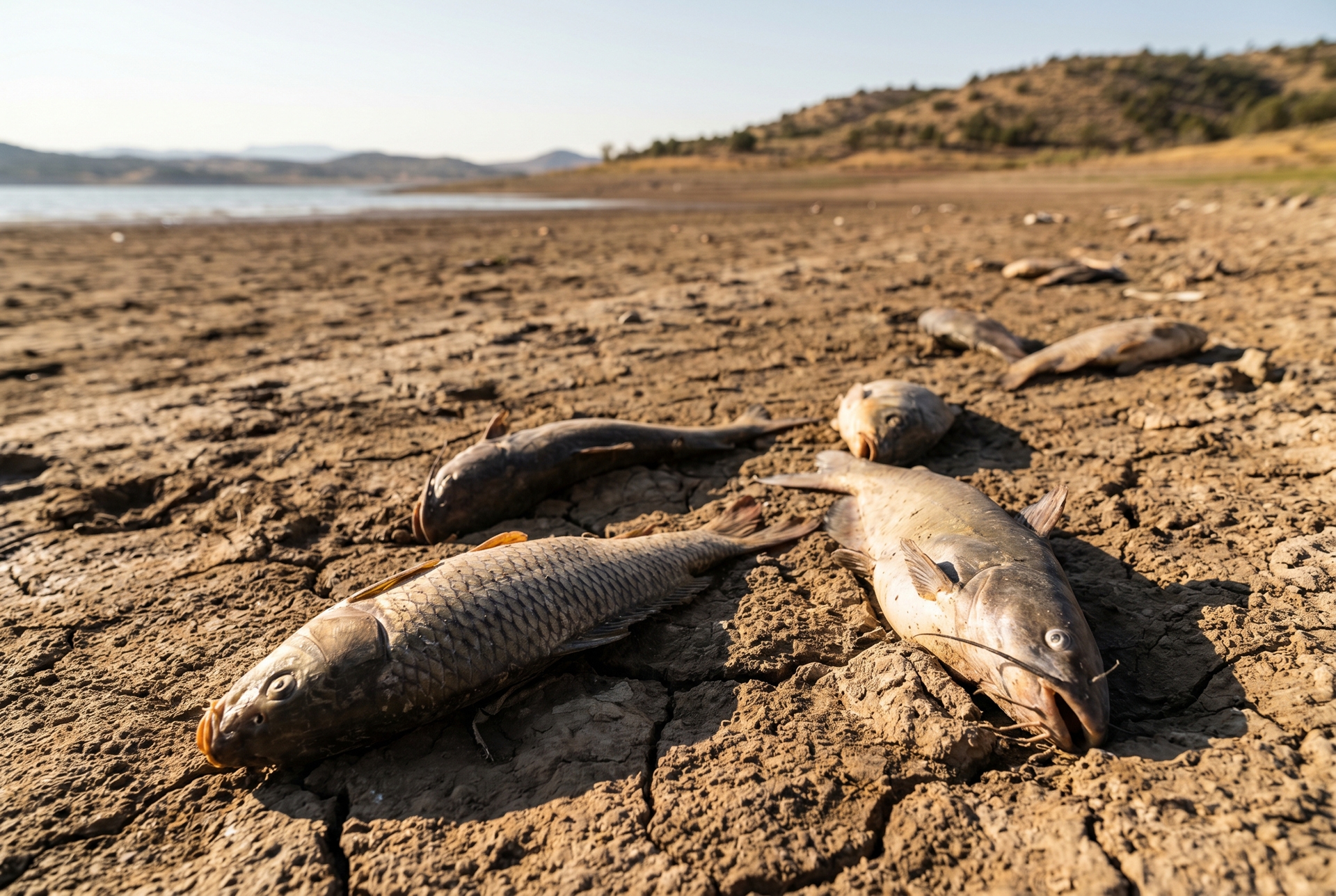
- San Carlos Lake was closed on June 5, 2026, after drought and mandatory water releases wiped out an estimated 100 percent of its fish population.
- Decomposing fish along the shoreline created health and safety hazards, prompting a full ban on fishing and all related recreation.
- Drought-driven water releases from Coolidge Dam drained the reservoir to critically low levels, setting off a chain reaction that suffocated the fish.
- This is not the first time the lake has suffered a total fish kill; the reservoir has crashed to near-empty levels roughly 20 times in its nearly century-long history.
- A nearby fishery, Cluff Pond Number 3 in Graham County, suffered a similar fish kill just weeks earlier.
Monday, June 8, 2026 — On the same Saturday that anglers across Arizona were celebrating Free Fishing Day, one of the state’s most beloved fishing destinations had nothing left to offer. Every fish in San Carlos Reservoir (aka San Carlos Lake) was dead.
The San Carlos Recreation and Wildlife Department issued an emergency closure notice on June 5, 2026 , after a catastrophic environmental collapse wiped out virtually the entire fish population of the eastern Arizona reservoir. The closure is in effect until further notice.
“Recent drought conditions, combined with water releases from the dam, have resulted in a major fish kill affecting approximately 100% of the fish population within the lake,” the Department stated in its public notice. “Decomposing fish may pose health risks to individuals who enter the area or attempt to fish.”
About San Carlos Lake.
Created by the construction of Coolidge Dam on the Gila River, San Carlos Lake stretches across portions of Gila, Graham, and Pinal counties within the San Carlos Apache Reservation. At full capacity, it covers nearly 20,000 acres with roughly 158 miles of shoreline. When water levels are healthy, the lake is one of Arizona’s premier fishing destinations, known for largemouth bass, black crappie, channel catfish, flathead catfish, and sunfish, and it has produced several Arizona state-record fish.
Yet the lake is famously unpredictable. Water levels rise and fall dramatically depending on rainfall and downstream irrigation demands. When President Calvin Coolidge dedicated the dam in 1930, humorist Will Rogers reportedly looked out at the dry, grassy lakebed and quipped, “If this were my lake, I’d mow it.” Nearly a century later, that joke still carries an uncomfortable ring of truth.
What Caused the Fish Kill?
Fish breathe by pulling dissolved oxygen out of the water through their gills. When that oxygen disappears, they suffocate. Several forces came together to drain the oxygen from San Carlos Lake all at once.
Severe drought, made worse by mandatory water releases from Coolidge Dam to serve downstream agricultural users in communities like Coolidge and Florence, caused water levels to plunge. The remaining shallow water heated rapidly under the desert sun, and warm water holds far less oxygen than cold water. As the lake shrank, millions of fish were squeezed into tight, stagnant pockets that quickly ran out of oxygen. Algae blooms added to the problem, consuming oxygen at night and triggering a bacterial decomposition process that stripped what little remained. Species with state-record-holding histories, including largemouth bass, black crappie, bluegill, and flathead catfish, are now gone.
This Has Happened Before.
The reservoir has crashed to near-empty levels roughly 20 times in its history. The most recent major fish kill before this one occurred in the summer of 2018, when the lake dropped below one percent of its capacity. Before that, a drought from 1976 to 1977 killed an estimated five million fish and required a five-year recovery period.
The Gila Herald reports that Cluff Pond Number 3, a popular 20-acre fishery near Pima in Graham County, suffered a similar oxygen-crash fish kill just weeks earlier after an algal bloom struck the already low-water pond at the end of May.
What Visitors Need to Know.
Fishing, harvesting or possessing any fish from the lake, and all related recreational activities are prohibited until further notice. The Department will continue monitoring conditions and provide updates as they become available. The public can contact the San Carlos Recreation and Wildlife Department at (928) 475-2343.