- Golden mussels are a fast-growing threat to California’s water system.
- The Department of Water Resources is using a three-part strategy to fight back.
- Copper treatments and constant cleaning protect equipment right now.
- Ultraviolet systems and potash treatments are planned for critical sites.
- Officials ask boaters to Clean, Drain, and Dry to slow the spread.
Tuesday, August 4, 2026 — A tiny invader is causing big worries for the people who manage California’s water. Golden mussels have moved into parts of the state’s water network, and the California Department of Water Resources says the threat is spreading fast. On July 29, 2026, the agency laid out a three-part plan to slow the mussels and keep water flowing through the State Water Project, the system that delivers water to millions of Californians and hundreds of thousands of acres of farmland.
Acting Now.
The first part of the plan focuses on quick action. Crews are inspecting and monitoring the system for early signs of the mussels, including a lab method called environmental DNA that can spot them before they take hold. To protect equipment, workers are using low-dose copper treatments along with plenty of hands-on labor, such as flushing pipelines, power washing, and scraping mussels off by hand. Some divisions are swapping in replacement parts to avoid breakdowns. Boaters leaving infested reservoirs face inspections and cleaning stations, and the agency reminds them to Clean, Drain, and Dry their boats.
Building Stronger Defenses.
The middle part of the plan strengthens the most important sites, including pumping plants, hydropower plants, and fish hatcheries. One tool is ultraviolet light, which kills mussel larvae before they can settle inside pipes that carry cooling water and fire protection water. The agency is also testing special coatings and chemical options. It is seeking emergency approval to use potassium chloride, better known as potash, which controls adult mussels and, according to the department, is “safe for fish and wildlife at treatment concentrations.”
Planning for the Long Haul.
The final part looks years ahead. Researchers are studying how the mussels live and reproduce so treatments can improve over time. Engineers are building mussel defenses into future designs, and the state plans to share what it learns with other agencies across North America.
A Shared Effort.
The Department of Water Resources is not working alone. It is teaming up with the California Department of Fish and Wildlife, California State Parks, federal agencies, local water managers, and researchers through the state’s Golden Mussel Response Framework. People who spot golden mussels in California can report them to the California Department of Fish and Wildlife’s Invasive Species Program.
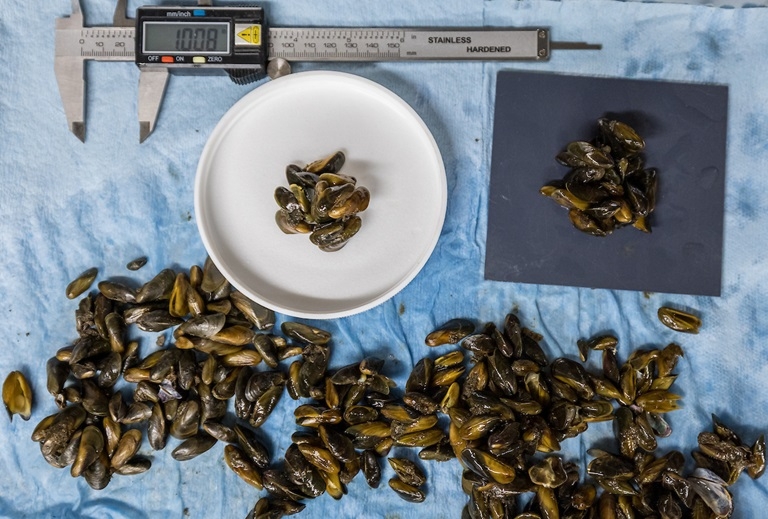
Pictured: “Golden mussel mobile lab staff perform hot water immersion studies to determine the minimum duration and temperature to kill adult mussels.” California Department of Water Resources.