- About 4.25 million gallons of untreated sewage entered the Arkansas River at Pueblo.
- Tests found extremely high levels of E. coli downstream of the spill.
- People were told to avoid river contact from Pueblo through John Martin Reservoir.
- Pets and livestock should not drink water from the affected stretch of river.
- Officials reported no evidence that the spill had affected public drinking water systems.
- State and local officials said testing would continue until bacteria levels returned to acceptable levels.
Tuesday, September 1, 2026 —A major sewage spill in Pueblo sent approximately 4.25 million gallons of untreated wastewater into the Arkansas River, prompting Colorado health officials to warn people to stay away from a long stretch of the river.
The accidental release began August 26 and was stopped August 27, according to state officials.
Laboratory results released August 28 showed extremely high levels of E. coli bacteria in water downstream from the spill.
The Colorado Department of Public Health and Environment and Pueblo Department of Public Health and Environment advised people to avoid contact with the Arkansas River downstream of Pueblo until further notice.
The advisory extended from the area where Fountain Creek enters the Arkansas River through John Martin Reservoir. Communities along the affected stretch include Blende, Avondale, Fowler, Manzanola, Rocky Ford, La Junta and Las Animas.
Tests Find Extremely High Bacteria Levels.
The Pueblo Department of Public Health and Environment collected three river samples during the afternoon of August 27. Results became available the evening of August 28.
Samples taken upstream of the sewage release showed low levels of bacteria.
The picture downstream was very different.
Tests there showed extremely high bacterial levels, leading state health officials to recommend that people avoid recreational activities and other uses involving contact with river water.
As of the state’s August 28 announcement, officials did not know how long the advisory would remain in effect. State and local agencies said they would continue sampling the river and would lift advisories when the water returned to acceptable standards.
4.25M gallon sewage spill flows down valley from Pueblo into John Martin Reservoir https://t.co/nxTjFA3bgM via @coloradosun. Great. Poisoning wildlife and wildlands with our toxic shit.
— Annie McCann (@AnnieMccann36) August 31, 2026
Stay Out of the Water.
Under the health advisory, people were told to stay out of the Arkansas River downstream of the discharge.
That includes swimming, wading, tubing and kayaking.
People were also told to keep children and pets away from the river and not allow pets or livestock to drink the water.
Untreated river water should not be used for drinking or preparing food. Officials also recommended avoiding fishing in the affected area.
Untreated river water should not be used on fruits or vegetables that will be eaten raw.
The Colorado Department of Agriculture notified registered produce growers along the Arkansas River Valley and said additional guidance would be provided as more information became available. Growers must make sure water used before, during or after harvest meets applicable food safety requirements.
What Happens After Contact With Contaminated Water?
Contaminated water may contain bacteria, viruses or parasites capable of causing illness.
Possible symptoms include diarrhea, vomiting, stomach cramps and fever.
Anyone who comes into contact with the affected river water should thoroughly wash exposed skin with soap and clean water. Wet clothing should be removed and washed separately.
Health officials recommend contacting a health care provider if symptoms develop, particularly when symptoms are severe or the person exposed is very young, older, pregnant or has a weakened immune system.
Public Drinking Water Had Not Shown Impacts.
Despite the size of the spill, state officials reported August 28 that there was no evidence the release had affected public drinking water systems.
Public water systems have several barriers designed to protect against contamination. Systems were also notified about the spill in time to shut off intakes and take other precautions.
People who rely on private wells or other private water supplies and believe their water may have been affected were advised to contact the Colorado Water Quality Control Division for guidance.
How the Spill Happened.
The City of Pueblo reported that the sewage escaped through a wastewater pipe located inside a stormwater pipe.
According to the city, a hole had been cut into the wastewater pipe many years earlier and later patched with concrete.
Over time, that concrete patch slipped out of place. Pressure created while bypass pumps were operating then forced untreated wastewater through the opening and into the stormwater system, which drains into the Arkansas River.
The discharge was stopped at approximately 11:45 a.m. on August 27.
Officials subsequently estimated that approximately 4.25 million gallons of untreated sewage had entered the river.
Contamination Moved Downstream.
Although the sewage release itself was stopped August 27, health officials warned that the contaminated water would continue moving downstream through the Arkansas River.
That was why the health advisory extended well beyond Pueblo.
State and local officials said they would continue collecting samples as the affected water moved through southeastern Colorado.
The advisory was expected to remain in place until testing showed bacterial levels had returned to acceptable standards.
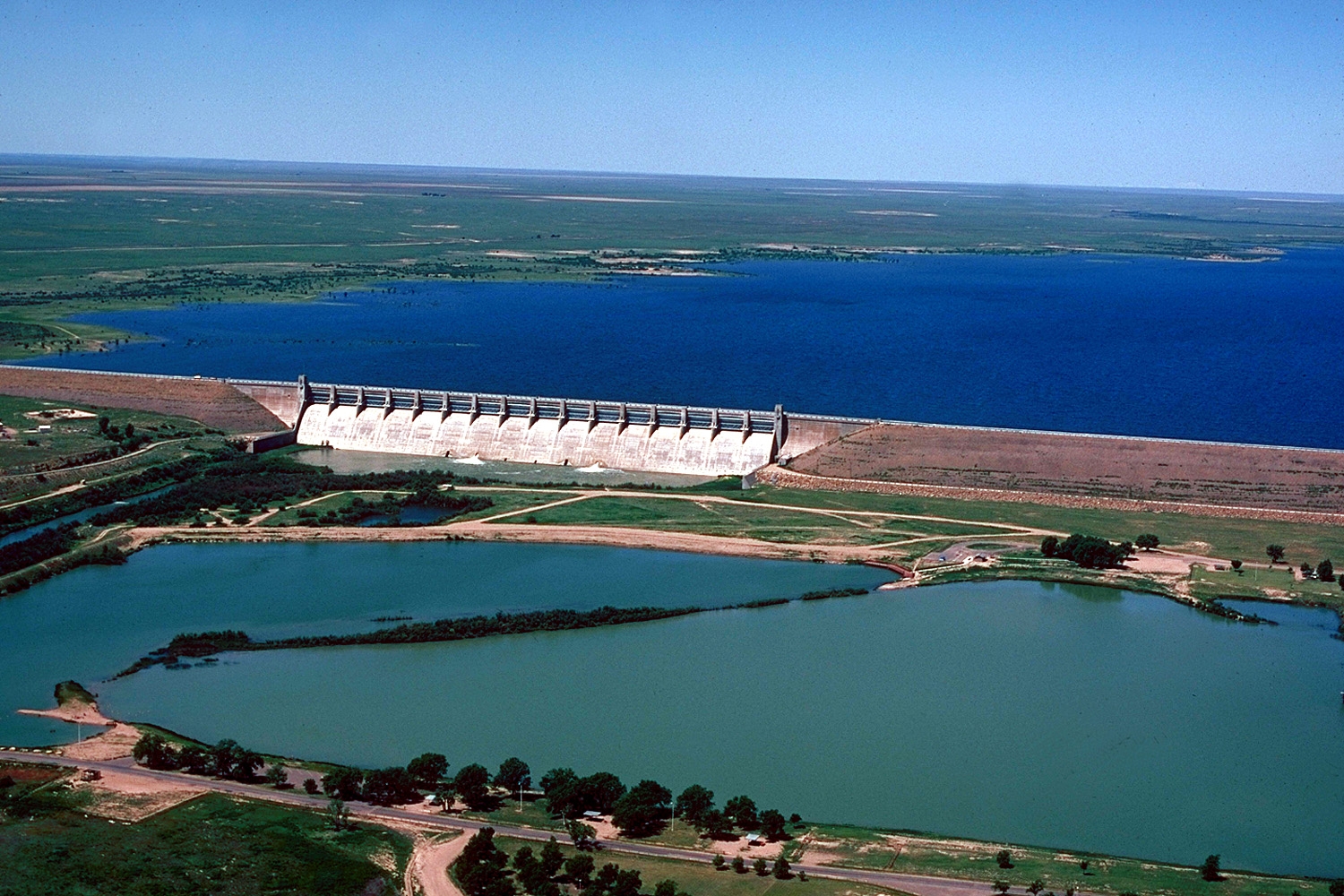
Pictured: John Martin Dam and Reservoir on the Arkansas River in Bent County, Colorado, USA . The dam was constructed by the U.S. Army Corps of Engineers for flood control on the Arkansas River. 1979 archive image provided by the U.S. Army Corps of Engineers.