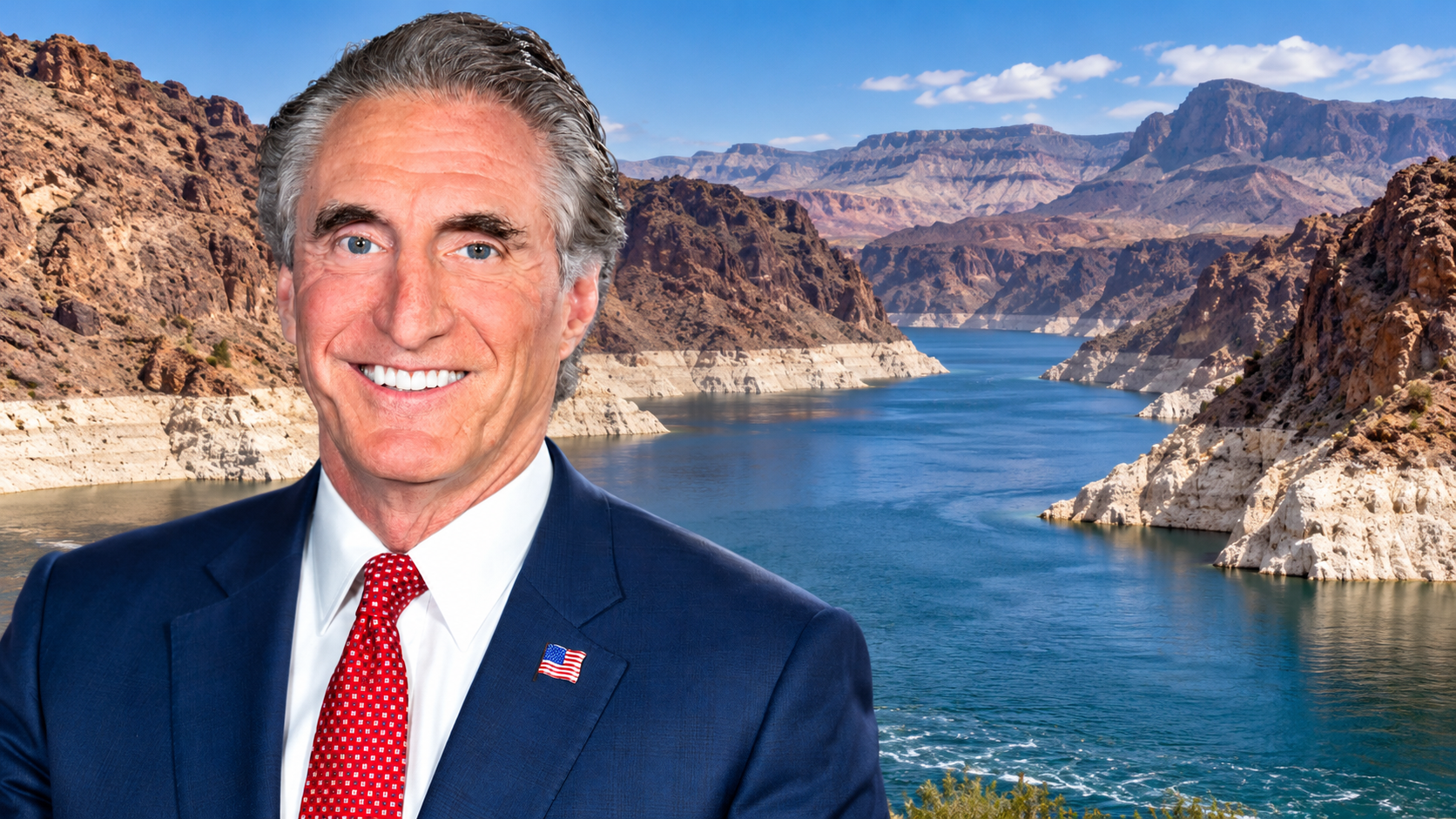
- Interior Secretary Doug Burgum disputes Arizona’s objections to proposed Colorado River water cuts.
- Arizona and Nevada are challenging the federal government’s approach in court.
- Burgum says improved snowfall could ease future shortages, but no relief is guaranteed.
Friday, October 23, 2026 — U.S. Interior Secretary Doug Burgum defended the federal government’s Colorado River water decisions during an exclusive interview with KOLD News 13 reporter Peyton May (embedded below).
The interview comes as Arizona and Nevada challenge the Department of the Interior over how it is handling Colorado River shortages.
Arizona officials, including Governor Katie Hobbs, argue that proposed reductions place too much responsibility on Lower Basin states while failing to hold Upper Basin states accountable.
Burgum disagreed.
“We believe that the governor is wrong on this topic,” Burgum told KOLD News 13.
He also questioned whether the lawsuit would succeed, arguing that the states have not demonstrated an injury sufficient to support their legal challenge.
What Happens to Arizona’s Water?
Burgum described a 10-year framework with water allocations established for the first two years, beginning January 1, 2027.
He called the initial reductions manageable for Arizona, despite concerns raised by Governor Hobbs.
Burgum acknowledged Arizona’s relatively junior Colorado River water rights and warned that prolonged litigation could work against the state.
He emphasized that negotiations involving all seven Colorado River Basin states remain important.
Could Better Snowfall Change the Picture?
Burgum expressed hope that a stronger winter snowpack, potentially influenced by El Niño, could improve Colorado River supplies.
Additional water could provide greater flexibility when allocations are reconsidered after the initial two-year period.
However, he acknowledged that reservoir levels remain historically low.
Burgum also pointed to federal investments in water infrastructure and suggested that desalination in Southern California could become part of a longer-term solution.
For Arizona, California, Nevada and the four Upper Basin states, the immediate question remains how limited Colorado River supplies will be divided as negotiations continue.
The full exclusive KOLD News 13 interview is embedded below: