
- Spring runoff in the North Platte River Basin above Glendo Dam is forecast at just 21% of the 30-year average.
- Extreme drought conditions are gripping the Upper North Platte Basin, with snowpack reading well below average.
- Combined reservoir storage across the system stood at roughly 64% of the long-term average as of May 31, 2026.
- Water deliveries to farmers are expected to start late and end earlier than normal this summer.
- Boaters on the affected reservoirs are urged to use caution and keep a close eye on falling water levels.
Tuesday, June 9, 2026 — Something is missing across the mountains of Wyoming this spring, and its absence is being felt all the way down to the farm fields below.
Snow. There simply was not enough of it.
The Bureau of Reclamation released its June 2026 forecast on June 8, 2026 , and the numbers tell a sobering story for the North Platte River Basin. From April through July, total runoff above Glendo Dam is expected to reach only about 183,000 acre-feet. To put that in perspective, the 30-year average for that same period is roughly five times higher. That 183,000 figure represents just 21% of what is considered normal.
An acre-foot is the amount of water needed to cover one acre of land one foot deep, roughly 326,000 gallons. That is enough water to supply two average American households for an entire year. When a basin falls to one-fifth of its typical runoff, the effects ripple far and wide.
Drought Has a Tight Grip.
The Upper North Platte Basin is not just dry. It is in what scientists classify as extreme drought, the second-worst category on the U.S. Drought Monitor scale. That is a level where crops wither, wells run low, and river flows shrink to a fraction of what wildlife and water users depend on.
Snowpack across the basin was well below average heading into the spring melt season. That snowpack acts like a giant frozen savings account in the mountains, releasing water slowly through spring and early summer to fill rivers and reservoirs. When that account runs low, the consequences stretch all the way into summer and beyond.
Reservoir Levels Tell the Story.
The North Platte Reservoir System is made up of seven reservoirs managed by Reclamation’s Wyoming Area Office. Together, they can hold up to about 2,815,800 acre-feet of water when full. As of May 31, 2026, the system held about 1,307,600 acre-feet, which is 64% of the 30-year average.
That is not catastrophic, but it is well short of where managers would like to be heading into a dry summer.
Seminoe Reservoir, the farthest upstream in the chain, and Pathfinder Reservoir are both expected to remain very low. Pathfinder, in particular, is projected to drop sharply once water deliveries begin in mid-June.
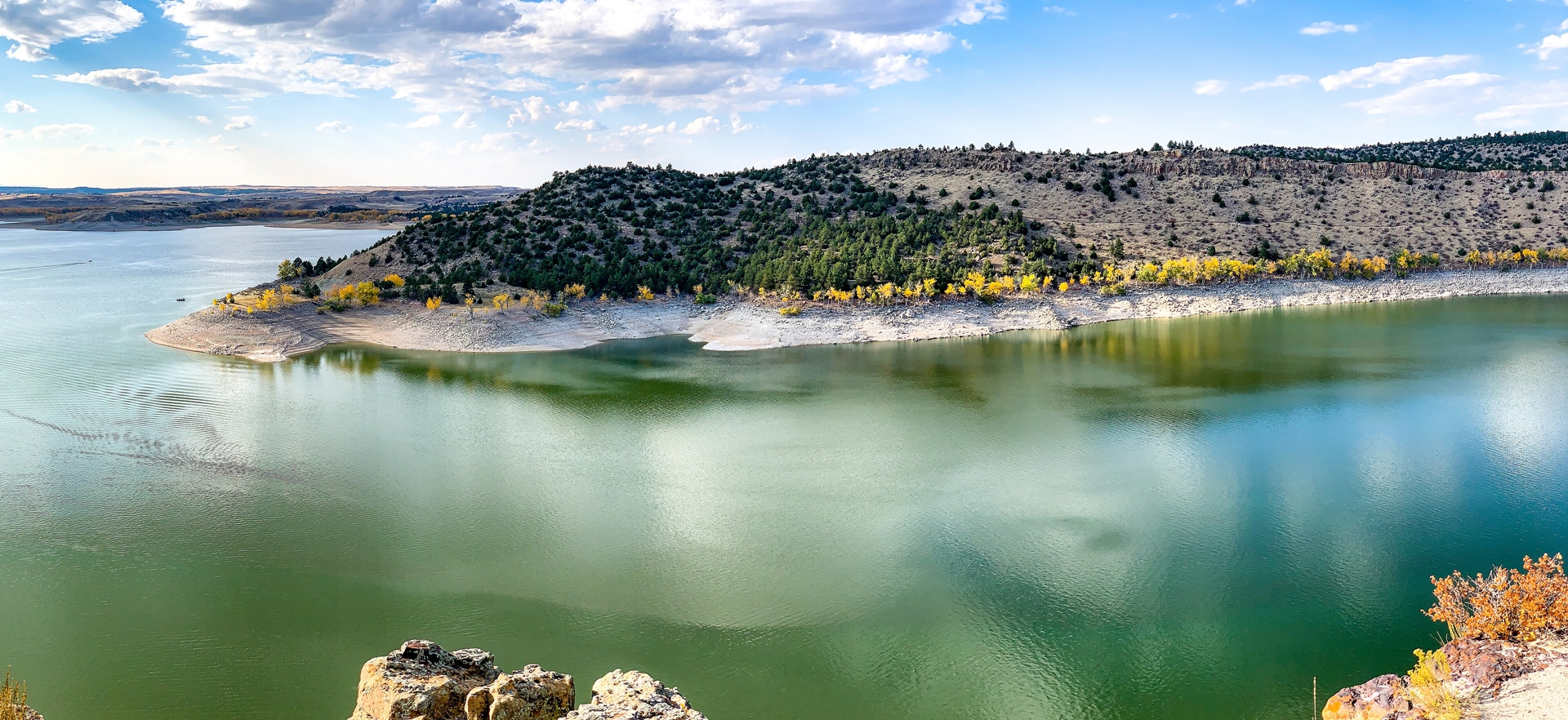
Glendo and Guernsey reservoirs, which sit further downstream, are not expected to fill as early or reach the water levels typically seen this time of year. Their levels are also expected to fall sooner than usual as the summer progresses.
Farmers Face a Shorter Season.
The North Platte Project serves hundreds of thousands of acres of farmland across the region. Irrigation, the lifeblood of agriculture in this semi-arid part of the West, depends heavily on how much water those reservoirs can release.
This year, the limited water supply has already caused a delay in irrigation releases from Guernsey Reservoir. Farmers who depend on that water have had to wait longer than normal to get their fields irrigated. And when releases do begin, they are expected to end earlier in the season than typical, cutting short the window that crops need water most.
Reclamation confirmed that an allocation is expected based on the current forecast, but supply constraints will shape how much water actually reaches the fields.
Power Generation Also at Stake.
The reservoirs do more than water crops. The North Platte system feeds six power plants that generate electricity for tens of thousands of homes across the region. Lower water levels mean less generating capacity, which adds another layer of concern to an already tight situation.
What Boaters Should Know.
With water levels dropping across multiple reservoirs, Reclamation is urging anyone planning to boat on these waters to use caution. Hazards that are normally submerged, such as rocks, sandbars, and old structures, can become exposed as levels fall. Anyone heading out on the water should monitor reservoir conditions closely before launching.
Current and Projected Water Releases.
As of June 8, 2026, Reclamation reported the following current release rates from the system:
Seminoe Reservoir is releasing 530 cubic feet per second through the stretch known as the Miracle Mile. Gray Reef Reservoir is releasing 500 cubic feet per second. Glendo Reservoir is releasing just 25 cubic feet per second. Guernsey Reservoir currently has no releases.
A cubic foot per second is a unit of water flow equal to about 449 gallons per minute, roughly enough to fill a standard bathtub in about four seconds.
Looking ahead into summer, Reclamation projects that Seminoe will hold steady at 530 cubic feet per second. Gray Reef is expected to range between approximately 1,000 and 2,500 cubic feet per second. Guernsey is projected to range from roughly 1,600 to 5,000 cubic feet per second depending on conditions.
The Bigger Picture.
The North Platte River Basin may not carry the same name recognition as the Colorado River, but its challenges this summer reflect a broader pattern playing out across the American West. Shrinking snowpack, extreme drought, and growing demand are testing water systems built for a different era.
For now, farmers, recreationists, and utility customers across Wyoming are watching the skies and the reservoir gauges, hoping summer brings something closer to normal. The numbers, at least for now, say otherwise.
Pictured: Glendo Reservoir on the North Platte River in Glendo, Wyoming , October, 2021, by Raygun5000000. Licensed under the Creative Commons Attribution-Share Alike 4.0 International license.