
- Every July 1, California’s State Water Project shifts into a higher gear, moving significantly more water because endangered fish have largely cleared the most sensitive stretches of the Sacramento-San Joaquin Delta.
- Pumping rates jumped from 1,000 cubic feet per second on June 30 to a projected 6,500 cubic feet per second by July 5, sending water south toward millions of Californians.
- At the same time, managers opened special gates on Montezuma Slough to create saltier conditions that the endangered Delta smelt prefer.
- A 2025 update to California’s Endangered Species Act permit allowed real-time, flexible operations that helped push an estimated additional 210,000 acre-feet of water through the Delta in January alone.
- The number of protected fish species inadvertently caught at the south Delta pumping plant last season reached nearly a 10-year low under the new approach.
Thursday, July 9, 2026 —Think of California’s massive water delivery network as a faucet that gets turned up every summer. That is essentially what happened on July 1, 2026, when the California Department of Water Resources shifted its State Water Project into what operators call summer operations.
The State Water Project, the nation’s largest state-built water system, serves some or all of the water needs of 27 million Californians. It moves water from rain and snowmelt in Northern California through a network of reservoirs, canals, and pumping stations all the way down to Southern California. Getting that water where it needs to go, however, is never simple. Strict rules govern every move, and those rules change dramatically with the season.
Fish Drive the Schedule.
The main reason for the seasonal shift has nothing to do with human demand and everything to do with fish.
Four native species, the Delta smelt, the longfin smelt, steelhead, and Chinook salmon, are either threatened or endangered. From February through June, many of these fish are spawning or migrating through the Sacramento-San Joaquin Delta, the fragile inland estuary east of San Francisco Bay where most of California’s water is captured and routed south. During those critical months, the pumps are kept at relatively low speeds to reduce the risk of pulling fish into the system or disrupting their movements.
By early July, scientists say, those fish have generally moved well beyond the channels most affected by pumping. That biological reality is what allows the rules to change.
The Pumps Open Up.
In anticipation of the July 1 rule shift, the California Department of Water Resources began releasing more water from Lake Oroville, the project’s primary storage reservoir located roughly 150 miles north of the Delta in the Sierra Nevada foothills.
Pumping at the south Delta facilities was expected to climb from 1,000 cubic feet per second on June 30 to about 6,500 cubic feet per second by July 5. To put that in plain terms, a cubic foot of water holds about 7.5 gallons. At 6,500 cubic feet per second, the pumps are moving more than 48,000 gallons of water every single second.
That water travels two paths. Some of it flows 70 miles south into San Luis Reservoir, a giant off-stream storage facility, where it waits to be drawn on later by communities in the Santa Clara Valley, the San Joaquin Valley, and coastal and southern water districts. The rest flows directly to those same districts to meet their immediate summer needs.
A Marsh Gets a Drink.
The seasonal shift does not only mean pumping more water south. It also means managing where that water goes within the Delta itself.
On July 1, the California Department of Water Resources began operating a set of gates on Montezuma Slough, a channel in the western portion of the Delta. The purpose: to push more freshwater into Suisun Marsh, a sprawling brackish wetland where the Sacramento and San Joaquin rivers meet the San Francisco Bay estuary.
Suisun Marsh is important habitat. Birds and fish rely on it for food and shelter. Federal and state wildlife rules require the department to run those gates for 60 consecutive days starting each July 1 in order to create conditions, specifically a particular level of salinity or saltiness, that scientists believe the endangered Delta smelt prefer.
There is a catch, though. Freshening the marsh with those gates pushes saltier water into other western Delta channels outside the marsh. That is a problem for farmers in the western Delta who depend on that water for their crops. To offset that saltier water in the channels, the department increases freshwater releases from Lake Oroville further upstream. The goal is to keep salinity levels in the Delta within the boundaries set by the State Water Resources Control Board.
It is a continuous balancing act, a push and pull of flows, gates, and releases playing out across hundreds of miles of waterways.
A Smarter System Emerges.
For decades, much of this balancing act was driven purely by the calendar. Rules kicked in on set dates regardless of what was actually happening in the water that day. That is starting to change.
Late in 2025, an amendment to the California Department of Water Resources’ California Endangered Species Act permit opened the door to a more flexible approach. Rather than following a rigid schedule, operators began tracking the real-time presence of fish species in the Delta and adjusting operations accordingly.
The results last season were notable. By holding back certain water releases in the fall, operators were able to release larger volumes in the winter, when conditions were better suited for fish and water supply alike. Under that amendment, the State Water Project contributed an estimated additional 210,000 acre-feet of Delta outflow in January 2026. An acre-foot is roughly the amount of water that covers one acre of land to a depth of one foot, or about 326,000 gallons, enough to supply two average California households for a year.
That surge of water in January helped push fish westward and away from the high-risk zones near the pumping facilities.
Near a 10-Year Low for Fish Impacts.
The flexible approach also appeared to reduce harm to protected species. For much of the past season, the State Water Project was able to operate at a fairly steady pace without major disruptions, and the number of listed fish species inadvertently caught at the south Delta pumping plant came in at nearly a 10-year low, according to the California Department of Water Resources’ July 2, 2026, blog post.
“Water managers take seriously their mission to balance the water needs of millions of people while protecting fish species and the environment,” the Department wrote. “By adjusting operations and the regulations behind them, California can continue to adapt to a changing climate to the benefit of all.”
Whether this more adaptive strategy will continue to deliver results in the years ahead remains to be seen, but last season’s numbers offered a promising early signal.
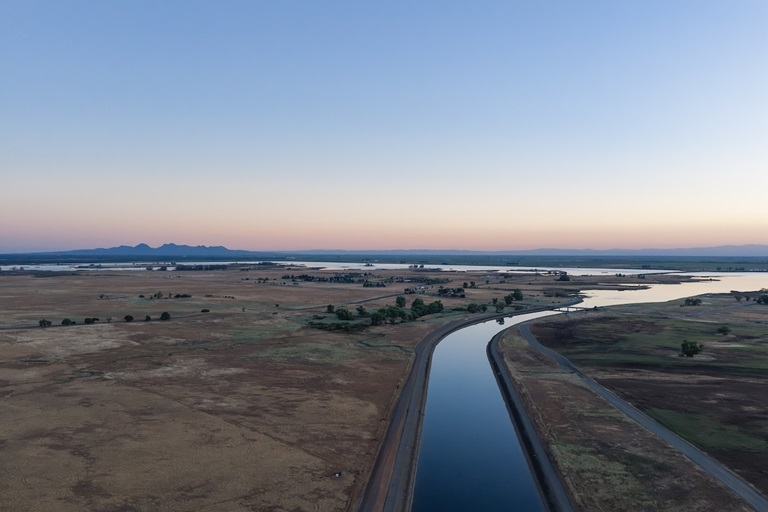
Pictured: From the California Department of Water Resources, a drone view of The Ronald B. Robie Thermalito Pumping-Generating plant produces electricity by transferring water from the Thermalito Forebay to the Thermalito Afterbay through four generating units. This State Water Project facility is located in Butte County downstream from Oroville Dam.