
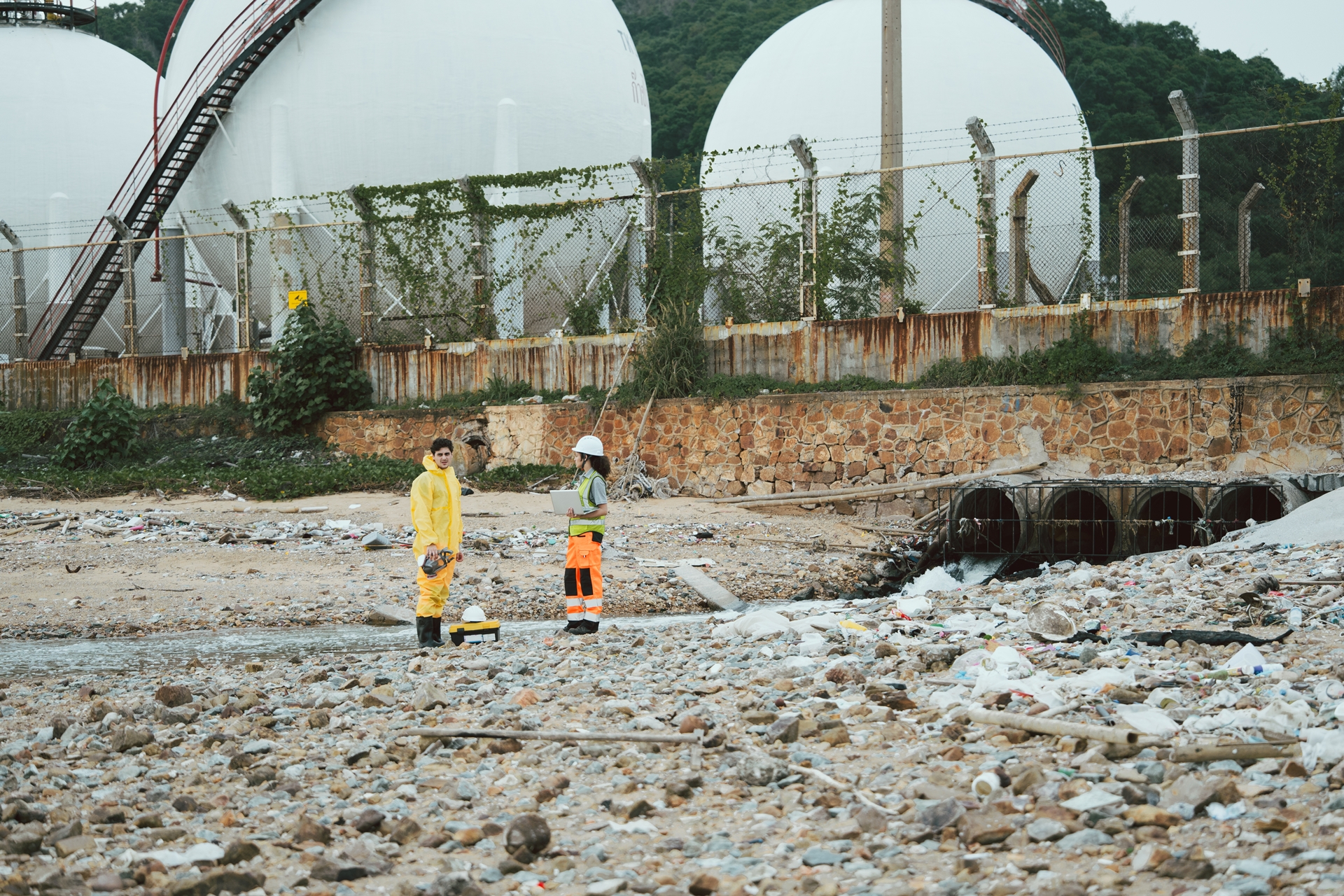
- The EPA held a public hearing on July 7 to take comments on its proposal to undo drinking water limits for four types of forever chemicals.
- A bipartisan group in Congress introduced two bills last week to ban PFAS from cosmetics and food packaging.
- The Environmental Working Group released a report warning that millions of pounds of PFAS pesticides are being sprayed on American food crops each year.
- The EPA proposed new monitoring requirements for additional unregulated contaminants, including certain PFAS, in public drinking water systems.
- More than 15,000 public comments have been submitted on the proposed rescission rule, with a July 20 deadline to weigh in.
Saturday, July 11, 2026 — The fight over how America deals with a stubborn class of chemicals known as PFAS took several sharp turns over the past two weeks, with federal agencies, lawmakers, and watchdog groups all pulling in different directions.
PFAS stands for per- and polyfluoroalkyl substances. Scientists often call them “forever chemicals” because they do not break down easily in the environment or in the human body. They show up in drinking water, food packaging, cosmetics, pesticides, and even the blood of most Americans. Research has linked PFAS exposure to serious health problems, including cancer, liver damage, immune system suppression, and harm to developing babies.
Against that backdrop, the Environmental Protection Agency is proposing to pull back certain drinking water protections for some of these chemicals, while at the same time proposing new monitoring for others. Meanwhile, members of Congress are pushing to ban PFAS from everyday consumer products, and an environmental research group is sounding alarms about PFAS-laden pesticides being sprayed on fruits and vegetables.
EPA Proposes Undoing Some Drinking Water Limits.
On May 18, the EPA announced it wanted to rescind drinking water regulations for four specific types of PFAS: PFHxS, PFNA, HFPO-DA (commonly known as GenX chemicals), and mixtures of those three chemicals plus PFBS. Those limits were part of a broader rule finalized in April 2024 under the Biden Administration that set the first-ever national drinking water standards for six PFAS chemicals.
The EPA’s rationale is procedural, not scientific. The agency says it is not questioning whether these chemicals are harmful. Instead, it says the prior administration did not follow the correct legal steps required by the Safe Drinking Water Act when it set the standards.
Under that law, the EPA is supposed to take a step-by-step approach. First, the agency must propose a determination about whether to regulate a particular contaminant, then take public comment, then finalize that determination. Only after that final determination can the EPA propose an actual drinking water standard, take another round of public comment, and finalize the rule.
The EPA says it followed that sequence correctly for PFOA and PFOS, which are two of the most well-known forever chemicals. Those standards, which set limits at 4 parts per trillion, remain untouched by this proposal. But for the other four PFAS, the agency says the Biden Administration collapsed the process, issuing the preliminary determination and the proposed regulation at the same time. The EPA now considers that an unlawful shortcut.
“The EPA’s proposal is necessary to correct the unlawful procedure under which regulations for these PFAS were promulgated,” the agency stated on its website, updated July 8. “The EPA’s proposal is solely based on a need to correct this unlawful process.”
The Public Hearing Drew Thousands of Eyes.
On July 7, the EPA held a virtual public hearing on the proposed rescission, running from 11 a.m. to 7 p.m. Eastern time. The agency presented information on the proposal and received verbal comments from members of the public. A recording of the hearing is expected to be posted on the EPA website.
The proposal has generated intense public interest. As of last week, more than 15,000 written comments had been submitted to the Federal Register docket. The public comment period closes on July 20, giving people roughly another week to weigh in. Comments can be submitted through the federal rulemaking portal at regulations.gov under Docket ID EPA-HQ-OW-2025-0654, or by email or mail.
The Federal Register notice made clear that the EPA is only seeking comment on the legal interpretation behind the rescission, not on the underlying science about whether PFAS are harmful. “The EPA is not seeking comment on its substantive findings supporting either its regulatory determinations or its associated NPDWR provisions, including any information about health risks associated with PFAS, cost of regulation, or occurrence information,” the notice stated.
What Happens If the Rules Are Rolled Back?
The rescission would not erase all federal PFAS drinking water limits. The 4-parts-per-trillion standards for PFOA and PFOS would remain in effect, though the EPA is separately proposing to extend the compliance deadlines for those two chemicals.
But the limits for PFHxS, PFNA, GenX chemicals, and their mixtures would be removed from the books. Water systems that were preparing to meet those standards would no longer be required to monitor or treat for those particular contaminants.
According to the EPA’s own economic analysis, removing those standards would save water systems an estimated $11.6 million per year in compliance costs. A sensitivity analysis suggested that total savings could reach approximately $82 million per year when accounting for additional contaminants in the group.
At the same time, the EPA estimated that the rescission would result in roughly $6.7 million per year in lost health benefits. Beyond the numbers that could be calculated, the agency acknowledged there would be additional health benefits that could not be quantified, including reduced protection against developmental and reproductive harm, immune system suppression, liver damage, and thyroid disruption linked to those chemicals.
The EPA emphasized that walking away from these particular regulations does not necessarily mean the chemicals will go unregulated forever. “Once the EPA has taken final action to correct the unlawful process,” the agency stated, “the agency will take steps to follow through on its commitment to evaluate additional PFAS in drinking water for future regulation. While the EPA cannot pre-determine the outcome, it is possible that the result could be more stringent requirements.”
The case is also tangled up in federal court. The American Water Works Association and other groups challenged the original 2024 PFAS rule in the D.C. Circuit Court of Appeals, and that litigation remains pending.
Congress Takes a Different Path.
While the EPA proposes to loosen certain drinking water standards, members of Congress introduced legislation last week intended to tighten protections against PFAS in consumer products.
On July 9, Congressman Brian Fitzpatrick of Pennsylvania, the co-chair of the Bipartisan PFAS Task Force, introduced two bills alongside Congresswoman Debbie Dingell of Michigan and Congresswoman Laura Friedman of California.
The first, the No PFAS in Cosmetics Act, would require the Food and Drug Administration to ban the intentional use of PFAS in cosmetic products within 270 days of enactment. The second, the Keep Food Containers Safe from PFAS Act, would prohibit intentionally added PFAS in food packaging, including wrappers and containers designed to resist grease, water, and oil.
“Since entering Congress, I have worked with affected families, local leaders, scientists, and advocates to force action on PFAS, and that fight has made one thing clear: we cannot wait for contamination to spread before we act,” Fitzpatrick said in a July 9 press release. “Now we are taking the next step by cutting off unnecessary exposure at the source.”
Dingell pointed to the widespread nature of the problem. “PFAS chemicals are in products that we use every single day, including cosmetics and personal care products. Too often these dangerous chemicals are not disclosed on packaging and labels, meaning most Americans don’t even know they’re using them,” she said.
Suzanne Price, the CEO of Breast Cancer Prevention Partners, praised the legislative effort. “The science is clear: PFAS chemicals are linked to breast and other cancers, birth defects, hormone disruption, and organ damage, yet they’re still hiding in the products we use every single day,” Price said.
The bills are part of a broader push by Fitzpatrick, whose district in Bucks and Montgomery Counties has been directly affected by PFAS contamination, often from military sites. His efforts have included securing federal funding for PFAS cleanup and water infrastructure upgrades, and advancing legislation to create a senior PFAS coordinator at the Department of Defense.
Watchdog Group Warns About PFAS in Pesticides.
Adding another layer to the PFAS picture, the Environmental Working Group released a report warning that an estimated 14 million pounds of PFAS-containing pesticides are applied to American food crops each year. The group’s analysis found that roughly 100 pesticide products registered with the EPA contain PFAS as active or so-called inert ingredients.
Inert ingredients are not necessarily harmless. Many of these additives belong to the same chemical family as the forever chemicals already linked to serious health concerns, according to the report.
The group’s research found PFAS pesticide residues on 37 percent of California-grown non-organic produce samples, including nine out of 10 samples of peaches, nectarines, and plums. PFAS pesticides were also detected in up to half of California surface water samples and roughly half of all tested sediment samples. Between 2018 and 2023, farms applied 15 million pounds of PFAS pesticides across all 58 California counties.
“We’re spraying millions of pounds of chemicals on food without understanding their full health impacts or considering what little we do already know. It’s unconscionable,” said Alexis Temkin, a senior toxicologist with the Environmental Working Group.
The group also raised concerns about the breakdown products of these pesticides. As PFAS chemicals partially degrade over time, they can form other harmful compounds, including trifluoroacetic acid, which is increasingly being detected in the environment, wildlife, and people. One study estimates that PFAS pesticide use in California alone could generate between 185,000 and 616,000 pounds of trifluoroacetic acid each year.
An EPA analysis cited in the report noted that 36 PFAS pesticides lack updated developmental and reproductive toxicity tests. The report also noted that since 2012, it has been common practice for the EPA to waive immunotoxicity study requirements for pesticides, which limits the agency’s ability to detect harm to the immune system.
In California, Assembly Bill 1603 by Assemblymember Nick Schultz would require the state to monitor and report the use of PFAS pesticides. The Environmental Working Group is co-sponsoring the legislation.
EPA Proposes New Monitoring for Other Contaminants.
In a move that may seem to run counter to rescinding existing standards, the EPA proposed on July 1 a new round of drinking water monitoring that includes certain PFAS chemicals.
The sixth Unregulated Contaminant Monitoring Rule, known as UCMR 6, would require public water systems to collect data on 30 unregulated contaminants, including seven ultra-short organofluorine compounds, three pesticide metabolites, 13 semi-volatile organic compounds, and seven purgeable organic compounds. Four of the organofluorine compounds on the list are PFAS: PFPrS, PFPrA, PFEtS, and PFMOAA.
The National Ground Water Association reported on July 9 that under the proposal, all community and non-transient non-community water systems serving 3,300 or more people would be required to conduct monitoring, along with a representative sample of smaller systems. The association noted that “eighty percent of community water systems are small groundwater-supplied water systems serving 10,000 or fewer people.”
These contaminants are not currently regulated under federal drinking water standards. The purpose of the monitoring is to gather data that could inform future regulatory decisions. Comments on the UCMR 6 proposal are due by August 31.
Where Things Stand.
The PFAS landscape remains complicated and fast-moving. Federal regulators are pulling back some protections while proposing to expand monitoring in other areas. Congress is pushing new legislation to eliminate PFAS from consumer products. And environmental groups are pressing for tighter controls on PFAS in agriculture.
For communities that rely on public water systems, the practical reality is that drinking water limits for PFOA and PFOS remain in place for now, though their compliance deadlines could be extended. The limits for PFHxS, PFNA, GenX chemicals, and their mixtures face possible elimination if the rescission rule is finalized. The EPA has said it intends to take final action on the rescission in 2026.
Anyone who wants to comment on the proposed rescission rule has until July 20 to do so through the federal rulemaking portal.