
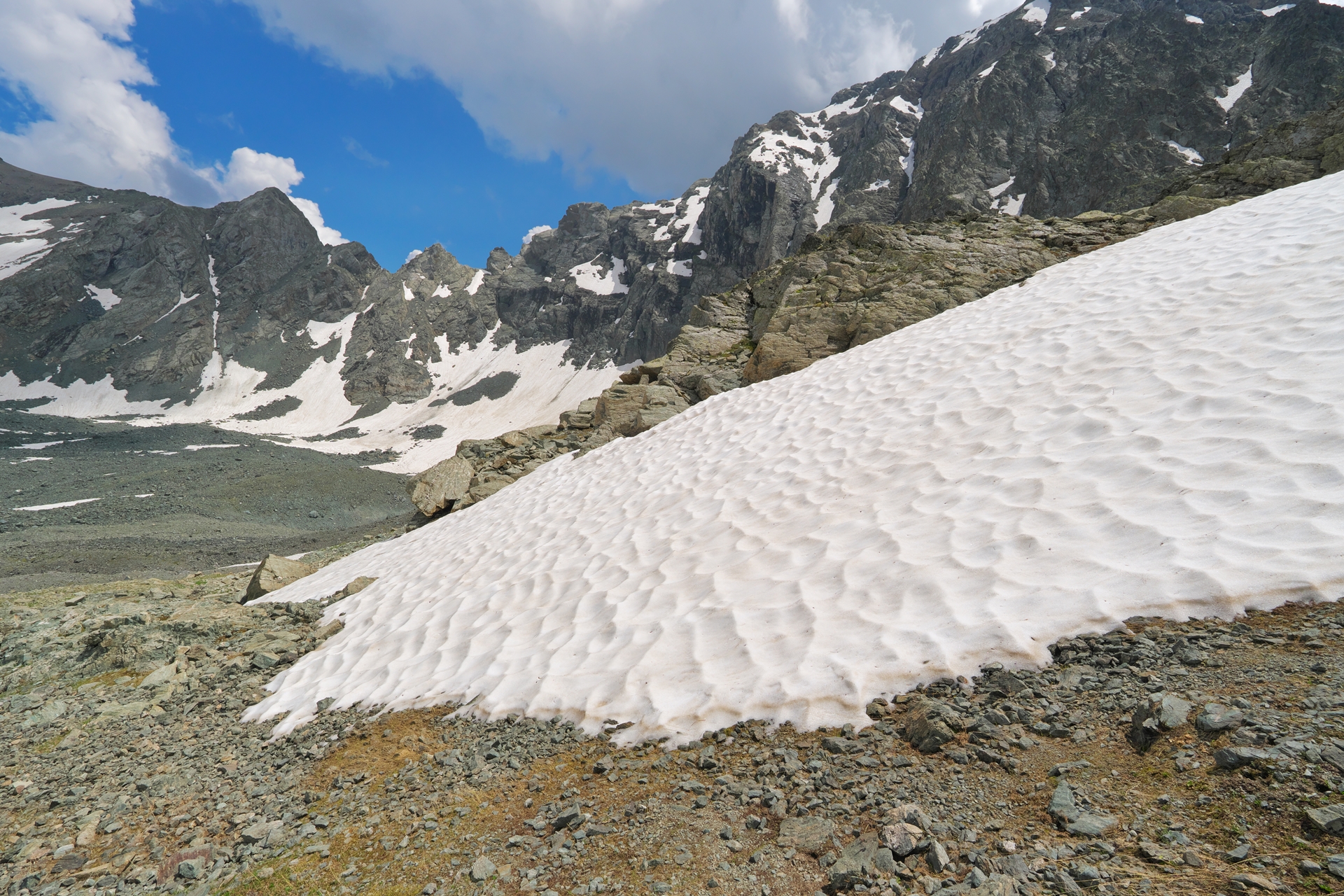
- A new study links the 2026 western snow drought to climate change.
- Researchers found the drought was about four times more likely than in the 1800s.
- The Upper Colorado River Basin showed the largest shift in the odds.
- The missing snow across the West rivaled the storage capacity of Lake Mead.
- The authors warn such droughts could become common in a higher-emissions future.
Wednesday, August 12, 2026 — During the winter and spring of 2026, a snow drought settled over the American West. News outlets reported “record-low” conditions across the region. The shortage arrived alongside unusually warm temperatures, while precipitation ranged from moderately dry to about average.
A study published on July 20, 2026, in the journal Proceedings of the National Academy of Sciences set out to answer a single question: how much did climate change have to do with it? A team led by Adrienne M. Marshall of the Colorado School of Mines found that a snow drought this severe across the western United States was roughly 4.4 times more likely in the current climate than it would have been in the preindustrial period, the years from 1850 to 1900 before the large-scale burning of fossil fuels. The researchers placed the range of that estimate between 2.6 and 9.4 times.
What the Snow Numbers Mean.
The study measured snow using snow water equivalent, which is the amount of water that would remain if the snowpack melted. It is a common way to compare snow from one year to the next, because a deep, fluffy snowpack and a shallow, wet one can hold very different amounts of water.
The drought was both widespread and severe. At about 17 percent of automated snow stations, called snow pillows, and 20 percent of grid areas in a land dataset, the snow water equivalent on March 15, 2026, was the lowest in nearly four decades. At close to half of those stations and grid areas, snow sat at or below the tenth percentile, meaning lower than roughly nine out of ten years on record.
Putting the Missing Snow in Perspective.
Across the western United States, the snowpack held about 40 cubic kilometers less water than a similar event would have in the years 1850 to 1900. That is a drop of about 25 percent. To picture the gap, the authors compared it to Lake Mead, the region’s largest reservoir, which can store about 35 cubic kilometers of water.
The team also described the odds in terms of how often an event like this tends to occur. In the current climate, a drought this severe would be expected about once every 6.8 years. In the preindustrial climate, the same event would have been far rarer, closer to once every 30 years.
The Upper Colorado River Basin Stood Out.
The Colorado River supplies water to cities, farms, and power plants across the Southwest, and one part of the study drew special attention to it. In the Upper Colorado River Basin, the snow drought was about 14 times more likely in the current climate than in the preindustrial period. That figure came with a very wide range of uncertainty, because a drought this severe was so unlikely in the older climate that the exact odds are hard to pin down.
In that basin, the snowpack held about 2.6 cubic kilometers less water than a comparable past event, a drop of about 33 percent. In the Columbia River Basin and in California, the drought was about 2.9 times more likely than in preindustrial times.
Water Supplies Under Strain.
The consequences of the 2026 snow drought are still unfolding, but the study points to several concerns. For the first time, in spring 2026, the United States Bureau of Reclamation projected that Lake Powell could fall below its minimum power pool, the water level a dam needs to keep generating electricity, by the following winter under typical conditions. The authors also noted that the drought is likely to raise wildfire risk and to reduce water available for energy, farming, and communities.
A Look at Warmer Decades Ahead.
The researchers also examined how common such droughts could become under a future with moderately high greenhouse gas emissions. In that scenario, the yearly chance of western snow falling to 2026 levels was about 10 percent during the 2020s. That chance more than triples to about 32 percent by the 2050s and climbs to about 87 percent by the 2090s. By late in the century, in other words, a drought like 2026 would be more common than not.
The Upper Colorado River Basin followed a different path. There, the yearly chance of a drought this severe was only about 0.02 percent in the 2020s, rising to about 2.1 percent by the 2050s and about 17 percent by the 2090s. Even by the end of the century, a drought that extreme would not become the norm in that basin.
The authors were careful about how to read these figures. “We emphasize that these projections are not predictions of the future, but a warning of our best estimates of expected impacts in a moderately high emissions world,” they wrote, adding that lower emissions scenarios would reduce the risk.
How the Study Was Done.
To reach these conclusions, the team pulled snow water equivalent data from a land dataset called ERA5-Land, which reaches back to 1950, and focused on March 15 because it marks about the peak of the snow season. The researchers then compared the real world against a set of climate model runs representing both a preindustrial climate and the present. By dividing the chance of the drought in the current climate by the chance in the older climate, they produced what scientists call a risk ratio, a number that shows how much more likely an event has become.
Citation.
Marshall, A. M., Cowherd, M., Rahimi, S., & Ye, Y. (2026). The 2026 western US snow drought was about four times more likely due to climate change. Proceedings of the National Academy of Sciences, 123(30), e2612961123. https://doi.org/10.1073/pnas.2612961123



 wpDiscuz