- Wyoming lawmakers declined to sponsor proposed data center water restrictions as a committee bill.
- The proposed law would have required annual reports on data center water consumption.
- Lawmakers supported expanding groundwater studies to areas facing new development.
- Committee members reviewed Colorado River negotiations and federal litigation.
- Wyoming also examined stormwater legislation and improved water mapping technology.
Thursday, November 12, 2026 — Wyoming lawmakers considered new limits on how much water large data centers could use to cool their equipment during a November 6, 2026, meeting of the Legislature’s Select Water Committee.
The proposal, introduced by Representative Ken Chestek, would have established water-use standards for data centers, required annual reporting and allowed penalties for facilities that failed to comply.
However, the committee rejected a motion to sponsor the legislation as a committee bill. The vote was three in favor and eight opposed, with one member excused.
The vote did not permanently defeat the proposed legislation. It meant only that the Select Water Committee would not sponsor the measure as a committee bill for the 2027 legislative session. Individual lawmakers could still introduce the proposal, or a revised version, through the regular legislative process. The committee’s decision did not establish or change any existing restrictions on data center water use.
The proposal was one of several water-related matters discussed during the committee’s November 4–6 meetings in Casper.
How Much Water Should a Data Center Use?
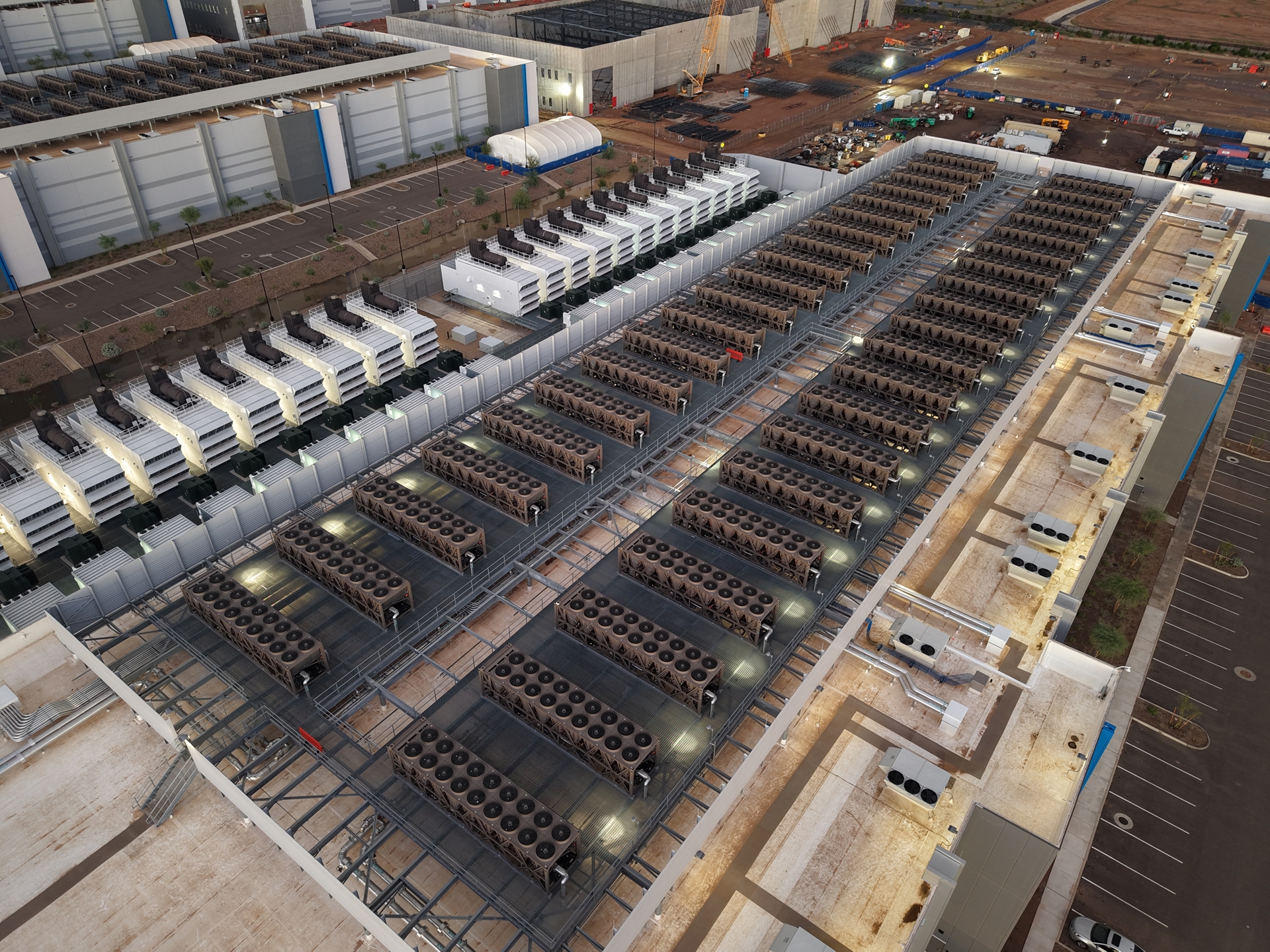
Data centers contain computers and other electronic equipment used to store, process, and transmit digital information. That equipment generates heat and must be cooled to operate properly.
Some facilities use cooling systems that consume substantial amounts of water. Others use systems that circulate and reuse water, reducing the amount needed.
Chestek’s proposal, identified as Working Draft 27LSO-0235 , would have applied to data centers with an electrical demand of at least five megawatts.
Under the draft, new water permits and changes to existing water rights would have been subject to a limit of 0.2 liters of water consumed for cooling and related environmental management per kilowatt-hour of electricity used by a data center, measured over a 12-month period.
The restriction would also apply to municipal or other water supplies serving data centers.
Chestek told committee members that the standard would not require a particular cooling technology. Instead, facilities could choose how to meet the water-use limit.
He explained that Wyoming data centers being developed were already using closed-loop cooling systems, which generally consume less water.
The proposed restrictions were intended to ensure that future facilities continued using water-efficient technology.
Annual Reporting and Penalties Proposed.
The legislation also included requirements intended to make data center water consumption more transparent.
Facilities using water for cooling or environmental management would have been required to submit annual reports to the Wyoming State Engineer by March 1.
Those reports would have included total water use and the amount of water used for cooling relative to electricity consumption, calculated monthly and annually.
The reports would have been made publicly available in a searchable format on the State Engineer’s website.
Facilities that failed to submit required reports could have faced civil penalties of up to $1,000 per day.
For water permits covered by the new consumption limit, a data center found to exceed the standard would have been given six months to reduce its water use. Continued violations could have resulted in additional permit conditions, suspension, or cancellation.
The draft would have taken effect July 1, 2027. Its proposed water-use restrictions would have applied to new applications and petitions filed on or after that date, rather than retroactively changing existing water rights.
The annual reporting requirement, however, would have applied to existing data centers as well.
Lawmakers Questioned the Restrictions.
Committee members raised several concerns about the proposal, including whether data centers should face requirements that do not apply to other industries.
Chestek argued that data centers have cooling options that other water users may not have. For example, agricultural operations require water for crops and livestock, while data centers may be able to use cooling systems that consume less water.
Some lawmakers questioned whether that distinction justified placing special restrictions on one industry.
Senator Ogden Driskill raised concerns about industrial water consumption and whether the proposal would provide enough flexibility as technology changes.
Other members questioned how the rules would interact with local government oversight.
Senator Stacy Jones pointed to efforts by Wyoming counties, including Sweetwater County, to develop their own data center policies. Chestek responded that Wyoming has a statewide interest in managing its water resources.
Lawmakers also discussed whether future legislation should cover other large electricity users, not just data centers.
Data Center Industry Raises Concerns.
The committee heard from a representative of the Data Center Coalition, a national organization representing data center owners, operators and related businesses.
Cara Bunder, the coalition’s director of government affairs for the Western United States, said the industry shares the committee’s interest in responsible water management.
She described investments in newer cooling technologies and efforts to reduce water consumption.
Bunder also cautioned that cooling systems involve trade-offs between water use and electricity demand.
Reducing the water used directly by a data center could affect the amount of electricity needed for cooling, along with water consumption associated with electricity generation.
She said local conditions should be considered when developing requirements rather than applying a single standard to every facility.
Wyoming State Engineer Brandon Gabbart did not take a position on the proposed restrictions. He did, however, identify questions about how the legislation would be implemented and enforced.
Following the discussion and public testimony, the committee voted against sponsoring the bill.
The decision means the proposal will not advance as a Select Water Committee bill, although the discussion left open the possibility of legislation introduced through another route.
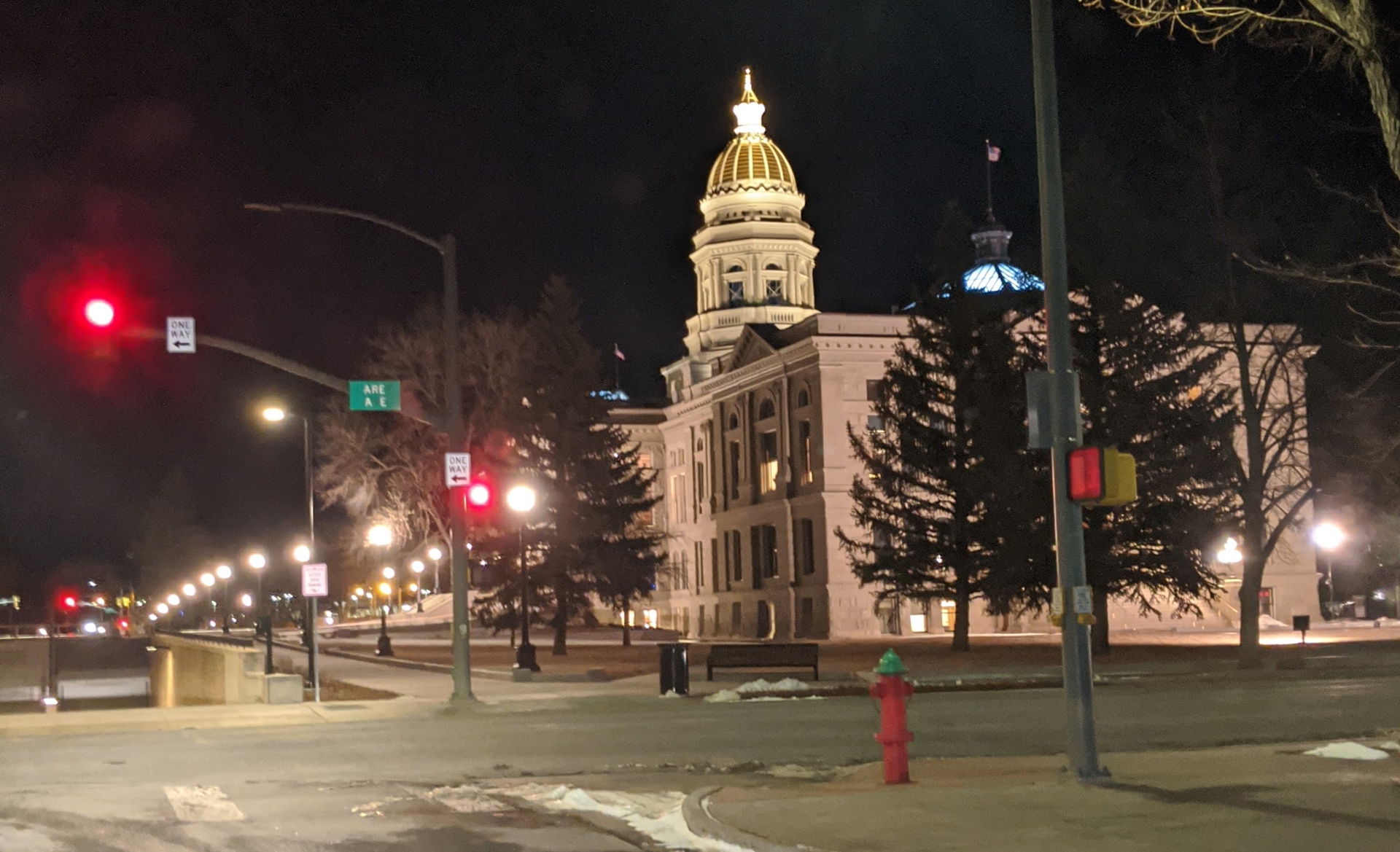
 . James Martin, February 2020. Public domain.
Groundwater Studies Receive Committee Support.
Although the data center bill failed, lawmakers supported another proposal related to the state’s groundwater resources.
Vice Chairman Brian Boner proposed expanding groundwater studies beyond areas already subject to special groundwater controls.
The proposal grew partly out of concerns about new development, including data centers, and how much water may be available underground.
Boner explained that Wyoming has established systems for managing surface water, but the amount of groundwater available in some areas remains less certain.
He suggested studying areas where additional development is expected before existing wells begin experiencing problems.
The proposed expansion would build on earlier groundwater study legislation sponsored by Senator Taft Love.
Boner requested approximately $2 million to begin the work.
Water Quantity and Quality Both Matter.
During the discussion, lawmakers suggested that groundwater studies should examine not only how much water is available but also its quality.
Driskill raised concerns about establishing baseline water-quality information before large industrial developments begin operating.
Such information could help document existing conditions and identify changes that occur later.
Gabbart described a possible statewide program that would proceed in stages.
The first stage would identify areas needing study. The second would establish priorities based on existing groundwater problems, expected development and other concerns.
Later work could include groundwater mapping, computer models and monitoring wells.
Gabbart explained that the proposed $2 million was an estimate for an initial study comparable to earlier work in Laramie County. A larger effort would require additional funding.
The proposal also included discussion of adding two staff positions to help manage an ongoing groundwater monitoring program.
Committee members unanimously supported incorporating the groundwater study concept into water planning legislation, with additional attention to water quality.
Colorado River Disputes Remain Under Review.
The committee also received an update on Colorado River management, including conservation programs, federal operating rules and litigation involving Lower Colorado River Basin states.
Wyoming is one of four Upper Colorado River Basin states, along with Colorado, New Mexico and Utah.
State Engineer Gabbart discussed ongoing work involving a $100 million federal grant awarded to the Upper Colorado River Commission for conservation efforts.
The Upper Basin states were continuing to work through questions about how conservation programs would operate and how conserved water would be handled.
The committee also received information about litigation challenging federal Colorado River operating decisions.
Nevada, the Colorado River Commission of Nevada and the Southern Nevada Water Authority filed suit against the federal government on August 24, 2026.
Arizona subsequently sought to intervene in the case.
According to the presentation, the lawsuit challenges federal decisions concerning Colorado River operations, including potential water shortages in the Lower Basin.
Federal modeling discussed during the meeting included possible shortages as large as 3.6 million acre-feet, including a portion assigned to Mexico.
Under one modeled shortage scenario, Nevada would face a reduction of approximately 213,556 acre-feet, or about 71 percent of its annual Colorado River allocation.
The committee was told that Wyoming was not named as a defendant in the lawsuit.
State officials continued monitoring the proceedings and their possible implications for Colorado River management.
Stormwater Legislation Moves Forward.
Another discussion concerned proposed changes to Wyoming’s stormwater infrastructure laws.
A working group reported that it had completed additional review of legislation previously approved by the committee.
The proposal addresses municipal stormwater management, including questions about fees and the authority of local governments.
Legislative staff discussed language requiring charges to be just and reasonable, a standard intended to allow flexibility for differing local conditions.
Supporters said the approach would help municipalities establish defensible charges while accounting for individual circumstances.
However, public testimony reflected continuing disagreement.
Cheyenne resident Brian Terrell questioned whether municipalities should be allowed to impose certain charges without voter approval.
The working group recommended that the legislation continue through the legislative process without further revisions.
Better Maps Could Improve Water Management.
The committee also heard a presentation from Jeff Hamerlinck of the University of Wyoming’s Wyoming Geographic Information Science Center.
Hamerlinck described work using lidar, a laser-based mapping technology, to produce more detailed information about Wyoming’s landscape and waterways.
The state has supported development of a statewide terrain model with elevation measurements at a one-meter resolution.
Earlier statewide terrain information had a much coarser resolution of approximately 30 meters.
The improved information can help researchers identify drainage patterns, streams and other landscape features.
Hamerlinck also discussed work supporting the national 3D Hydrography Program, which uses detailed terrain information to improve maps of waterways and drainage networks.
The presentation explained how more accurate geographic information could support water planning, watershed management and decisions involving interstate water resources.
Water Management Remains on Wyoming’s Agenda.
The November meetings also included discussions of water development funding, reservoir projects, irrigation improvements and matters involving the Belle Fourche River Compact.
While lawmakers did not approve the proposed data center restrictions, they supported additional work on groundwater studies and continued consideration of stormwater legislation.
The discussions reflected different approaches to managing Wyoming’s water resources, including proposed restrictions on particular uses, expanded scientific studies and greater flexibility for local communities.
The groundwater study proposal is expected to receive further consideration as lawmakers prepare water planning legislation for the 2027 legislative session.
Sources:
1. Wyoming Legislature, Select Water Committee. November 4–6, 2026, meeting information, agenda and meeting materials.
https://www.wyoleg.gov/Committees/2026/SWC
2. Wyoming Legislative Service Office. Working Draft 27LSO-0235, Version 0.5, Consumptive Use of Water – Data Centers, proposed for the 2027 legislative session, nine pages.
https://wyoleg.gov/InterimCommittee/2026/SWC-2026110427LSO-0235v0.5.pdf
3. Wyoming Legislature, Select Water Committee. November 6, 2026, meeting proceedings, including discussion of data center water use, groundwater studies, the Colorado River, stormwater legislation and water management technology.