
- A new device desalinates water, recovers useful chemicals, and makes energy at the same time.
- Researchers built it using scrap zinc in place of costly platinum.
- It runs on acidic and alkaline factory wastewater without any outside power.
- The cell held steady output for more than 18 hours in testing.
- The team describes it as a complementary tool, not a replacement for reverse osmosis.
Wednesday, August 19, 2026 — Factories often face three headaches at once. They need fresh water. They pay to handle the strong acids and bases left over from production. And they burn a lot of energy doing both. A study published last week in the journal npj Clean Water describes a device meant to take on all three problems inside one unit.
Researchers from National Taiwan University and the University of Tokyo call their invention a zinc-based electrochemical neutralization desalination cell, or ZEND. The name is a mouthful, but the idea is simpler than it sounds. The cell pulls salt out of water, recovers reusable material, and generates electricity and hydrogen gas in a single process. The authors describe it as “a promising transitional technology for industrial wastewater reclamation and resource reuse.”
How the cell works, in plain terms.
The cell has three connected compartments. One holds acidic wastewater. One holds alkaline, or basic, wastewater. The middle holds salty water, standing in for seawater at about 35 grams of salt per liter. Thin sheets called ion exchange membranes separate the chambers and let charged particles pass through in a controlled way.
When the cell runs, the acid and the base slowly neutralize each other. That chemical reaction does the work. It draws salt out of the middle chamber and pushes an electric current through the system. No wall outlet is needed, because the reaction itself provides the push. The process even pulls in a little heat from its surroundings, which adds to the usable electricity it can deliver.
Scrap zinc instead of costly platinum.
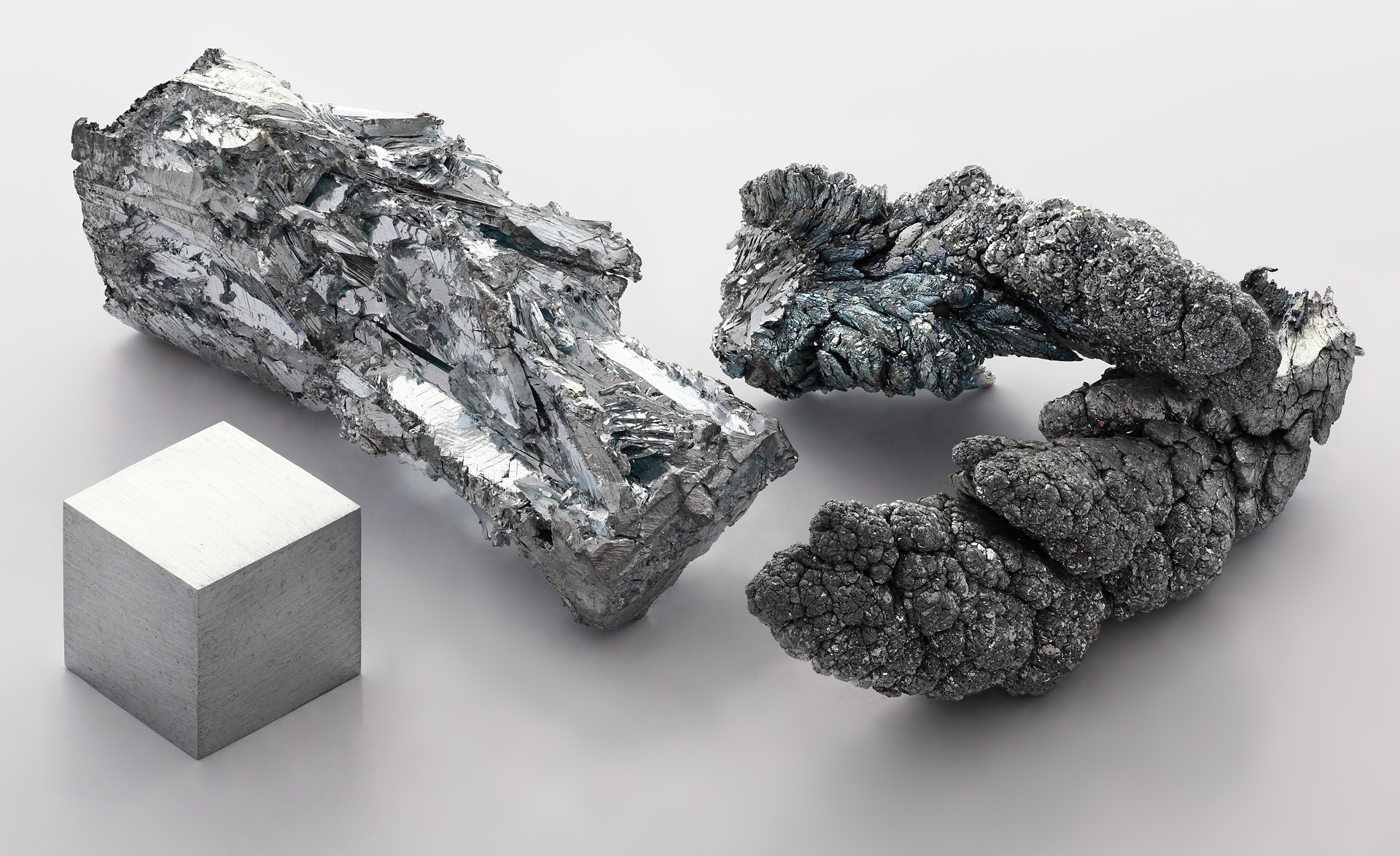
The twist is the metal. Earlier versions of this kind of cell leaned on hydrogen gas and expensive platinum. This design uses zinc instead, and not fresh zinc. It uses recycled zinc recovered from scrap such as spent batteries and electronic waste. The team used zinc that was 99.9 percent pure to keep the test results clean, but it notes that recycled zinc from industry typically runs 95 to 99 percent pure and could work in real use.
Zinc is cheap, common, and already widely recycled. Using it removes the need for a separate hydrogen supply. As the zinc reacts, it forms zinc compounds that settle out as a solid. Those solids can be collected and reused, for example in rubber making, ceramics, pigments, farm zinc supplements, or, if clean enough, pharmaceutical ingredients.
What the tests showed.
In the lab, the cell ran steadily at a fixed current for more than 18 hours. It reached a peak power density of 37.9 milliwatts per square centimeter. It produced hydrogen gas at roughly 29.7 milliliters per hour. When real-world energy losses are counted, its effective energy conversion efficiency came out to about 59 percent.
Over the 18-hour run, the salt level in the middle chamber dropped. Total dissolved solids, a common measure of saltiness, fell from 35.5 grams per liter to 26.5 grams per liter.
The desalination catch.
Here the study is candid about its limits. That drop works out to a desalination efficiency of roughly 25.4 percent, meaning the water was only partly de-salted. By comparison, standard reverse osmosis removes far more salt. The authors state plainly that the cell is not a stand-in for reverse osmosis in producing drinking water.
The reason is resistance. Seawater-strength salt water does not conduct electricity as easily as the concentrated brines used in some earlier experiments, so ions move more slowly through the cell. That caps how much salt comes out in a single cycle. The researchers suggest the technology fits best where water is extremely salty, such as hypersaline industrial wastewater and brines that give reverse osmosis trouble.
A hydrogen bonus and a lower carbon footprint.
The cell also makes hydrogen, a fuel that carries value. Drawing on 2023 International Energy Agency figures, the paper notes that green hydrogen from renewable sources cost roughly 3.1 to 9.0 dollars per kilogram. Selling that hydrogen could help offset the cost of running the system.
The team also ran a screening-level look at the cell’s climate impact across its life cycle. For each cubic meter of seawater treated, the model showed a net figure of about negative 52.0 kilograms of carbon dioxide equivalent. A negative number means the system was credited with more emissions savings than it caused, mostly by supplying electricity, hydrogen, recovered salts, and avoided treatment chemicals. Swapping platinum-heavy parts for recycled zinc cut the manufacturing-stage emissions by 99.7 percent compared with the earlier hydrogen-based version.
That number is not a guarantee. When the researchers applied tougher stress-test assumptions about wear, shorter equipment life, and lower output, the benefit shrank to about negative 30.1 and negative 8.5 kilograms of carbon dioxide equivalent per cubic meter. The authors caution that the result depends heavily on those assumptions and does not prove long-term or commercial performance.
Where it might fit.
The paper points to Taiwan’s Hsinchu region as a natural example. Its semiconductor plants use enormous amounts of water and produce acidic, alkaline, and salty waste streams. The government approved a Hsinchu seawater desalination plant in 2023. In a place like that, the study suggests, treating the acid and base waste while desalting water in one unit could make more sense than running separate systems.
What comes next.
The device remains an early, lab-scale proof of concept. The tests used clean, laboratory-grade acid and base rather than messy real wastewater, which can carry metals, organics, and grit that could foul the membranes or lower the quality of the recovered zinc. The zinc surface can also form a crusty layer over time that slows the reaction. On the plus side, the membranes held up well under harsh acid and base for up to a month in testing, showing no visible breakdown.
The researchers list clear next steps: test the cell with real industrial waste, run it over many cycles, and study how it holds up as parts wear. Data from the study are available from the corresponding author on request, along with supplementary material.
Citation.
Chang, H.-M., Negi, S., Rani, A., Tobino, T. & Pan, S.-Y. Simultaneous desalination, chemicals recovery, and energy production from multiple wastes. npj Clean Water (2026). https://doi.org/10.1038/s41545-026-00619-x