- Drought conditions improved across much of the Southwest, including portions of five Colorado River Basin states.
- High streamflows helped reduce drought severity in parts of Arizona, Nevada, Utah, New Mexico and California.
- Extreme drought expanded in northern Wyoming, while exceptional drought developed in the northeastern part of the state.
- Southwestern reservoirs continued to gain water, although at a slower pace than in previous weeks.
Saturday, November 21, 2026 — Drought conditions continued to worsen across large portions of the United States during the week ending November 17, 2026, even as recent storms brought further relief to parts of the Southwest.
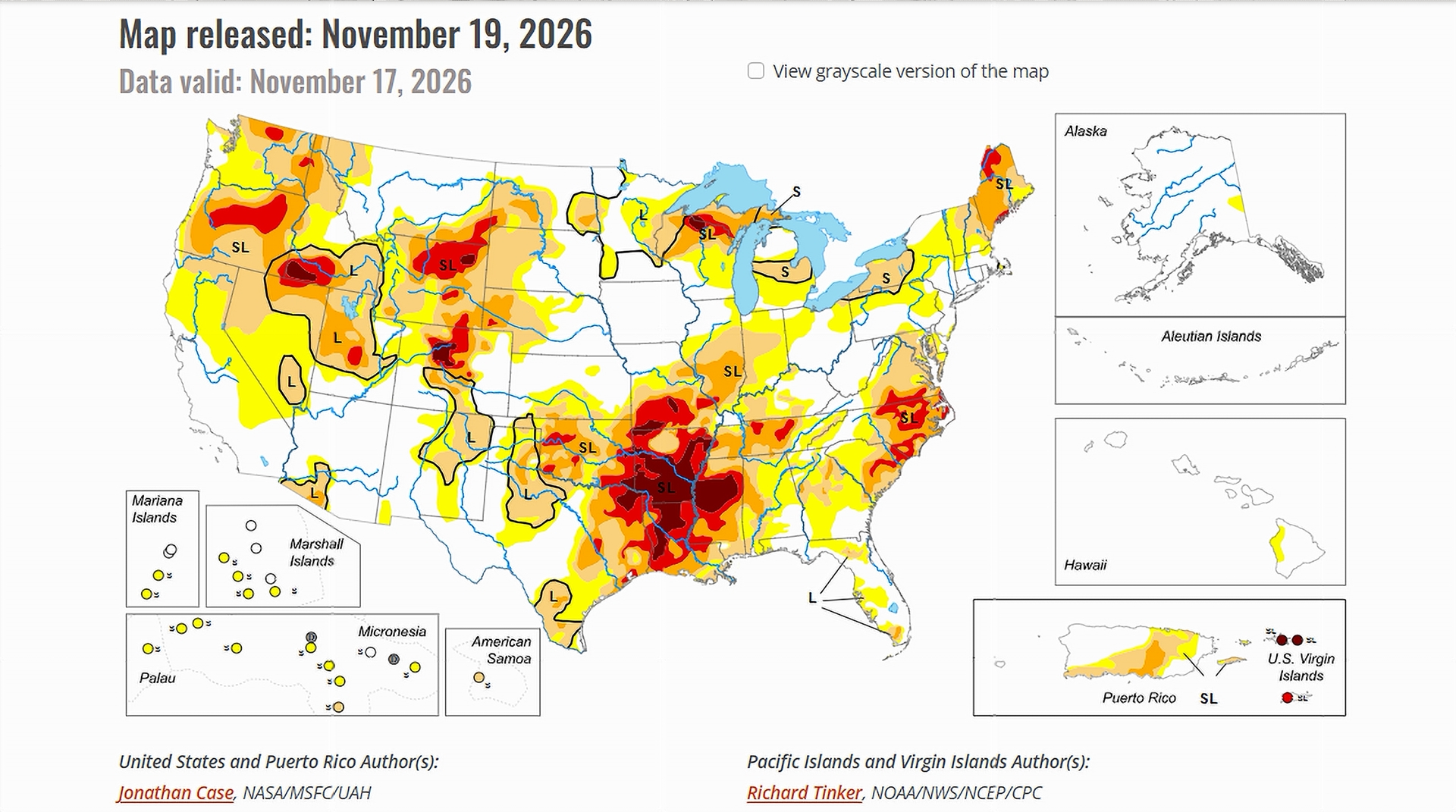
According to the U.S. Drought Monitor report released November 19 , dry conditions spread or intensified from the Mississippi River Valley through the Southeast and into the Middle Atlantic states.
The most significant deterioration occurred in parts of the Southeast, where another week with almost no precipitation worsened drought from Alabama through Virginia. Extreme drought intensified across portions of the Carolinas and southern Virginia.
Conditions were particularly serious in Arkansas, Louisiana and Mississippi, where exceptional drought continued to expand. In some areas, rainfall shortages have accumulated for more than a year.
Elsewhere, heavy rain improved conditions in southeastern Texas and central Oklahoma. Portions of the Northeast also saw relief after a coastal storm delivered substantial rainfall and mountain snow.
The western United States presented a different picture, with continued drought improvement across much of the Southwest but worsening conditions in parts of the northern Rocky Mountains.
Southwest Storms Continue to Reduce Drought.
The Colorado River Basin states experienced another week of contrasting conditions, with widespread improvements across the Southwest and worsening drought in northern Wyoming.
A series of storm systems brought significant precipitation to parts of the West, including heavy rainfall along the Pacific Coast.
The U.S. Drought Monitor reported additional drought improvements across southeastern California, southeastern Nevada, northern Arizona, southern and eastern Utah, and New Mexico.
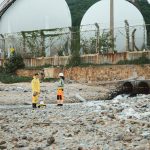
Many streams in the Southwest were flowing near their highest levels on record for this time of year. Those unusually high flows further reduced drought severity across the region.
Southwestern reservoirs also continued to receive additional water during the reporting period. However, the pace of those gains had slowed compared with previous weeks.
The improvements extended drought relief across portions of the Colorado River Basin, where the latest report documented continued changes in drought classifications.
Wyoming Sees Expansion of Severe Drought Conditions.
While much of the Southwest experienced improving conditions, northern Wyoming moved in the opposite direction.
Well-above-average temperatures, combined with a lack of precipitation, contributed to worsening drought across northern and northeastern Wyoming.
Extreme drought expanded across the region, and exceptional drought, the most severe classification used by the U.S. Drought Monitor, was introduced in northeastern Wyoming.
The report attributed the new exceptional drought designation to very poor long-term drought indicators, supported by observations from the affected area.
A smaller area of worsening drought was also reported in the northern Colorado Rocky Mountains.
The deterioration in Wyoming contrasted with the widespread improvements farther south in the Colorado River Basin states.
More Western Storms in the Forecast.
The November 19 report also described another powerful storm system expected to affect much of the western United States during the following days.
California was expected to receive particularly heavy precipitation, with several inches of rain possible and mountain snowfall potentially reaching 50 to 100 inches in the Sierra Nevada.
Substantial mountain snowfall was also forecast for western Colorado, northeastern Utah, and western portions of Wyoming and Montana.
The National Weather Service’s Climate Prediction Center projected above-normal precipitation across much of the West during the following six to ten days.
Those forecasts were issued as part of the November 19 report and described expected conditions rather than confirmed precipitation totals.
A Mixed Drought Picture for the Colorado River Basin.
The latest U.S. Drought Monitor findings show considerable differences across the seven Colorado River Basin states.
Arizona, California, Nevada, New Mexico and Utah experienced additional drought improvements in areas affected by recent storms and elevated streamflows.
Northern Colorado saw a smaller area of worsening conditions, while northern and northeastern Wyoming experienced more substantial deterioration, including the introduction of exceptional drought.
Meanwhile, Southwestern reservoirs continued to gain water, but more slowly than in previous weeks.
The November 19 report reflects drought conditions through November 17, 2026, and provides the latest documented assessment for the period covered.