- Bacteria levels in the San Juan River have dropped sharply following recent flooding.
- November 12 testing shows flowing river water approaching pre-flood conditions.
- Standing floodwater and wet mud remain dangerous despite improvements in the river.
- Drinking water tests in Montezuma Creek confirm safe conditions.
- Mexican Hat remains without regular water service as repairs continue.
Monday, November 16, 2026 — Water quality in Utah’s San Juan River is improving after weeks of flooding and sewage contamination sent bacteria levels soaring.
According to a November 13 update from the Utah Department of Environmental Quality , recent testing shows that water flowing through the river’s main channel is returning to conditions seen before the floods.
Water samples collected November 12 showed E. coli bacteria levels well below Utah’s recreational health advisory limit.
At Swinging Bridge, the bacteria level measured 96 most probable number (MPN) per 100 milliliters of water. At Sand Island, the reading was 103.
Both readings were well below Utah’s recreational health advisory limit of 235. The Sand Island reading was also close to the river’s historical average of 130.4.
The improvement is substantial. Just a week earlier, bacteria levels in the main river channel exceeded 2,419, the highest concentration the laboratory test could measure.
The department explained that flowing water moves contamination downstream much faster than standing water, allowing bacteria levels in the main channel to decline.
Flooding and Sewage Spills Contaminated the River.
The contamination followed several rounds of flooding across the San Juan River watershed in late October and early November.
Floodwaters damaged sewage lagoons in Pagosa Springs, Farmington and Montezuma Creek, allowing untreated sewage to enter the river. Damaged septic systems, mud and debris added to the contamination.
By October 26, E. coli readings had reached approximately 2,400. Although testing on October 30 showed some improvement, bacteria concentrations remained dangerously high.
Additional flooding in early November brought more runoff and debris into the river. By November 6, samples collected at Swinging Bridge, Sand Island and Mexican Hat again exceeded the laboratory’s upper detection limit of 2,419.
Utah officials warned residents to avoid swimming, wading, boating and other contact with contaminated river water.
Standing Floodwater and Mud Remain Dangerous.
Despite the improvement in the main river channel, health officials continue to warn about standing floodwater and saturated mud left behind by the storms.
Large pools remain along riverbanks, side channels and low-lying areas.
Unlike flowing river water, these pools do not quickly flush away contamination. Officials expect them to contain dangerous bacteria, disease-causing organisms and other pollutants for weeks.
Contaminated soil and mud can remain hazardous even longer. In its November 6 advisory, the Department of Environmental Quality warned that some disease-causing organisms can survive in wet soil for months, depending on environmental conditions.
The department continues to advise keeping people and pets away from standing floodwater and wet mud.
The improved river test results do not establish that these flooded areas are safe.
Drinking Water Conditions Improve, but Mexican Hat Waits.
There is also encouraging news for residents who depend on local drinking water systems.
Samples collected from the Utah Navajo Health System and the elementary school in Montezuma Creek confirmed that their drinking water is safe.
Public drinking water supplies in the area are separate from the San Juan River, and officials previously reported that municipal systems had not been contaminated by the flooding.
However, Mexican Hat continues to face water service problems.
Flooding damaged the community’s well house, interrupting its regular water supply. As of November 13, service remained shut off while repairs continued.
Monticello City has provided 7,000 gallons of drinking water to help residents during the outage. Residents have also received collapsible water bags to carry water home.
Blanding City has assisted with sanitation efforts.
Recovery Continues as River Conditions Improve.
The November 12 test results mark a significant improvement in the San Juan River’s water quality following the severe contamination recorded earlier in the month.
The latest readings show that bacteria concentrations in the flowing river have returned to levels close to those measured before the floods.
However, the Department of Environmental Quality continues to distinguish between improving conditions in the main channel and the hazards remaining in flooded areas.
Standing water, saturated mud and damaged infrastructure remain concerns as communities continue their recovery.
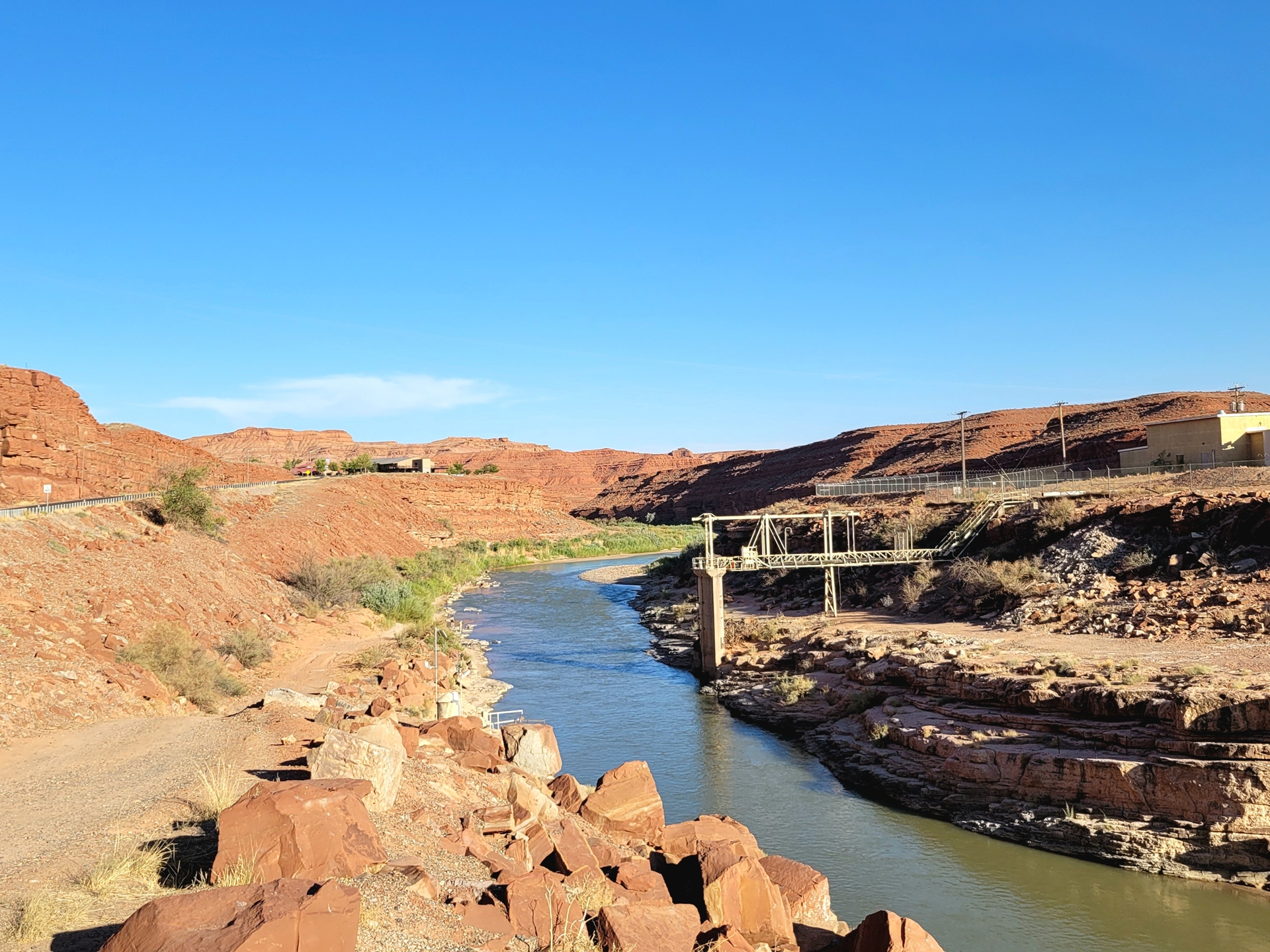
Image: San Juan River in Mexican Hat, UT, USA . Mojnsen, July 2025. Licensed under the Creative Commons Attribution 4.0 International license.